Indoor plants
Xanthosoma
Xanthosoma
The name derives from two Greek words «xanthos» — yellow and «soma» — body: because of the yellow coloration of the stigmas of the female flowers. The genus comprises approximately 53 species occurring in the tropical regions of Central and South America and in the Antilles.
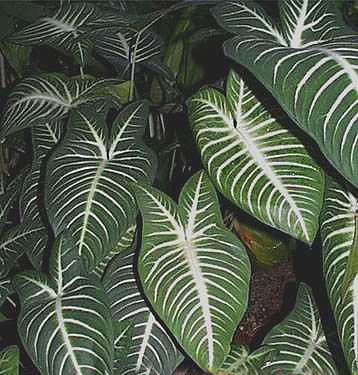
This is a fairly large plant with large petiolate, rounded leaves that have pointed tips. The leaves are thick, glossy, light green with well-defined veins; the local population uses them as food. The plant is rhizomatous or has a thick stem that only slightly protrudes above the soil surface. The spadix is fused to the spathe at the base. The spathe is oblong-ovate or ovate. The plants contain milky sap. They grow in tropical America. The genus contains 45 species.
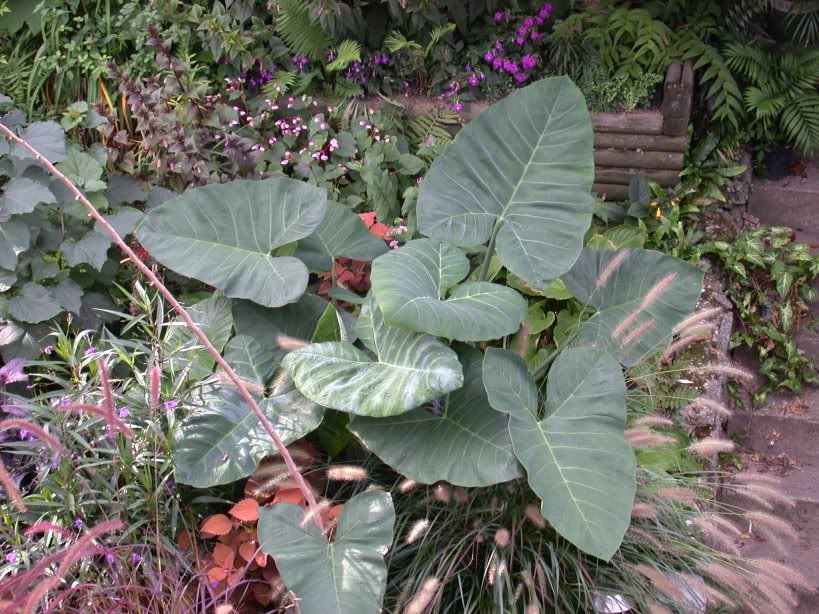
X. robustum, X. lindenii, X. violaceum, X. atrovirens are widely cultivated — plants of warm greenhouses.
Light: bright light.
Location: In spring and summer maintain temperature at 20-24 °C, in winter not below 18 °C. Xanthosoma does not tolerate drafts and sharp temperature fluctuations.
Watering: In the warm season water abundantly, keeping the soil constantly moist. However, overwatering is unacceptable. In winter water less frequently and more moderately.
Additional information: in summer it is necessary to provide shading from direct sunlight and maintain high air humidity (spraying the plants, pathways, shelving).
Care: during the growing season the plants require feeding — apply manure slurry every three weeks.
Propagation: propagate at any time of year except winter by dividing rhizomes or by tip cuttings from young plants.