
Indoor plants
Washingtonia
Washingtonia
Synonyms: Washingtonia H.Wendl., Neowashingtonia Sudworth
Washingtonia (Washingtonia Raf.) – a genus of plants in the Palm family (Arecaceae, Palmae). The genus was named in honor of the first President of the United States, George Washington. It was first described by Hermann Wendland in 1879 in the journal «Botanische Zeitung. Berlin».
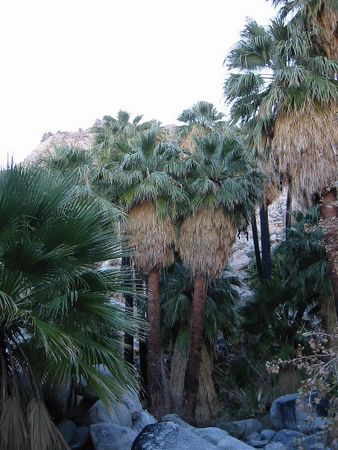
Washingtonia filifera (Washingtonia filifera)
In the wild it occurs in North America (northern California, northeastern Arizona, Texas) and northeastern Mexico (northern Baja California and Sonora). It is cultivated in the Middle East, northern Europe and North Africa.
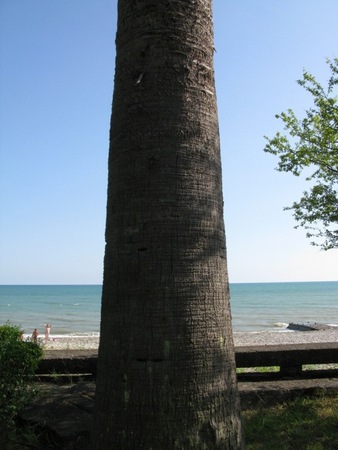
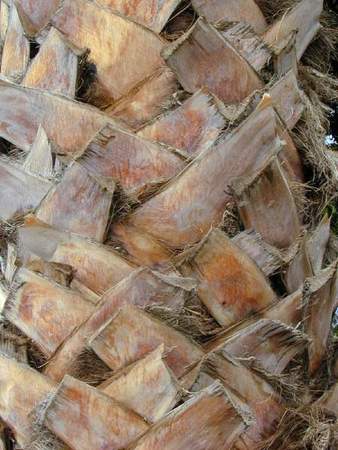
It is an erect, single-trunk, fast-growing palm up to 30 m tall with a trunk diameter of 100-150 cm. The trunk is partially or completely covered with the bases of old leaves, which partially or entirely conceal the trunk of the palm. The lower part of the trunk is light brown, almost smooth, covered with transverse scars from the leaf petioles. The upper trunk is covered with old, bent and closely appressed leaf petioles that form a characteristic "skirt" on the trunk.
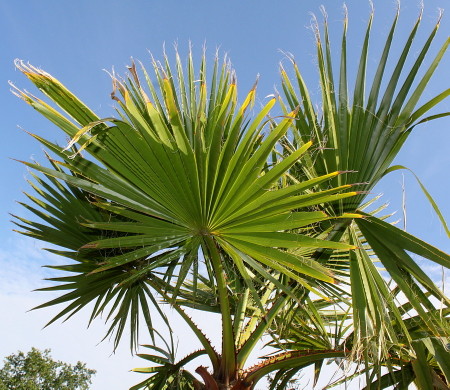
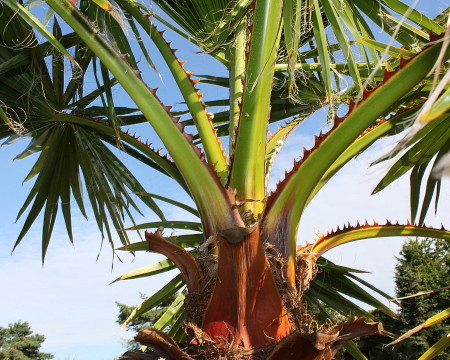
Washingtonia robusta (Washingtonia robusta)
Leaves are robust, large, up to 1.5 m in diameter, fan-shaped, borne at the top of the trunk on thick, long petioles. The lower part of the petioles is covered with strong hook-like spines. The leaf blade is broadly rounded in outline, split into longitudinally folded segments almost to half the leaf. Segments have a bifid apex and long whitish fibers that fray from the margins.
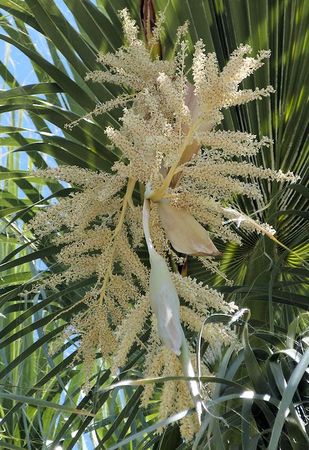
Inflorescences large, compound-panicle, 3-5 m long, slightly curved. The bracts of the inflorescences are leathery and covered with a felt-like pubescence. Flowers are bisexual, small; the calyx is tubular, three-lobed; the corolla has three petals, the corolla petals are three times longer than the calyx lobes. There are 6 stamens. The ovary is three-lobed, the style is thin and long.
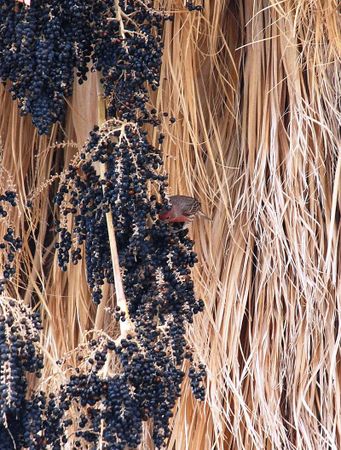
Fruits are berry-like drupes, oblong-ovoid, almost black, up to 1.5 cm long and 0.9 cm wide. The tip of the berry is acuminate. The flesh is thin, loose. Seeds are ellipsoid. Fruits are edible.
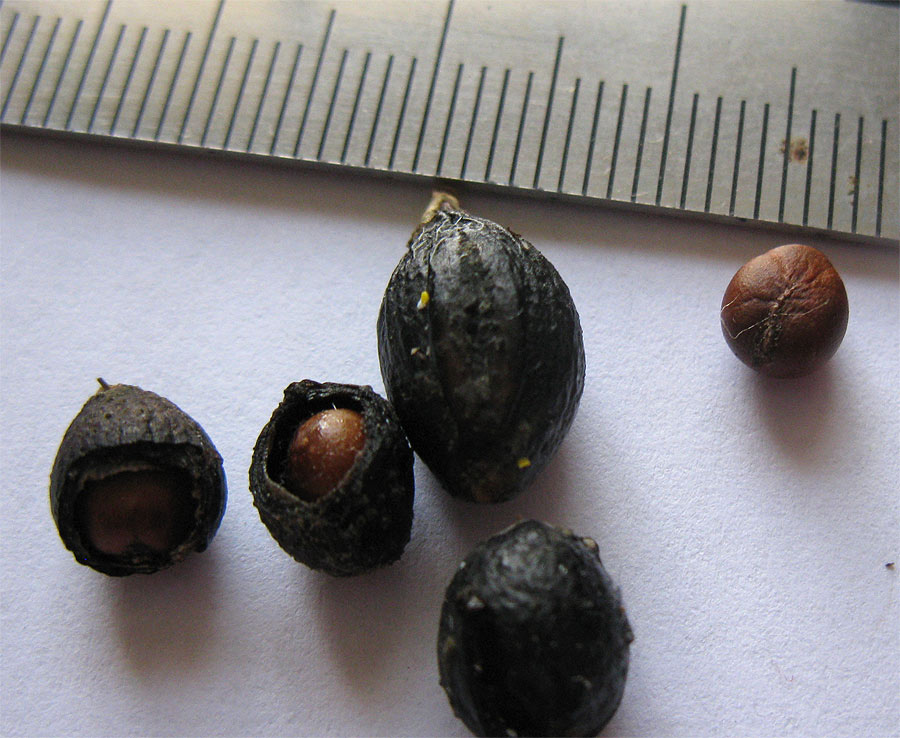
Washingtonia filifera (Washingtonia filifera)
Hybrids: W. robusta and W. filifera = Washingtonia × filibusta
Species: the genus includes only 2 species:
- Washingtonia filifera
- Washingtonia robusta
Hardiness zone: 9a (-12°C).
Temperature: In most of Ukraine representatives of the species are grown as houseplants. In the conditions of Crimea and Odessa it can be grown outdoors. The ideal place for cultivation is a greenhouse or winter garden. Recommended summer temperature should not exceed +23°C, winter – no higher than 6-8°C. In a warm room in winter the plant dries out. As a houseplant the palm tolerates temperature fluctuations fairly well, but it is recommended to keep it in a constant temperature regime. In spring and summer the recommended temperature is within +20+25°C; if the temperature rises to +28+30°C, provide the plant with access to fresh air, since prolonged stay at such temperatures can overheat the plant.
Light: foliage needs protection from direct sunlight. Optimal are east- or west-facing windows (southwest or southeast). In case of insufficient light, additional lighting for 14-16 hours is recommended. Use daylight lamps placed 30-60 cm above the plant. It is recommended to periodically rotate the plant for even crown development. In summer it poorly tolerates stagnant air, but drafts should be avoided. When kept outdoors in summer, protect the plant from precipitation and provide diffused light.
Watering: needs abundant watering in summer, moderate in winter (depending on temperature – once every 1.5-3 weeks). In summer water should remain in the tray for 3-4 hours; in winter having water in the tray is unacceptable. Mature plants can tolerate short-term soil dryness, but it is recommended to keep the soil consistently moist. In autumn and winter (October-February) water 2-3 days after the top layer of soil dries.
Air humidity: requires moderately humid air (up to 40%). Daily spraying is recommended.
Care: From the active growth period (May) feed the plant monthly with an organic fertilizer solution (diluted manure at 1:10 or poultry droppings at 1:20) or a complete mineral fertilizer (for young plants - 20 g/10 l). If the palm overheats, move it to a cool place for 2-3 hours, spray the leaves and water with room-temperature water. Do not fertilize in autumn and winter. If roots become exposed, cover them with soil.
Repotting: transplants poorly. Young plants are repotted once every 2 years, mature ones once every 5-6 years. A mature palm is recommended to be kept in an oak tub or a ceramic pot with a drainage hole. Place drainage at the bottom of the pot from small pieces of broken pots, pebbles or bricks.
Potting mix: Soil should be well-drained. Composition of the potting mix: equal parts turf soil, leaf mold and sand (the soil should be slightly acidic).
Pests: spider mite, mealybug, scale insects, leaf-eating beetles, aphids, thrips, false scales, whiteflies.
Diseases: parasitic fungi can cause the death of the apical bud. With insufficient nutrition plant growth slows and leaves yellow. Insufficient humidity may cause leaf tips to dry. Overwatering causes brown spots on leaves. Overwatering of the soil may lead to root rot. The plant does not like high temperatures, under which leaves may yellow in winter. Also encountered: leaf spots, pink rot, Phytophthora (root and stem rot), Fusarium, Rhizoctonia, Pythium, chlorosis of young leaves.
Propagation: does not form lateral shoots. Propagation is mainly by seed in March-April. It is desirable to sow freshly collected seeds. Seed surface is lightly abraded with sandpaper, soaked in warm water for 2 days and sown at a depth of 2-3 cm, covering the container with glass. The sowing substrate consists of equal parts sand, moss and steamed sawdust, with a little crushed charcoal added. Recommended germination temperature +26+28°C, and maintain moderate soil moisture. First seedlings appear after 3-4 weeks or up to 2 months (if seeds are purchased) after sowing. Pricking out is done one week after the first leaf appears. Germinated seeds with emerging shoots (1-1.5 cm high) can be separated and planted singly into pots. Seedling mix: leaf mold, humus, peat soil and sand in ratio 4:2:2:1:2. Seedlings grow quickly – in 1 year they have 4-5 leaves. Leaf dissection begins from the 7th-8th leaf. In summer seedlings can be kept outdoors; in autumn they are brought indoors. In southern regions the plant can be planted out at age 2-3 years.
Uses: widely used as an ornamental houseplant, and in temperate-continental and subtropical climates outdoors. Planted outdoors at resorts and along coastlines. Used in solitary and group plantings, for creating alleys and in parks. The plant is attractive with its large fan leaves, yellow-green panicle-like flowers and blue-black fruits that can remain on the plant for up to a year. In its native range the fruits are eaten.