
Climbing plants
Grape 'Amethyst'
Vitis vinifera L.
Obtained from: Vostorg krasny x Vostorg. Obtained at VNIIViV named after Ya.I. Potapenko, (Novocherkassk, Russia).
Synonyms: Amethyst Novocherkassky, II-13-6-2
Grape «Amethyst»– a table grape form of very early ripening. From bud break to full ripening it takes 100-110 days. Ripens in late July – early August.
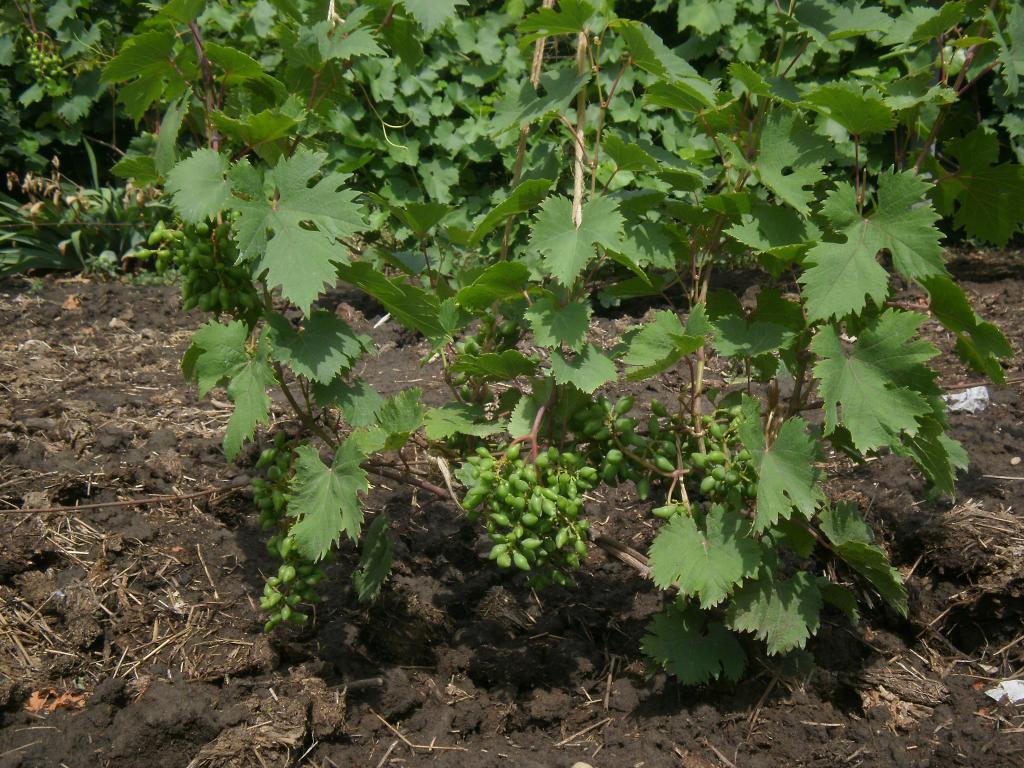
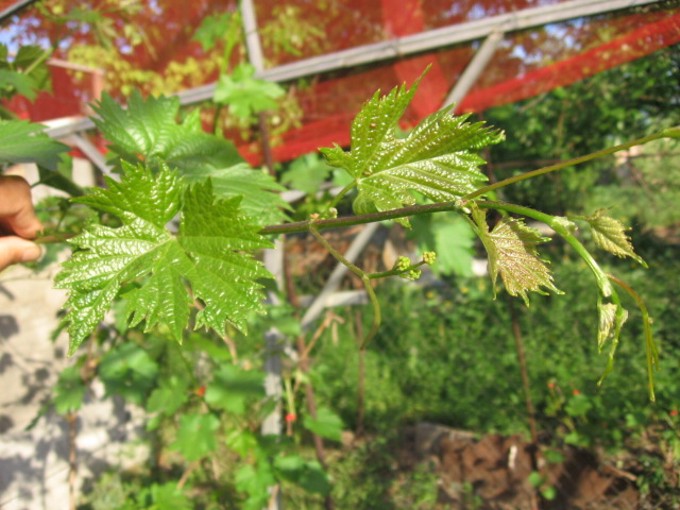
Bushes medium- to vigorous-growing. Shoots erect. Cane ripening is good, almost along the full length of the shoot. Ability to form lateral shoots is low. Flower is bisexual and sets well.
Bunches small, 500-800 (1000) g, cylindric-conical in shape, medium density.
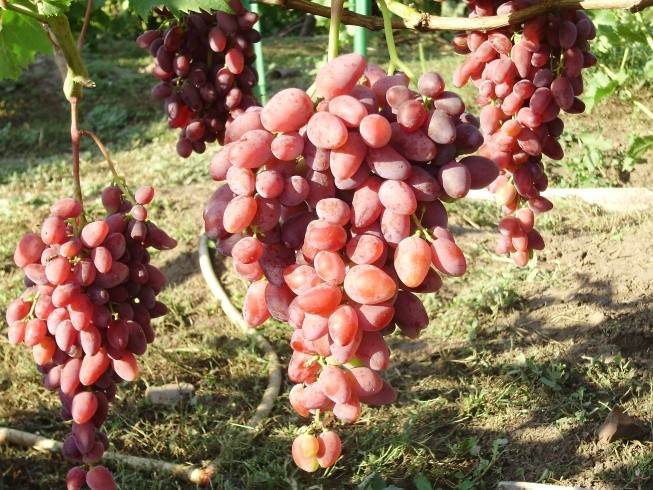
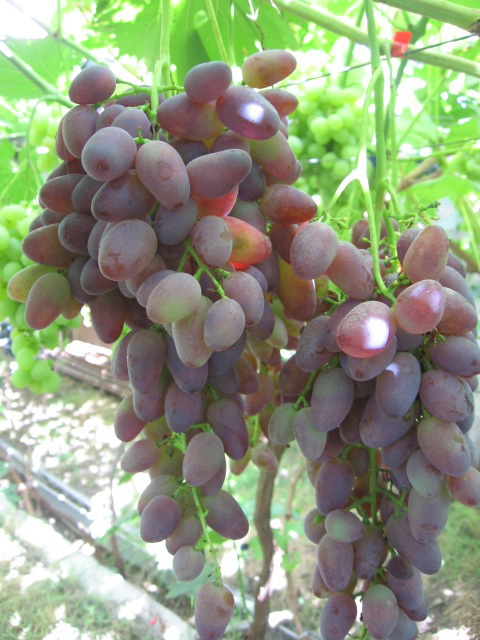
Berries large, weighing 6-8 g, elongated. Berry color ranges from bright red to dark raspberry. When overripe the color changes, becoming darker. Flavor changes as it ripens: at first there is a hint of the Renklod Altana plum, later this flavor fades and a simply harmonious, distinctive taste remains. Flesh is fleshy, juicy, crisp. Skin thin, edible. Berries can remain on the vine for a long time without loss of taste quality. The hybrid form tends to accumulate sugars quickly and to high levels. Yield is very high. Millerandage is not observed. Berries do not crack.
In the harvest of August 4, 2006 under the conditions of Novocherkassk (Russia) the berries had a sugar content of 15.3 g/100 cm3, with acidity 5.7 g/dm3.
Tasting score of the fresh harvest – 8.1 points.
Fruitfulness coefficient 1.2.
Cold hardiness zone: -24°C
Location: not demanding to soil, but grows better on light, sufficiently moist ground. The plant is drought-tolerant. Not sensitive to waterlogging.
Planting and care: similar to those for cultivated grape. Planting scheme: Z x 0.75 m
Pruning: Load of shoots per bush - 30-35, pruning of canes to 4-6 buds. On each fruiting shoot 2-4 inflorescences may form, therefore it requires cluster thinning.
Training: standard fan with a trunk height of 80-100 cm. In some locations it performs well in an arbor.
Pests and diseases: form with complex resistance to fungal diseases. Resistance to diseases is being studied.
Propagation: cuttings root well. Has proven excellent in grafted culture.
Use: Fruits are eaten fresh, have high transportability and an excellent marketable appearance. Can be stored in the refrigerator for a long time without loss of taste and market qualities.