
Flowers for the garden
Periwinkle
Vinca
Synonyms: Pervinca Mill.
Periwinkle (Vinca L.) – a genus of the family Apocynaceae. The name derives from the Latin 'vinca' – to twine. The genus was first described by Carl Linnaeus in Sp. Pl. 1: 209 in 1753.
They occur in Europe, Asia, and North Africa.
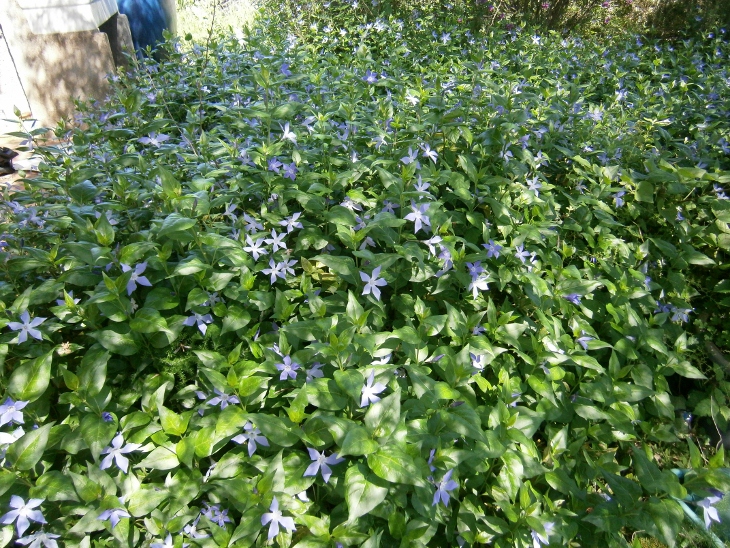
Vinca difformis ssp. Sardoa. Photo E. Rozinsh
They are evergreen or deciduous creeping subshrubs or perennial herbs with erect flowering shoots. Stems 1-2 m long, but the plant reaches 20-30 cm in height. Stems root readily.
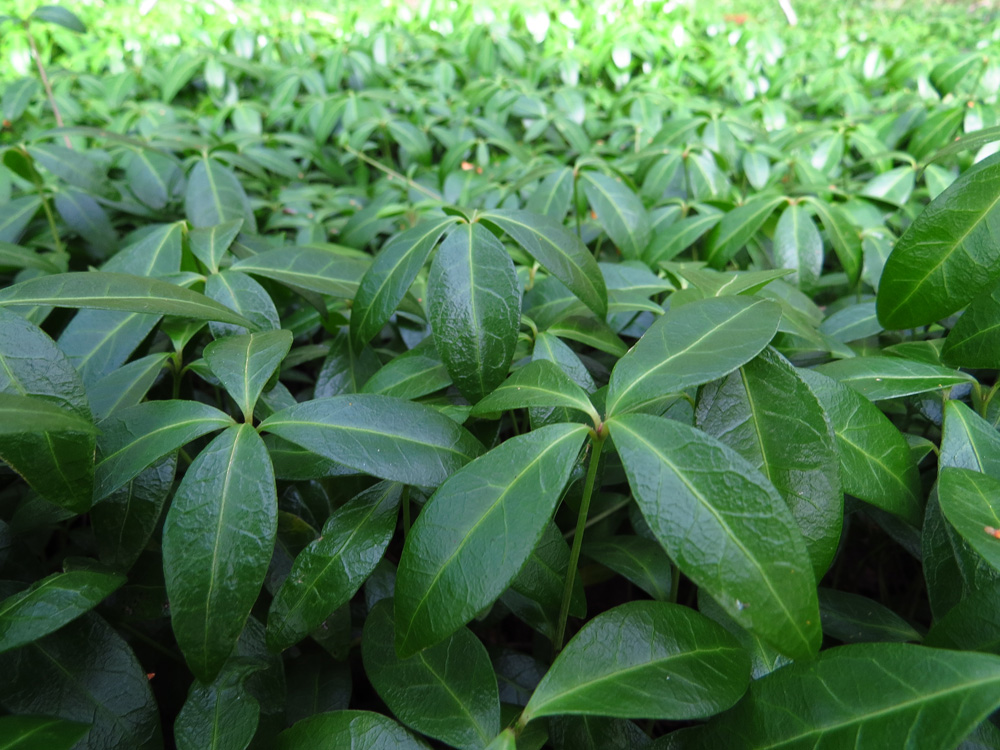
Photo Yu. Emelyanov
Leaves opposite, leathery, glossy, entire, on short petioles, from broadly lanceolate to ovate, 1-9 cm long and 0.5-6 cm wide, evergreen (except Vinca herbacea).
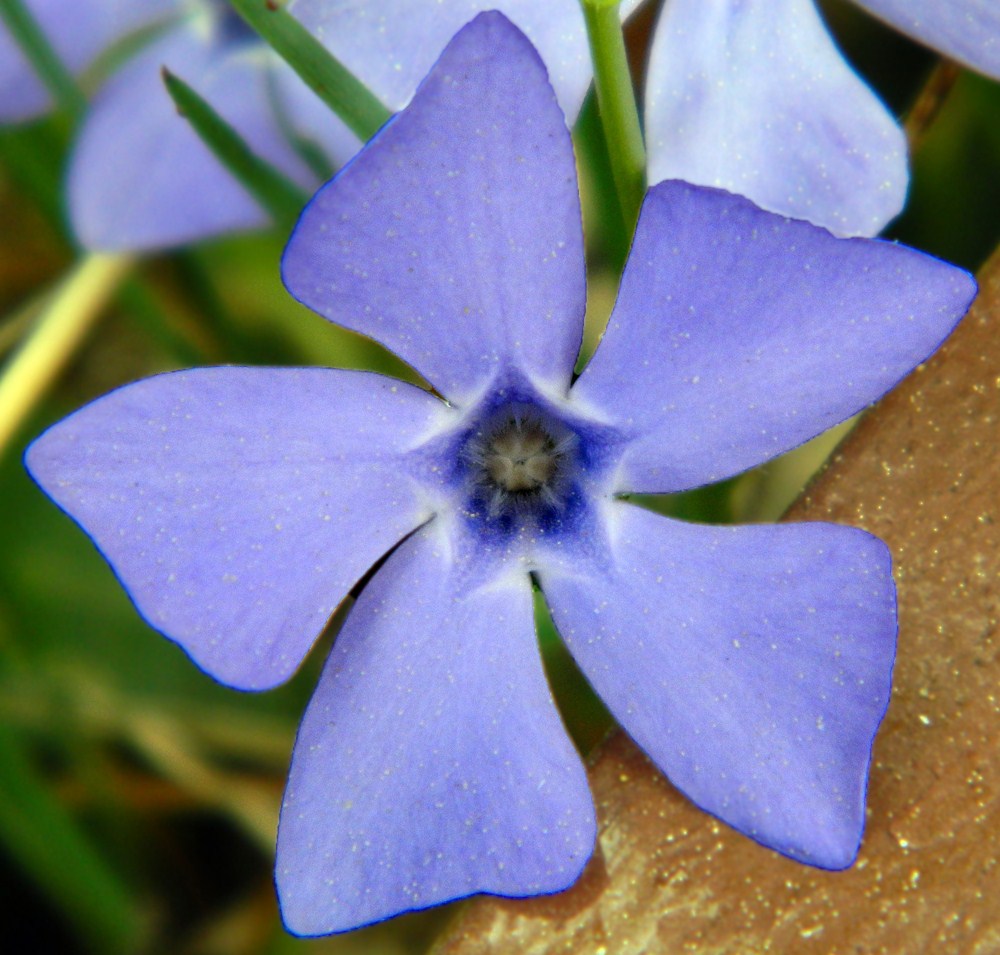
Vinca minor. Photo E. Spivakovsky
Flowers large, solitary, azure-blue, blue-purple, violet, more rarely red-purple or white, borne in the leaf axils. Calyx small, deeply five-cleft, with narrow, acute lobes, with 2 small teeth at the base or slightly above. Corolla sympetalous, funnel-shaped; the limb is five-parted, with lobes bent to the left. Tube long, thin, cylindrical, slightly expanded in the middle, glabrous or pubescent in the throat. Stamens 5, filaments thick, bent, attached to the middle of the corolla tube. Anthers expanded, short, with a thick and apically expanded connective that adjoins the broad stigma. Nectar glands 2, they are rounded and fused with the ovary. The pistil consists of 2 carpels. Ovary with 6-8 ovules.
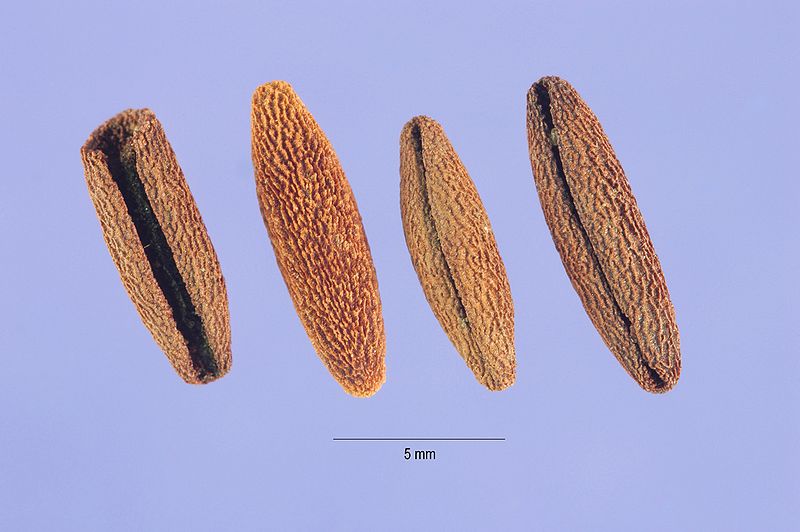
Photo S. Hurst
Fruits – 2 cylindrical follicles. Seeds without a coma, cylindrical in shape. Embryo straight, surrounded by endosperm.
Species: there are 5 species:
- Vinca difformis Pourr.
- Vinca erecta Regel & Schmalh. — Upright periwinkle
- Vinca herbacea Waldst. & Kit. — Herbaceous periwinkle
- Vinca major L. (type species) — Greater periwinkle
- Vinca minor L. — Lesser periwinkle
Hardiness zone: 4a
Position / Exposure: a shade-loving plant, but tolerates bright sun. Drought-tolerant, but moisture-loving. Not demanding regarding soil fertility; grows in most conditions except extremes. Does not like stagnant waterlogging. More ornamental on loose, well-drained, fertile loamy soil.
Planting: planting is best carried out in late August – early September or in spring. Recommended spacing between plants 20-30 cm.
Care: the plant responds well to applications of mineral fertilizer. Manure, compost or leaf mould can be used.
Pruning: to encourage better branching, old and young shoots can be pinched back.
Propagation: by layering, stem cuttings, seeds. Cuttings root quickly and can be planted out already in early September. Young plantings are recommended to be covered for the winter.
Diseases: powdery mildew, rust
Pests: aphids
Uses: used to create decorative groundcover in shady places, under trees and shrubs, for creating low and wide borders, in flower beds, rock gardens, cemeteries, gentle bare slopes, and as a trailing (ampelous) plant.