
Flowers for the garden
Prostrate speedwell
Veronica prostrata L.
Synonyms: rock speedwell, Veronica rupestris hort.
Prostrate speedwell (Veronica prostrata L.) – a species of the genus Veronica in the plantain family (Plantaginaceae). The species was first described by Carl Linnaeus in 1762 in «Sp. pl. ed. 2, 1:17.». In cultivation since 1774.
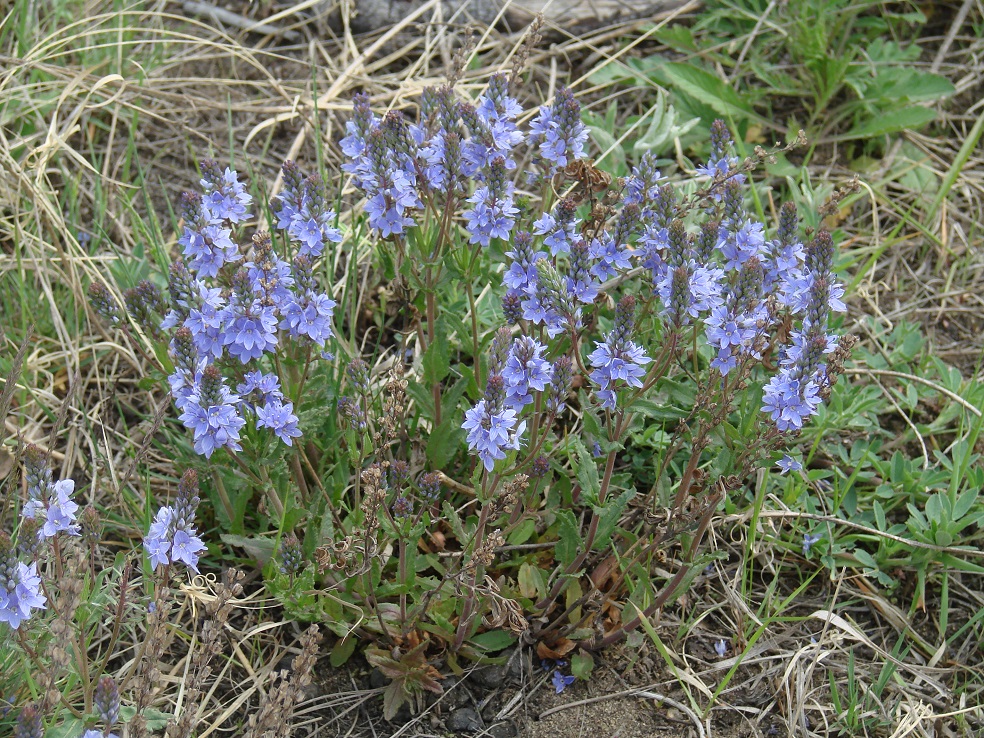
Lyudmila Palamarchuk
Occurs in Turkey and throughout most of Europe, and in Russia (European part). Found on dry steppe slopes, well-drained meadows and forest clearings, among shrubs; in the north it grows in dry pine woods and on slopes. Ascends to mountain heights up to 1500 m above sea level.
It is a perennial herbaceous plant 5-15 (20) cm tall, forming dense carpet-like mats. Stems 5-30 cm long, numerous, grayish from short pubescence; sterile stems prostrate, flowering stems ascending.
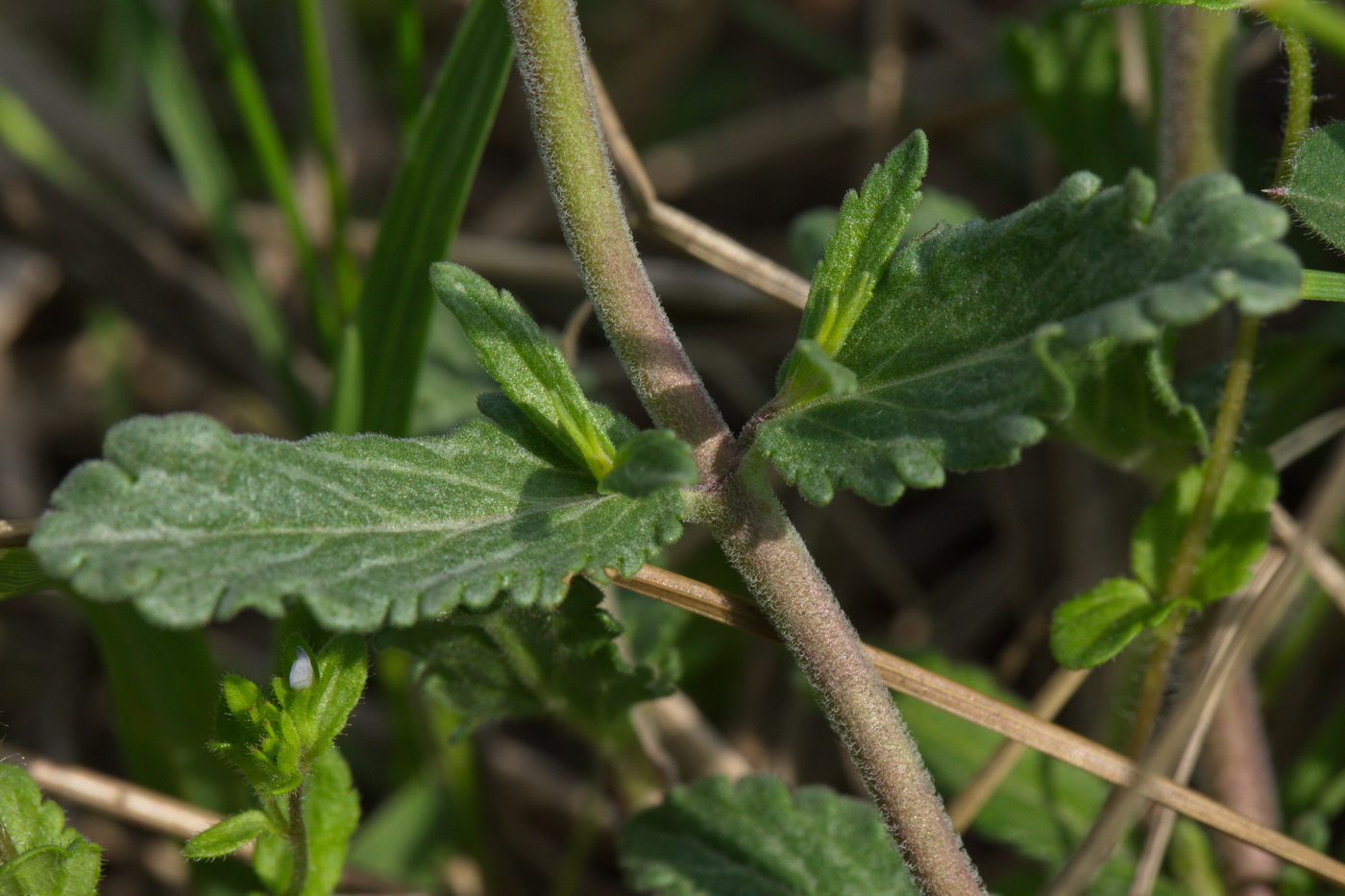
Radu Stratu
Leaves are on short petioles, opposite. Lower leaves narrowly ovate, upper leaves oblong-lanceolate or linear-lanceolate, narrowed into a short petiole, obtuse at the apex, toothed along the margin, 1-2 cm long and 3-8 mm wide.
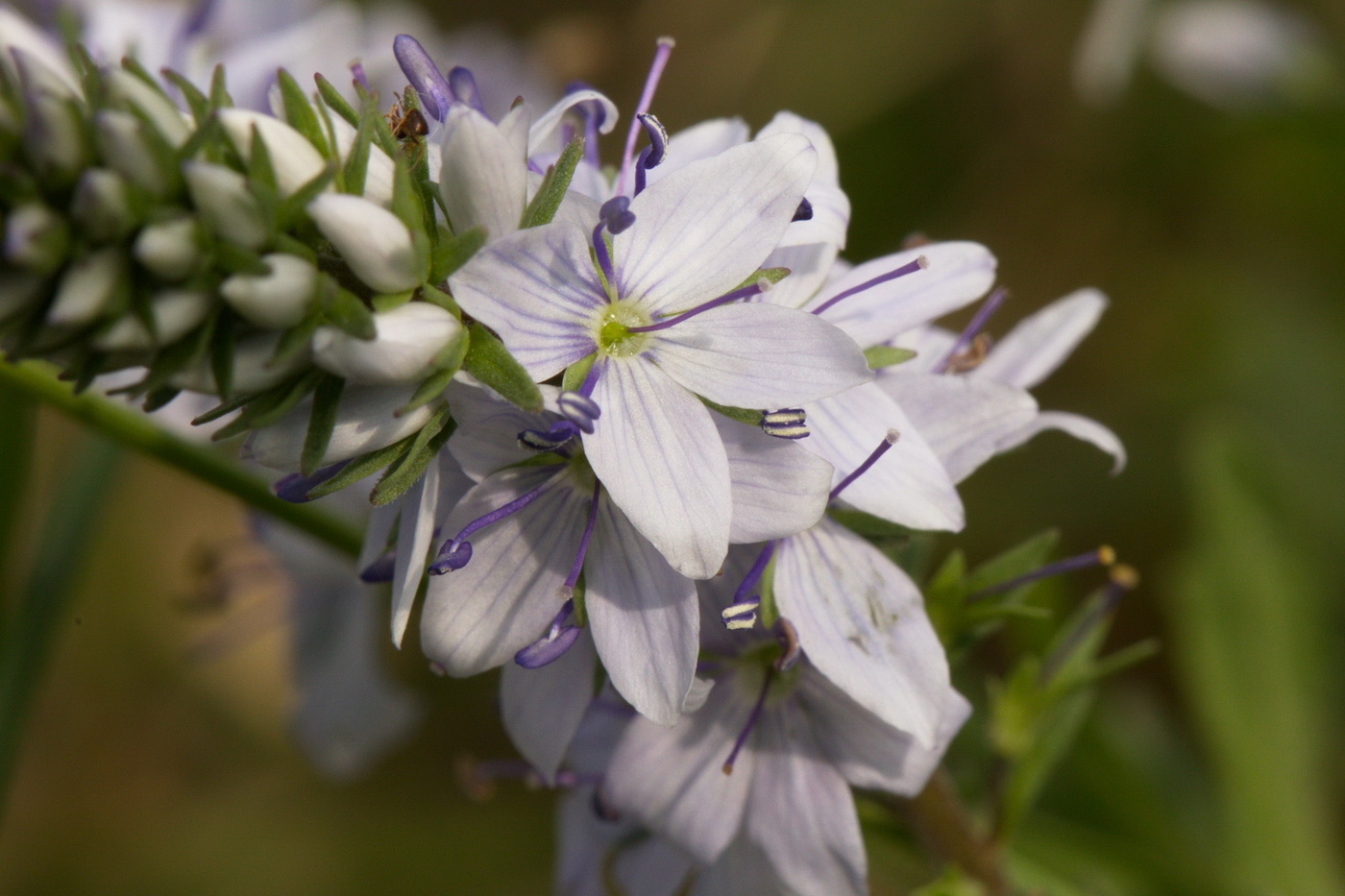
Radu Stratu
Flowers are gathered in lateral dense many-flowered racemes, oppositely arranged, growing in the axils of the upper 2-4 leaves, 1.5-4 cm long. Pedicels shorter than the bracts and the calyx; bracts linear-lanceolate. Calyx five-parted, lobes unequal, linear-lanceolate, exceeding the capsule; the two anterior lobes twice as long as the posterior ones, the fifth lobe three times shorter than the anterior ones. Corolla 5-8 mm in diameter, bluish-lilac or pale blue, the spreading lobes 4-5 mm long: one lobe rounded-ovate, two lateral lobes equal, broadly ovate, and one obtuse, ovate in shape.
Fruits are capsules 3-5 mm long, broadly ovate or obcordate, longer than wide, rounded at the base, glabrous or shortly pubescent, with a shallow sharp notch at the apex. Seeds rounded, shield-shaped, up to 1 mm long and wide, yellowish.
Subspecies:
- Veronica prostrata subsp. Prostrata
- Veronica prostrata subsp. scheereri J.-P.Brandt
Cultivars: 'Alba', 'Rosa', 'Pallida', 'Aztec Gold', 'Nestor'.
Hardiness zone: 3a (-40°C). May suffer winter kill in snowless winters, but recovers quickly.
Location: prefers sun but tolerates shade.
Soil: grows in any loose garden soil. Prefers moisture but is drought-tolerant.
Care: practically requires no care. Cut back shoots after flowering. Does not require winter covering.
Pests: gall midge Dasyneura veronicae, mites Anceria anceps.
Diseases: raspberry ring spot, mycorrhiza.
Propagation: propagated vegetatively (cuttings) or by seed. Seeds are sown in autumn (overwinter) or in spring. Plants grown from seed flower in the second year. Cuttings are taken in May or June.
Uses: used for creating clumps, plantings on retaining walls, terraces of rock gardens, and for decorating mixed borders.