
Flowers for the garden
Veronica filiformis
Veronica filiformis
Synonyms: Veronica tripartita Boriss., Cardia officinalis (L.) Dulac, Veronica officinarum Crantz
Veronica filiformis (Veronica filiformis Sm.) – a species of the genus Veronica in the plantain family (Plantaginaceae). The species was first described by James Edward Smith in 1751 in the «Transactions of the Linnean Society of London».
Occurs in Asia (Turkey, Iran, the Caucasus, Armenia), has been introduced to Crimea (YBK), and in most countries of Western Europe (France, Great Britain, Belgium, the Netherlands, Switzerland, Denmark, Czechoslovakia, Austria, Poland, Sweden, Finland, Germany, Romania). Grows in shady mountain forests, mainly beech, and in meadows. Rises to the upper forest limit at an altitude of 6000 m above sea level, less often found on plains, less often as a weed, often in mass plantings.
It is an annual and perennial herbaceous plant 3-10 (15) cm in height. Stems 10-30 cm long, weak, thin, ascending, branched, branches numerous, thin, elongated, rooting.
Наталья Гамова
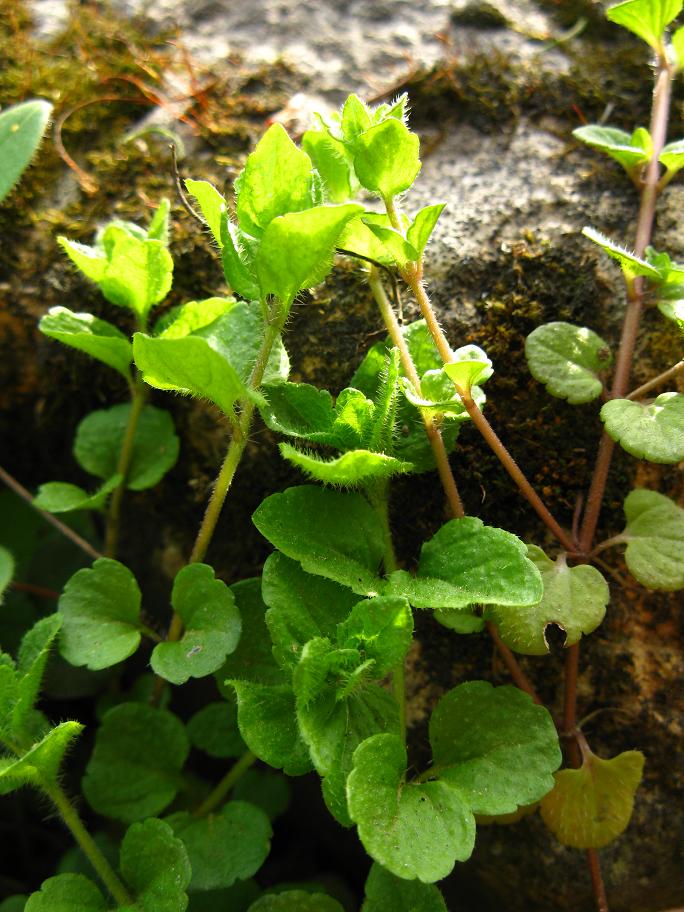
Upper leaves are arranged alternately, lower ones opposite, ovate or rounded in shape, 5-10 (15) mm long and wide, borne on short petioles, shallowly coarsely toothed at the margins, obtuse at the tip, base cordate or rounded, sparsely covered with flat hairs or glabrous. Bracts are smaller but of the same shape as the stem leaves.
Наталья Гамова
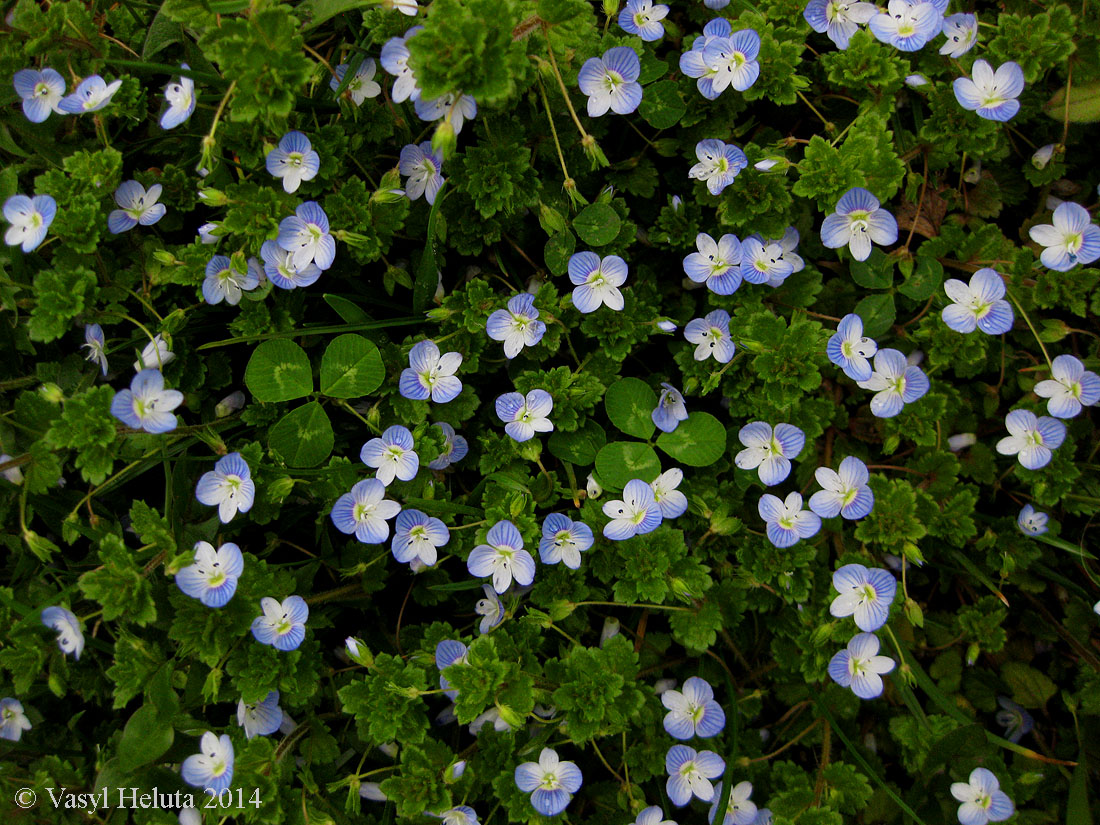
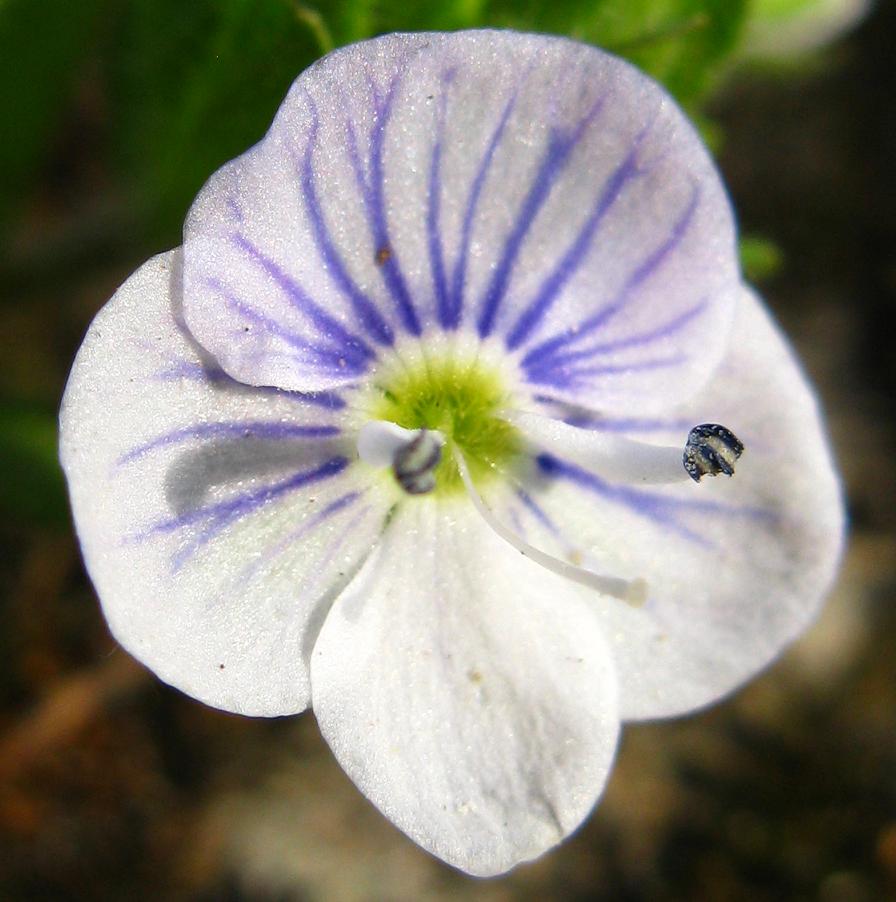
Flowers are borne singly on thin peduncles, 2-4 times longer than the leaves, nodding or slightly curved when fruiting, in the axils of ordinary or slightly reduced leaves. Calyx lobes elliptical or lanceolate, 2.5-4 mm long, shortly acuminate at the apex, slightly spreading, sparsely glandular. Corolla blue or whitish, exceeding the calyx, 8-13 mm in diameter; three corolla lobes kidney-shaped or rounded, almost equal, the lower lobe obovate; corolla tube short; stamens shorter than the corolla. Flowers June–August.
Emma Silviana Mauri
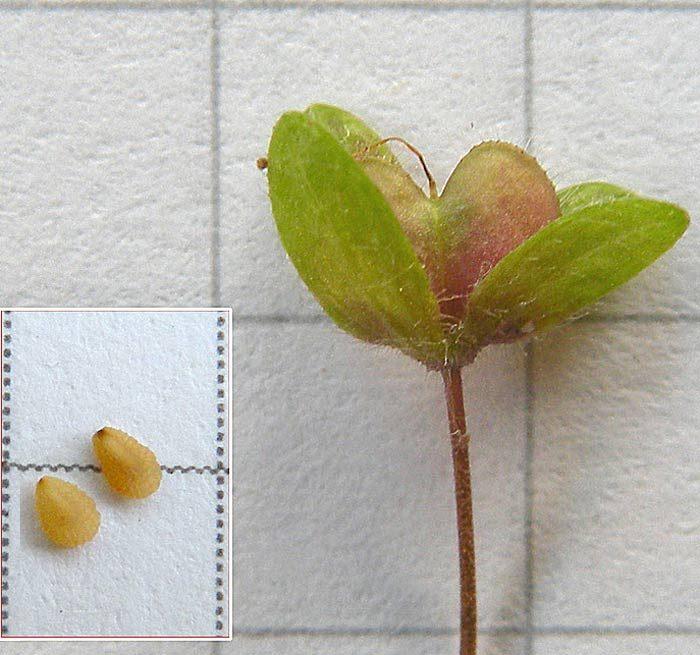
Fruits are capsules up to 5 mm wide and 4 mm long, convex, rounded-cordate in shape, sparsely glandular, thinly reticulate, two-lobed; lobes rounded, joined at a right or acute angle, slightly spreading and strongly fused. Seeds are 8-10 per cell, elliptical or oblong, flat, up to 1 mm long, smooth or slightly tuberculate-wrinkled.
Hardiness zone: 3a (-40°C). In snowless winters may freeze out, but recovers quickly.
Position: shade-tolerant, somewhat shade-loving, resistant to trampling.
Soil: grows well on poor, dry soils. Moisture-loving, but tolerates waterlogging.
Care: practically requires no maintenance. Cut back shoots after flowering. Does not require winter shelter.
Pests: gall midge Dasyneura veronicae, mites Anceria anceps.
Diseases: raspberry ring spot, mycorrhiza.
Propagation: easily propagated vegetatively – stems that touch the ground root. Sometimes can become an aggressive weed.
Uses: used as a groundcover plant, for plantings in terraced rock gardens, and for slope stabilization. Looks effective in carpeted masses.