
Conifers
Nutmeg torreya
Torreya californica
Synonyms: California torreya, Torreya myristica Hooker, Tumion californicum (Torrey) Greene
Large torreya (Torreya grandis Fortune ex Lindl.) – a species of evergreen coniferous shrubs of the family Taxaceae. It was first described by the American botanist John Torrey in the journal «New York Journal of Pharmacy» 3: 49 in 1854.
It is endemic to California. It grows on the Coastal Ranges and in the foothills of the Sierra Nevada. In coastal areas it occurs southwest from Trinity County south to Monterey County. In the Sierra Nevada foothills it ranges from Shasta County to Tulare County. It grows in moist, shady mountain sites. It occurs alongside Sequoia sempervirens, Picea sitchensis, Pseudotsuga menziesii. In the Sierra Nevada it is associated with Acer, Cornus nuttallii, Platanus occidentalis, Alnus rubra. It ascends to elevations of 200-2500 m above sea level.
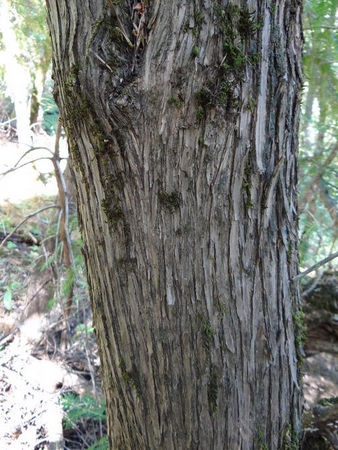
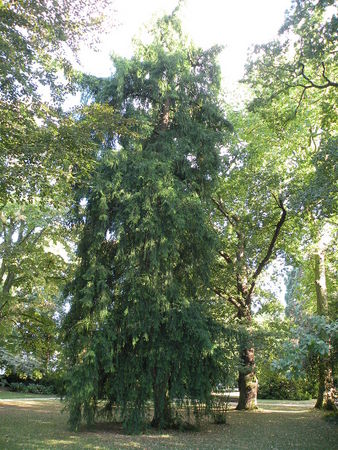
It is a dioecious tree 20-25 m tall with a trunk diameter of 90-120 cm. The crown is mainly conical, less often pyramidal, with a rounded top in older specimens. It grows slowly. Bark thin, 0.8-1.3 cm thick, gray-brown, peeling. Branches thick, ascending, with drooping tips. Two-year-old shoots reddish-brown, glabrous. Buds not resinous.
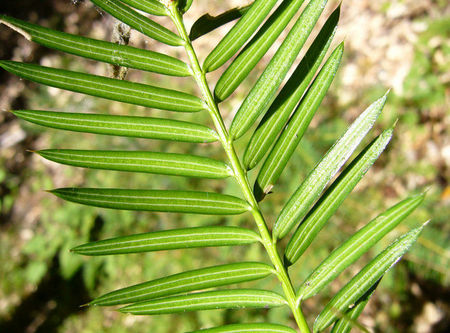
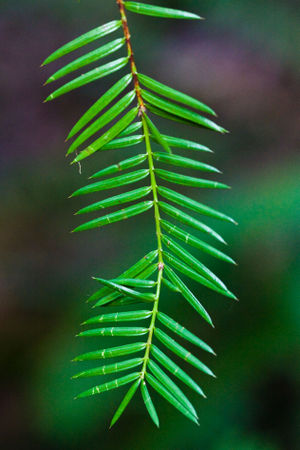
Foliage stiff, leathery, nearly two-ranked, dark green, glossy, with spiny tips, 3-8 cm long and 3-3.5 mm wide, pale green beneath, with 2 thin stomatal bands. The foliage emits a pungent odor when crushed.
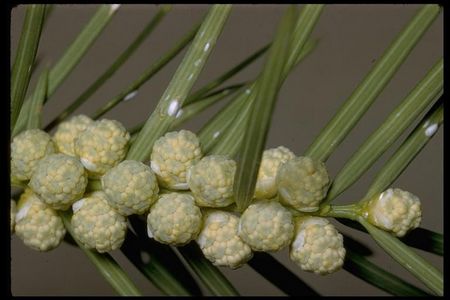
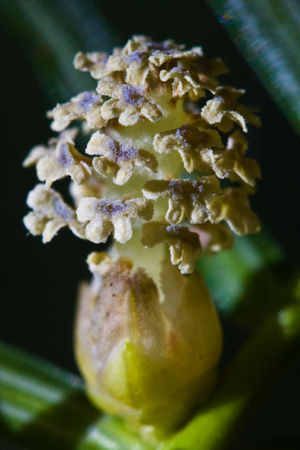
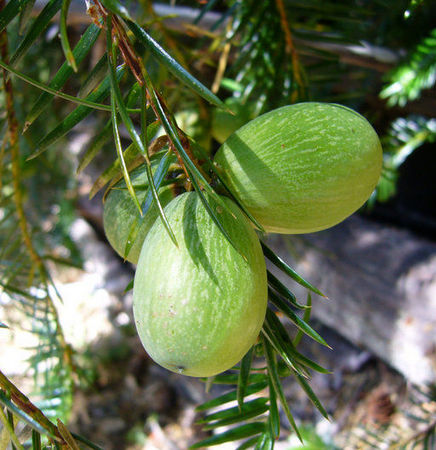
Male cones whitish. Flowers in June. Seeds with a seedcoat 2.5-3.5 cm. Aril light green, with purple veins. Seeds brown, oblong-ovoid, ripen in the second year in September-October.
Hardiness zone: 6b (-20-15°C)
Location/exposure: shade-tolerant, requires sites protected from sun and wind. Does not tolerate dry air.
Soil: Grows on any garden soil, not demanding in fertility, but more ornamental on calcareous and loamy soils.
Planting: soil mix – topsoil, peat and sand in proportions 3:2:2. Dig the planting hole to a depth of 70 cm, with the root collar at ground level.
Care: In hot, dry summers, to maintain ornamental appearance it is recommended to water the plant 1-2 times a month at a rate of 11-12 L per plant and to mist once every 2 weeks. In the first years after planting it is recommended to loosen the soil to a depth of 10-15 cm. Young trees should be covered for the winter with a 5-7 cm layer of peat and protected from sunscald with conifer boughs.
Pruning: only sanitary pruning is necessary.
Diseases and pests: practically unaffected.
Propagation: produces root and stump suckers. Propagated by seeds and cuttings.
Uses: practically not used. Seeds are edible, and oil is made from them. Can be used as specimen plantings in arboreta and parks.