
Indoor plants
Tolmiea
Tolmiea
A groundcover or trailing plant of the Saxifragaceae family. In the wild it is found across extensive forested areas in regions with a temperate climate. Tolmiea is a small bushy plant reaching only 25 cm in height. Pubescent bright green leaves on long petioles (up to 10 cm long) make it resemble a trailing plant. Offsets appear on mature leaves, by which the plant reproduces. During the flowering period inconspicuous small flowers appear.
Tolmiea menziesii
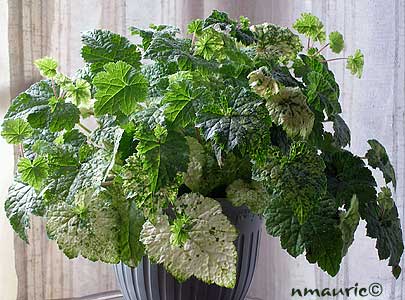
It occurs in highland areas of the Northern Hemisphere. Tolmiea menziesii is a leafy trailing shrub. Tolmiea forms a compact tuft of pubescent bright green leaves. Offsets form at the base of mature leaves. This is a widespread and very hardy houseplant, recommended for cultivation in cool, well-ventilated rooms. The petioles are long and the plant is fairly voluminous. It can be used as a hanging (ampelous) plant.
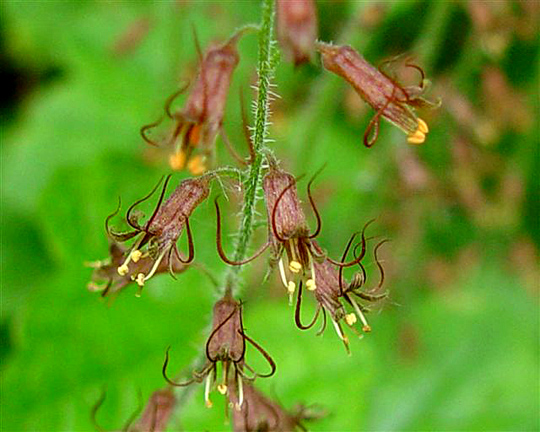
Ornamental all year round. Size 10-30 cm. Flowers are inconspicuous, greenish-white, and rarely appear under indoor conditions. Leaves are long-petiolate, cordate, 4-7.5 cm long, green, pubescent. Temperature range 13-20 °C. Lighting moderate, partial shade. Humidity high.
Care tips
Light: Prefers bright light, can also grow in shade.
Watering: Abundant; the soil should remain constantly moist. In winter reduce watering slightly, but the soil should not dry out completely.
Air humidity: The plant develops well under increased humidity, so regular misting is necessary or place the pot with the tolmiea in a shallow tray with wet pebbles. Leaves can be misted once a week, but lightly, as water trapped between the hairs can cause leaf rot.
Propagation: To propagate this plant, the offsets at the base of mature leaves should be covered with soil. They will root quickly; then cut the mother stem, dig up the shoot and plant it in a separate container.
Repotting: Each spring the plant should be repotted into a new soil mix consisting of two parts leaf mold, three parts turf soil and one part coarse sand. A drainage layer of small gravel should make up about 1/4 of the substrate.
Pests: Improper care can lead to infestation by scale insects, spider mites and thrips. Water on the leaves can cause rot spots. Warm, dry indoor air leads to the death of the plant.
Source: www.home-flowers.ru