
Indoor plants
Tillandsia cyanea
Tillandsia cyanea Linden ex K.Koch
Synonym: pink feather, Tillandsia ionantha, Pink Quil
Tillandsia cyanea (Tillandsia cyanea Linden ex K.Koch) – a species of epiphytic plants of the genus Tillandsia (Tillandsia) in the Bromeliaceae family (Bromeliaceae). The species was first described in 1867 in «Wochenschr. Vereines Beförd. Gartenbaues Konigl. Preuss. Staaten 10: 140» by Belgian naturalist Jean Jules Linden and German botanist-dendrologist Karl Heinrich Koch.
Native to Ecuador and Peru. Grows in humid forests. Found in the mountains up to 850 m above sea level.
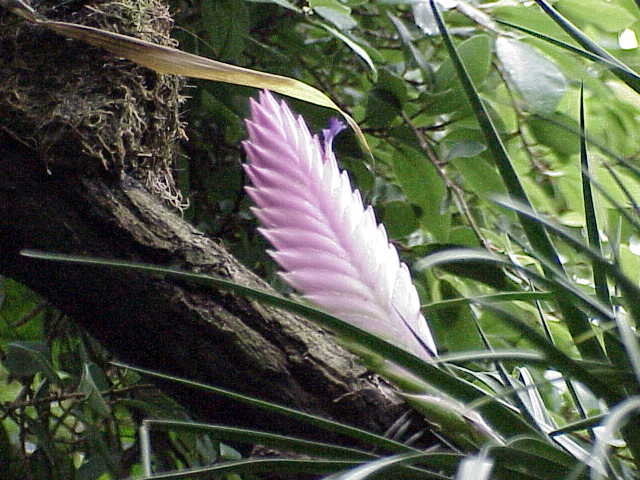
Is a small epiphytic plant forming a rosette. Reaches 30 cm in height and in diameter.
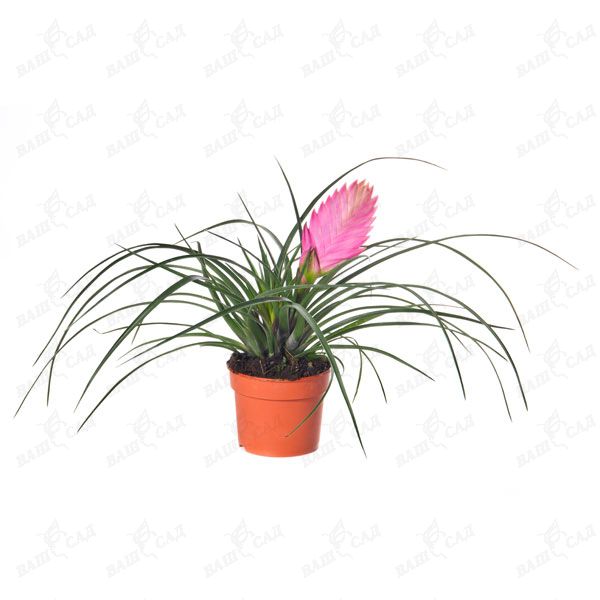
Tillandsia Cyanea ‘Anita’
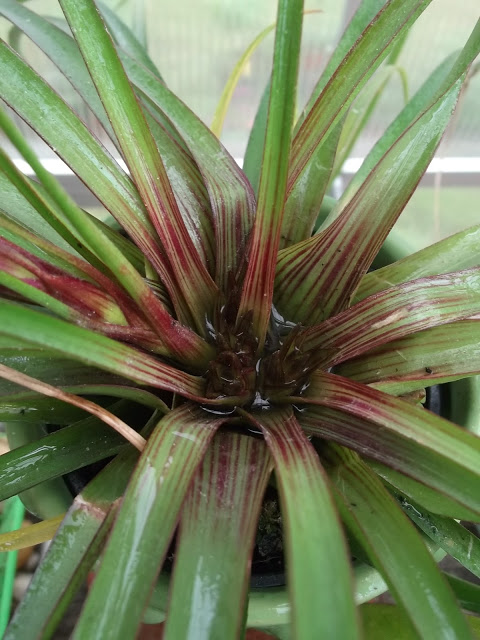
Leaves linear, forming a rosette, up to 30 cm long and up to 1 cm wide, green with a reddish tint, the leaf surface covered with fine scales by which the plant absorbs moisture from the air.
Flower stalks up to 5-8 cm long, curved or straight, emerge from the center of the rosette, and remain on the plant for up to 2 months. Flowers are gathered in a dense, broad and flat elliptical spike 10-15 cm long, containing up to 20 flowers, of which 1-2 open at a time. Bracts are arranged in two rows, tightly overlapping each other in a herringbone pattern, ranging in color from light green to pink and red, up to 5 cm long, completely hiding the sepals. Petals are reflexed, rhombic in shape, and a delicate violet color. Usually flowers in the summer-autumn period, however hybrids flower regardless of the season.
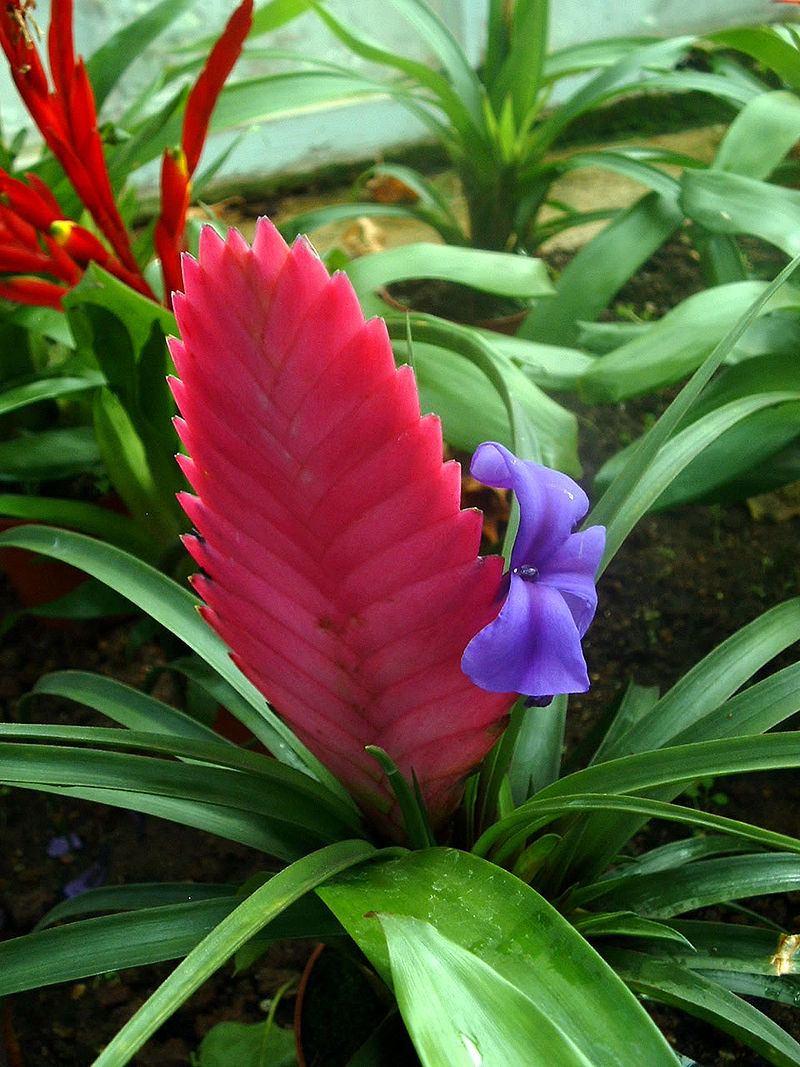
Cultivars: Tillandsia Cyanea ‘Paradise’, Tillandsia Cyanea ‘Anita’
Hardiness zone: 9-11 (+15°C).
Temperature: heat-loving, therefore in winter keep at 18-22 °C, minimum winter temperature 15 °C, in summer not below 17 °C.
Light: Prefers a bright location without direct sunlight. Grows on north-facing windowsills. In autumn and winter it can be moved to a brighter place – an east- or west-facing window.
Watering: water into the substrate moderately in summer, pouring water into the center of the rosette and moistening the leaves so that the substrate remains slightly moist at all times. In winter these plants are watered somewhat less often – allowing the substrate to dry out.
Fertilizers: best to feed with foliar (non-root) feedings, i.e. by spraying the leaves. Plants potted in containers receive nutrients from the soil, so during active growth they are fed with a liquid houseplant fertilizer at half the recommended dose every two weeks.
Humidity: Tillandsias require high air humidity, not less than 60%. Spray only with soft, warm water.
Repotting: repot approximately every two years. Use small pots just large enough to accommodate the root system and a little substrate consisting of one part leaf mold, one part peat and one part chopped sphagnum moss (or a special substrate for bromeliads or orchids).
Propagation: by seeds in spring or by separating side shoots.
Diseases and pests: may be affected by fungal and viral diseases.