
Deciduous trees
Linden
Tília
Linden (Tilia L.) – a genus of woody plants in the mallow family (Malvaceae). The genus was first described by Carl Linnaeus in 1753 in Species Plantarum 1: 514. In cultivation since the mid-18th century.
Occurs in the temperate and subtropical zones of the Northern Hemisphere. The greatest number of species is found in Southeast Asia. Found in warm and fairly humid regions. The natural range — the entire temperate zone up to 60-66° N.
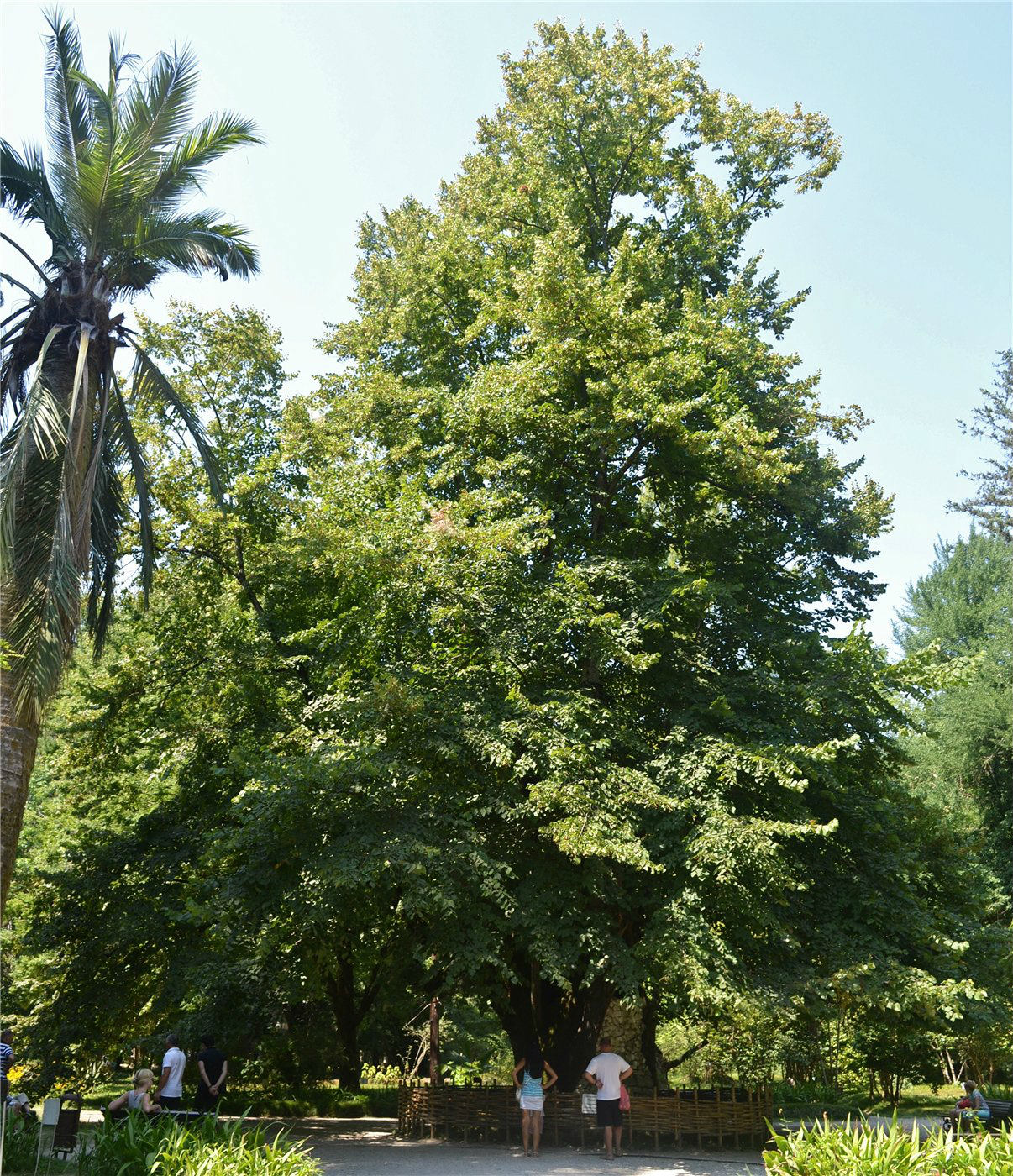
Begonia-leaved linden. Author N. Moross
They are large or medium-sized deciduous trees. Growth is slow for the first five years, then rapid, reaching maximum size by about one hundred years. Average lifespan is 150-200 years, sometimes living up to 500-600 years. Root system powerful, deep, with a well-developed taproot. Crown broad, spreading, oval. Bark silvery-gray to gray-brown, in old trees deeply fissured. Young shoots glossy.
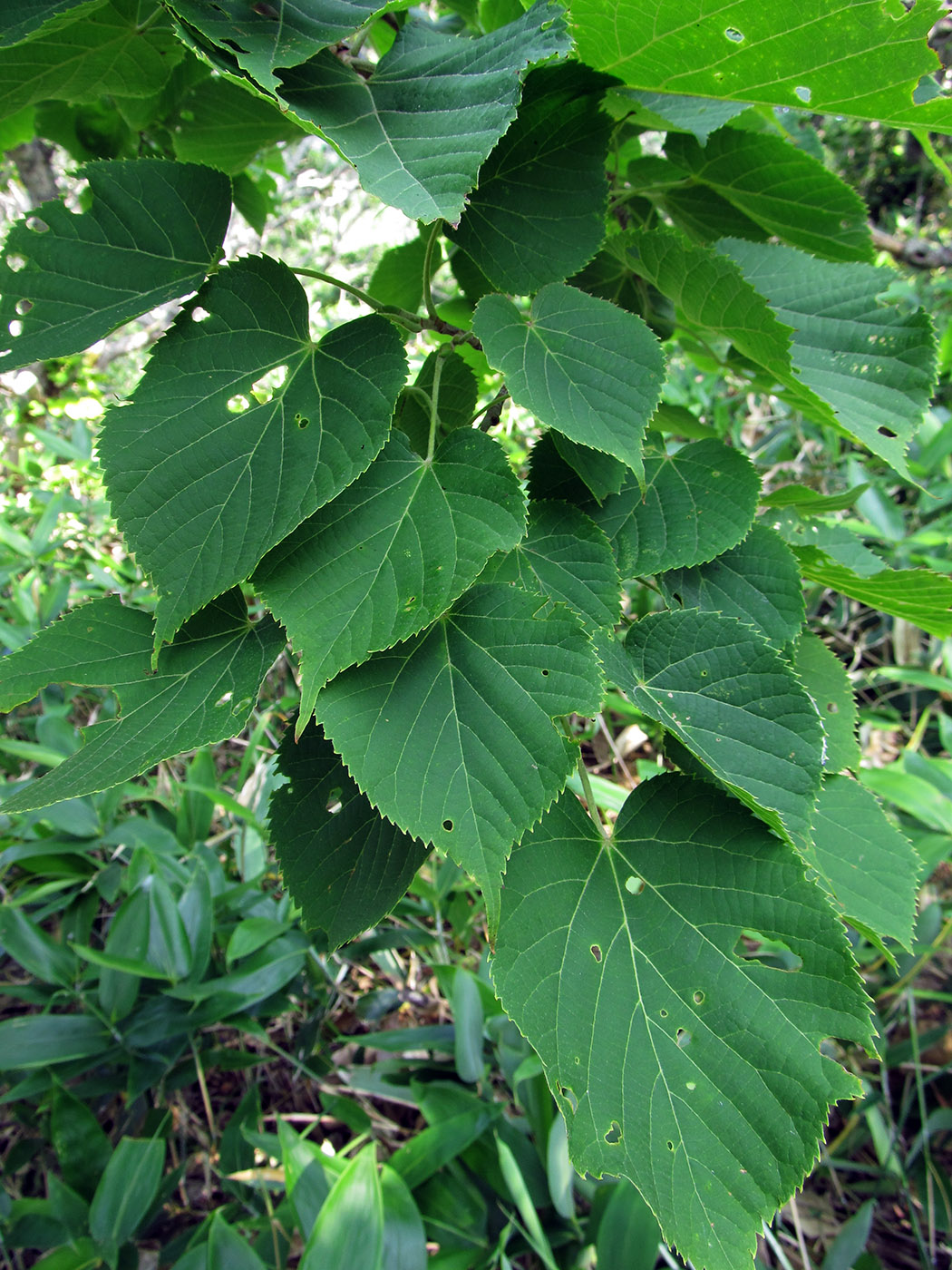
Maximowicz's linden. Author Y. Kopylov-Guskov
Leaves alternate, arranged in two ranks, simple, rounded-ovate in shape, apex pointed or acute, base emarginate, asymmetric, cordate, margins serrate, often with tufts of hairs in the axils of the veins on the underside, turning yellow in autumn. When leaves unfold there are stipules which fall quickly. Extrafloral nectaries are often present at the base of the leaf.
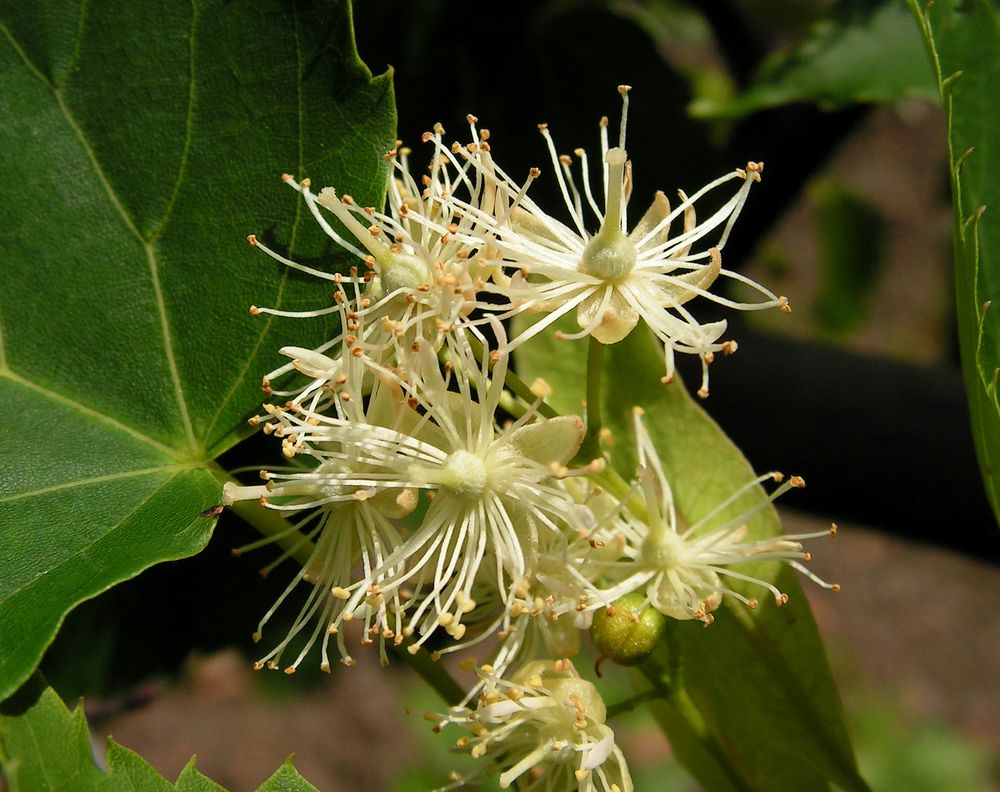
Amur linden. Author A. Baryshenko
Flowers bisexual, actinomorphic, fragrant, creamy-white or yellowish, numerous (up to 40) or grouped in several-flowered pendent or erect semiflat umbels, located on leafy shoots of the current year. Attached to the peduncle of the cymose inflorescences is a long, narrow, thin-membranous, yellowish-green bract, often united with it at the lower part. Staminodes 5, they are petaloid or absent. Stamens numerous, free or united into 4-5 bundles. Carpels 5. Flowers in summer, more often in July-August, usually for about 2-3 weeks.
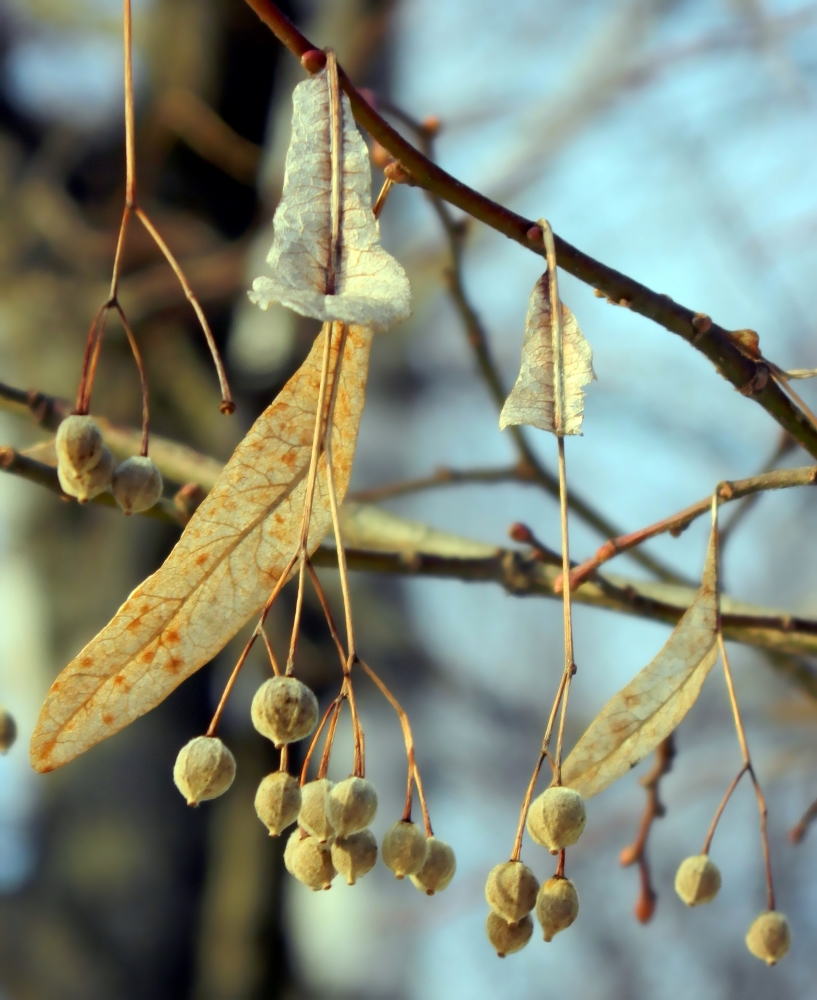
Large-leaved linden. Author E. Spivakovsky
Fruits dry, nut-like, single-seeded, less often 2-3-seeded, with a dense hairy covering. Begins to fruit at 10-15 years when solitary and at 25-30 years in plantations.
Species: includes about 45 species.
- Tilia americana L. - American linden, smooth, black
- Tilia amurensis Rupr. - Amur linden
- Tilia caucasica Rupr. - Caucasian linden
- Tilia cordata Mill. - Heart-leaved linden, small-leaved, small-flowered, elm-leaved
- Tilia dasystyla Steven non Rehd. - Hairy-styled linden, begonia-leaved
- Tilia x euchlora K.Koch. - Dark-green linden, Crimean linden
- Tilia henryana Szyszyl. - Henry's linden
- Tilia japonica (Miq.) Simonkai. - Japanese linden
- Tilia mandshurica Rupr.et Maxim. - Manchurian linden
- Tilia maximowicziana Shiras. - Maximowicz's linden
- Tilia mongolica Maxim. - Mongolian linden
- Tilia x petiolaris D.C. - Long-petioled linden
- Tilia platyphyllos Scop. - Broad-leaved linden, large-leaved
- Tilia tomentosa Moench. - Felted linden, white, silver
- Tilia x vulgaris Hayne. - Common linden, European, intermediate
Hybrids and cultivars:
- Tilia × europaea – linden of Europe (typical species)
- Tilia × euchlora — colored linden
- Tilia × petiolaris — stalked linden
Hardiness zone: 3a (-40°C).
Location: Sun-loving, but shade-tolerant. Flowers only in sufficiently illuminated places. Moisture-loving, not drought-resistant; in dry hot summers usually responds with early leaf fall. Tolerates urban conditions satisfactorily.
Soil: Tolerates short-term flooding and a high groundwater table. Demanding of fertility, does not tolerate acidic or saline soils. Most decorative and stable on sufficiently moist, well-drained, light, fertile sandy loams and loams with acidity pH=6.5-7.5.
Planting: Soil mix – leaf mould, humus, sand in ratio 1:2:2.
Care: In dry periods of summer additional watering is necessary at the rate of one bucket per square meter of crown projection.
Pruning: Some species tolerate trimming and pruning well. Hedge trimming is done in the first year in spring and at the end of summer; in subsequent years the hedge is trimmed 4-5 times per season.
Pests: gall midge Dasyneura veronicae, mites Anceria anceps.
Diseases: raspberry ring spot, mycorrhiza.
Propagation: By seed, less often by summer cuttings, sometimes by root suckers, grafting, shoots from a stump or rooting of lower branches that often hang to the ground.
Uses: Beautiful large deciduous trees with an attractive habit, decorative foliage and fragrant flowers. Used for solitary plantings, in small groups in parks, along alleys, for landscaping gardens and streets, for creating hedges or narrow screens and partitions. Excellent nectar plant. Produces valuable, soft but durable wood.