Flowering shrubs
Stewartia
Stewartia или Stuartia
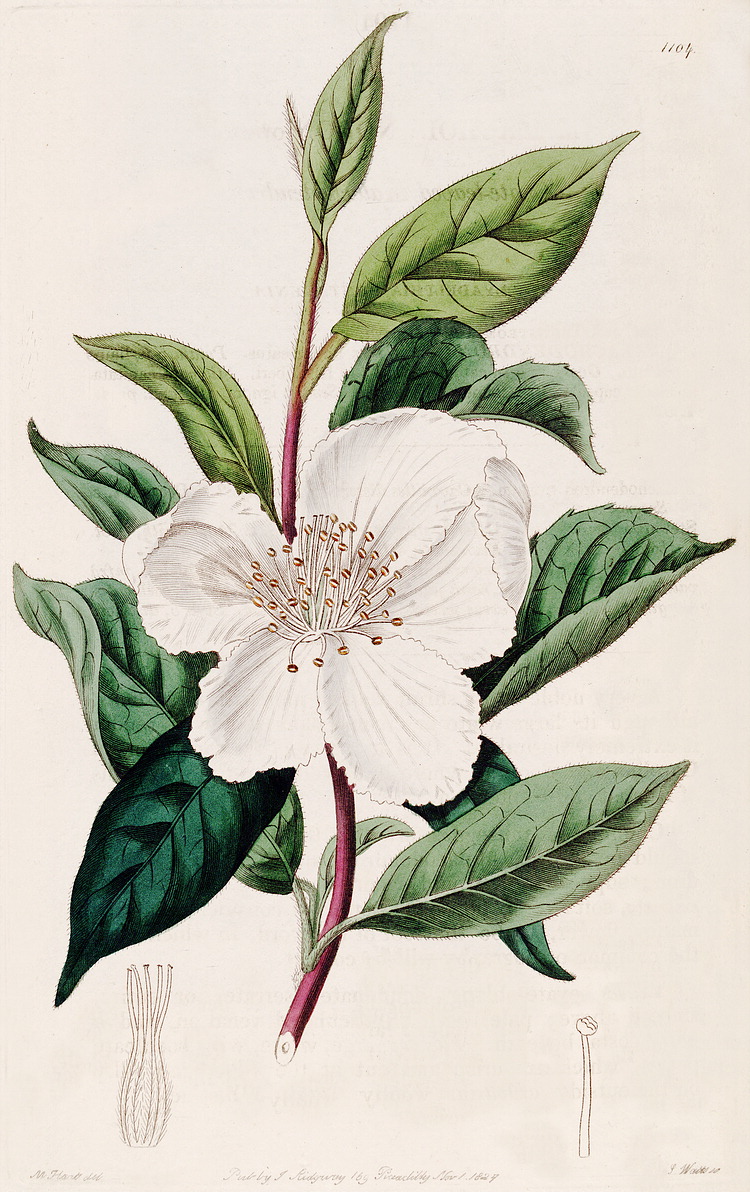
Stewartia (lat. Stewartia or Stuartia) is a genus comprising 8-20 species of flowering plants in the tea family (Theaceae), relatives of the camellia. The genus was described in 1753 by Carl Linnaeus and named in honor of John Stuart (John Stuart).
Most species are native to East Asia, China, and Japan. They occur in Korea, Laos, Myanmar, Thailand and Vietnam, and in the southeastern United States, from Virginia and Kentucky in the north to Florida and Louisiana in the south.
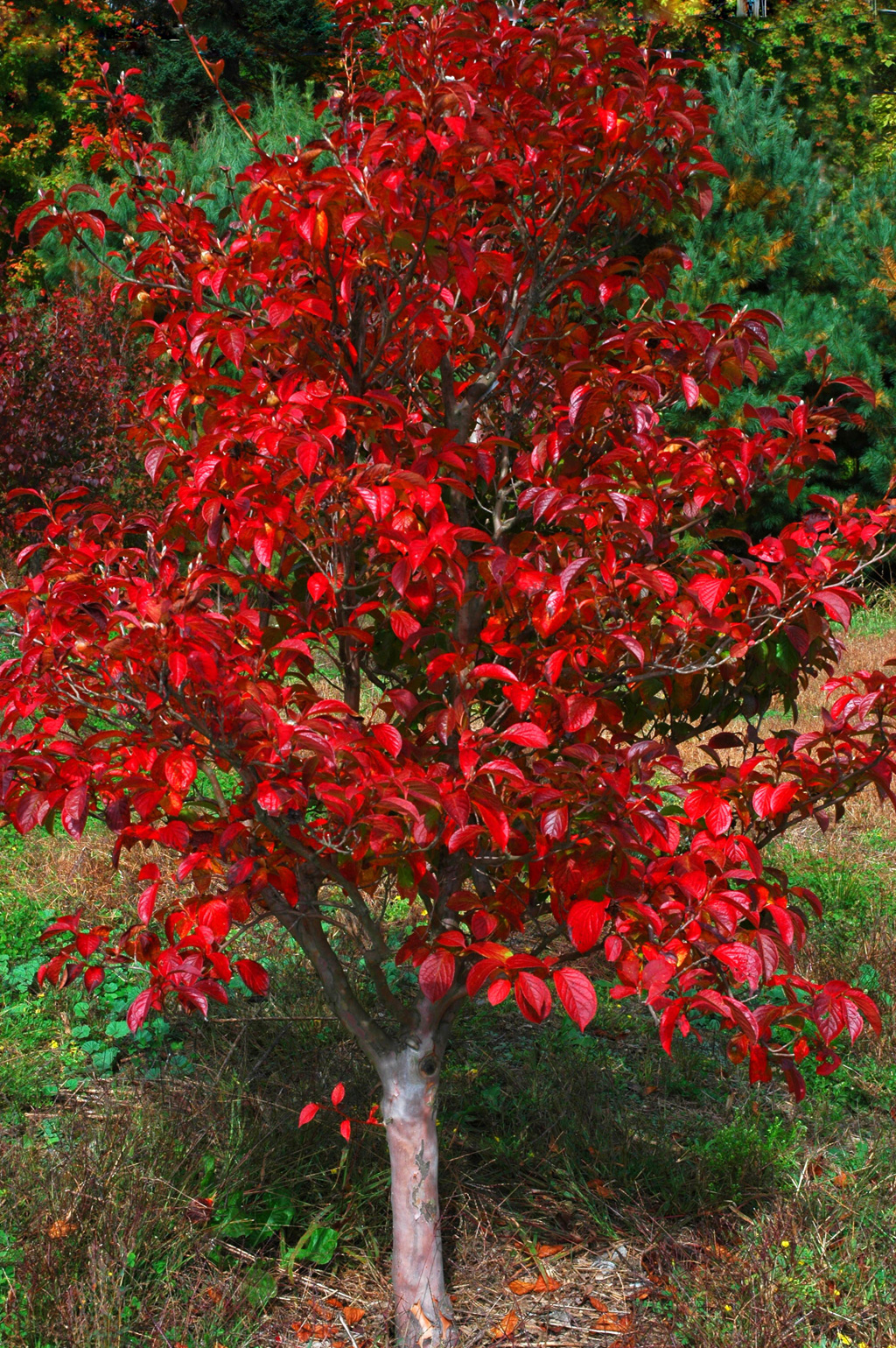
They are shrubs or trees, mostly deciduous, although some species (for example, Stewartia pteropetiolata) are evergreen and form genetically distinct groups and are split by some botanists into a separate genus Hartia (Hartia).
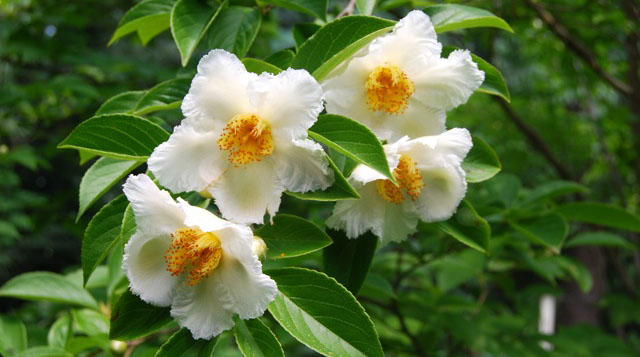
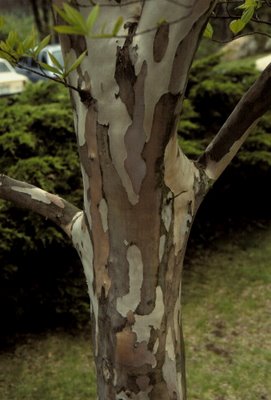
Asian species are shrubs and trees growing from 3 to 20 m in height, while the American species are shrubs 3-5 m high, less often becoming small trees. The bark is very distinctive, ranging from smooth orange to yellow-brown and peeling. Leaves are simple, toothed, 3-14 cm long, generally glossy, and arranged alternately.
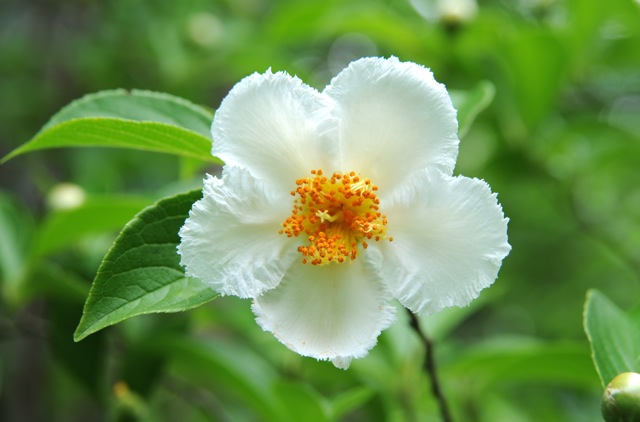
Flowers are large and conspicuous, 3-11 cm in diameter, with 5 (sometimes 6-8) white petals; they bloom in mid or late summer. The fruit is a dry five-valved capsule with 1-4 seeds in each chamber.
Plants are adapted to acidic soils and grow poorly on alkaline or other calcium-rich soils. They also have high requirements for watering and soil moisture and tolerate drought poorly.
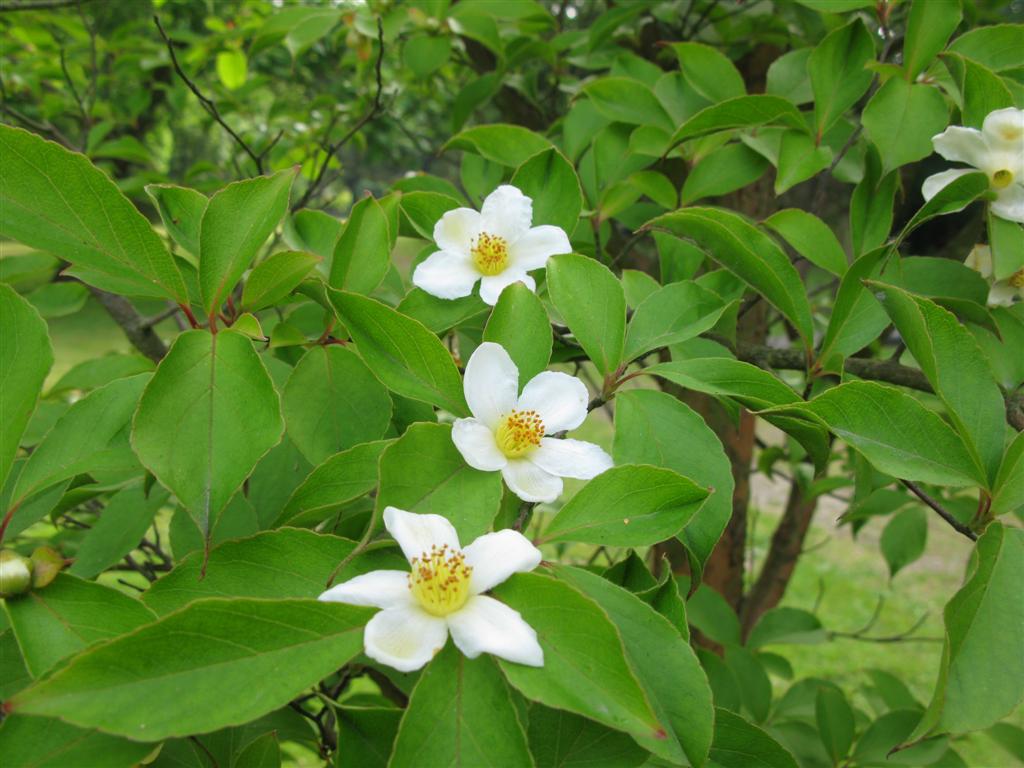
Location: sunny or light partial shade. A shaded site is preferable, as the plant tolerates heat poorly.
Soil: requires acidic or slightly acidic soils. Grows well on fertile substrates, does not tolerate lime or high calcium content in the soil.
Propagation: by seed, cuttings, layering.
Zone: 6-9