
Flowering shrubs
Stachyurus
Stachyurus
Stachyurus (lat. Stachyurus) — a small genus of plants of the monotypic family Stachyuraceae (Stachyurus), comprising about 10 species from Southeast Asia; the name comes from the Greek words stachys — spike and ura — tail, because of the rather fanciful resemblance of the inflorescences to a tail.
The native range is Japan, continental China, the eastern Himalayas, northern Burma, Indochina and the island of Taiwan.
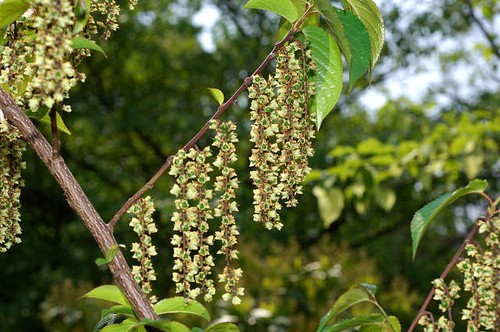
Only one species — the Himalayan Stachyurus (S. himalaicus) — is a small tree; all other species are shrubs 1.5—3 m, rarely up to 5 m tall. They are deciduous or evergreen, with alternate leaves of various shapes — from lanceolate to broadly elliptic, with characteristic venation (sometimes with secondary veins parallel to the midrib along the leaf margin). Small flowers are gathered in pendulous or erect axillary racemes or spikes that appear on last year’s shoots before leaf-out. At flowering, the leaves at the base of the inflorescences either remain (in species of section Callosurus) or fall early (section Gymnosurus).
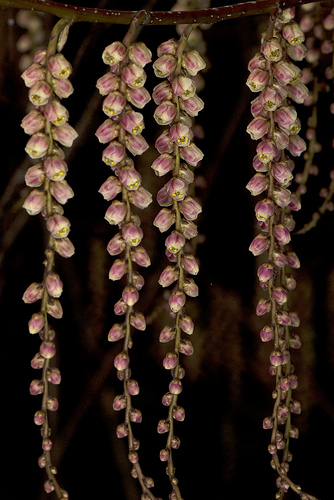
The genus Stachyurus is characterized by very small (about 8 mm long) bisexual or polygamous four-part flowers with two bracts fused at the base. A similar flower structure can be found in the genera Scolopia and Pseudoscolopia of the family Flacourtiaceae. However, the stamens in those genera are numerous, whereas in Stachyurus there are 8.
The ovary in Stachyurus is superior, one-celled. The fruits are berry-like, with a leathery pericarp, globose, usually 7—8 mm in diameter, rarely 18—20 mm. Seeds are numerous, very small, with a fleshy aril and abundant endosperm.
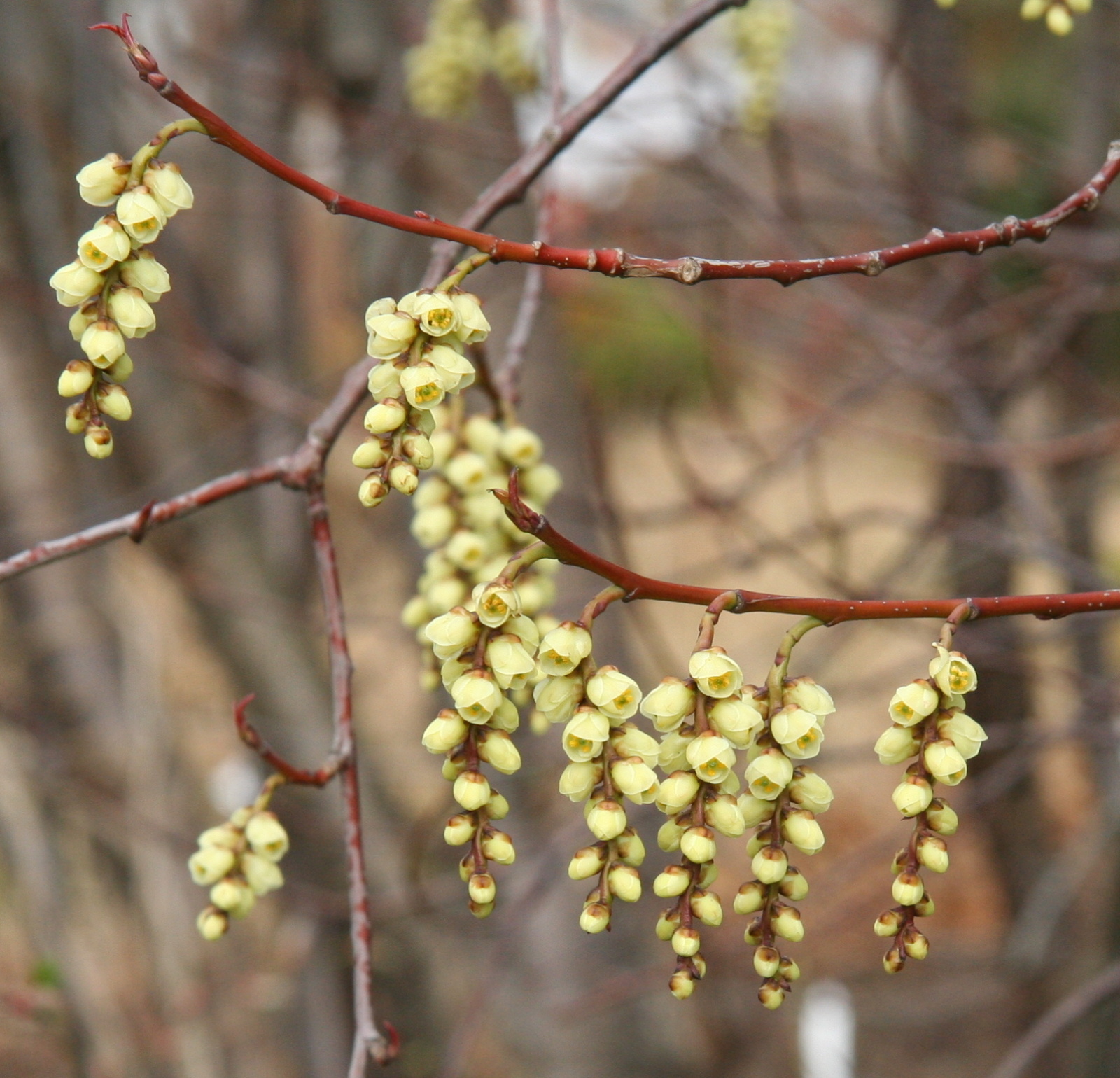
In Japan, the early Stachyurus (S. рrаесох) is often planted near houses and in parks; it flowers in March—April before the leaves open, has pretty yellowish flowers and bright green leaves 7—14 cm long, and fruits in July—August. It is found in cultivation on the Black Sea coast of the Caucasus, where it flowers and fruits annually.
Location: prefers a shaded spot protected from cold, drying winds, but will also grow in full sun provided moisture is maintained.
Soil: prefers moist, well-drained, humus-rich, fertile soils of acidic or neutral reaction.
Propagation: by seed (sown in autumn in cold frames) and by semi-ripe summer cuttings with a "heel".
Uses: pruning is not obligatory. It is best done after flowering by cutting spent shoots back to mature wood. Severe frosts can damage flower buds. Usually not susceptible to diseases and pests.