
Deciduous shrubs
Uda willow
Salix udensis
Synonyms: Salix udensis Trautv. & C.A. Mey, ива парамуширская, ива сахалинская, Salix fulcrata Andersson p.p., Salix mezereoides E.L. Wolf, Salix oblongifolia Trautv. & C.A. Mey., Salix opaca Andersson ex Seemen, Salix paramushirensis Kudo, Salix sachalinensis F. Schmidt, Salix siuzevii Seemen.
Uda willow (Salix udensis) – a species of the genus Salix (willow) in the Salicaceae family. Naturally occurs in Yakutia, the Russian Far East, the northeastern regions of China and Japan. Found on riverbanks and floodplains, in riparian forests, on plains and in the lower mountain belt, less often in open coniferous forests, at the edges of sedge bogs.
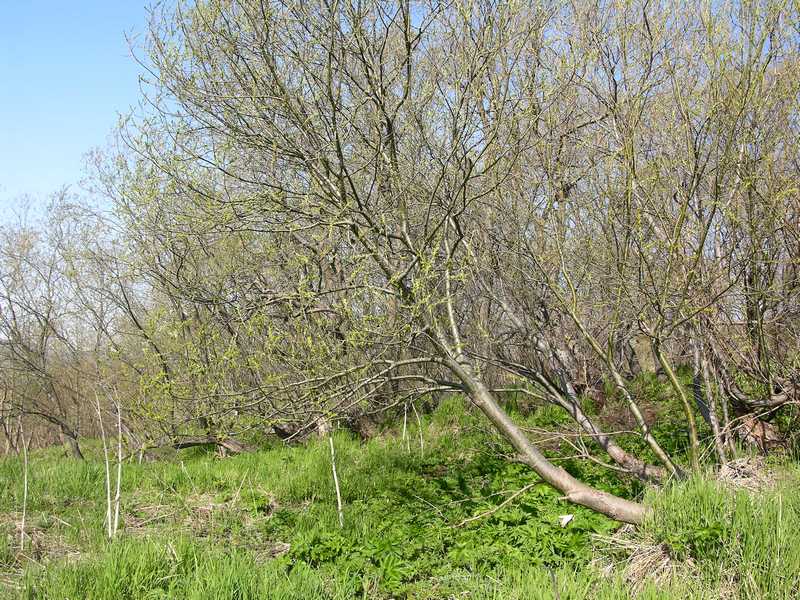
It is a tall shrub or small tree up to 6 m in height. Crown broad, dense, rounded. Branches thin, compact, reddish-brown, straightly ascending. Shoots yellowish, densely and shortly pubescent, hoary, later becoming glabrous, brown or reddish, shiny.
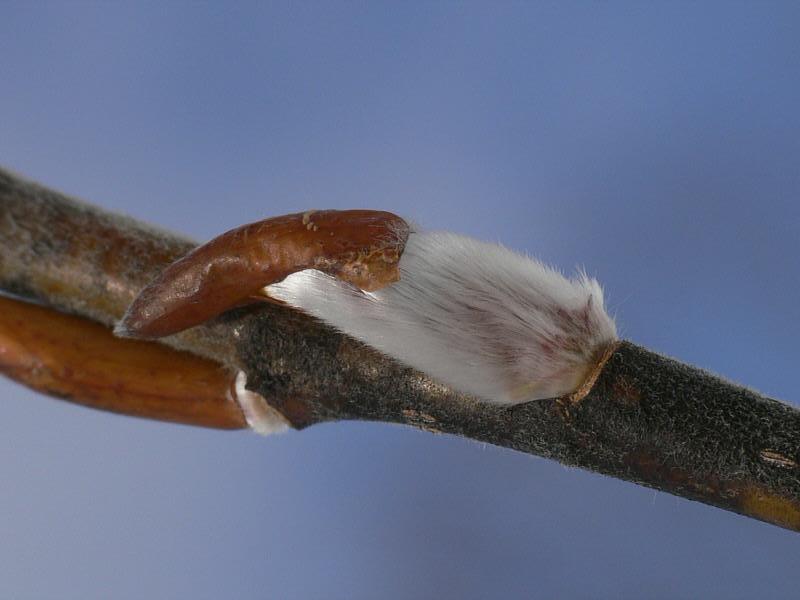
Buds ovoid, blunt, appressed, light brown, glabrous. Stipules small, linear, soon deciduous.
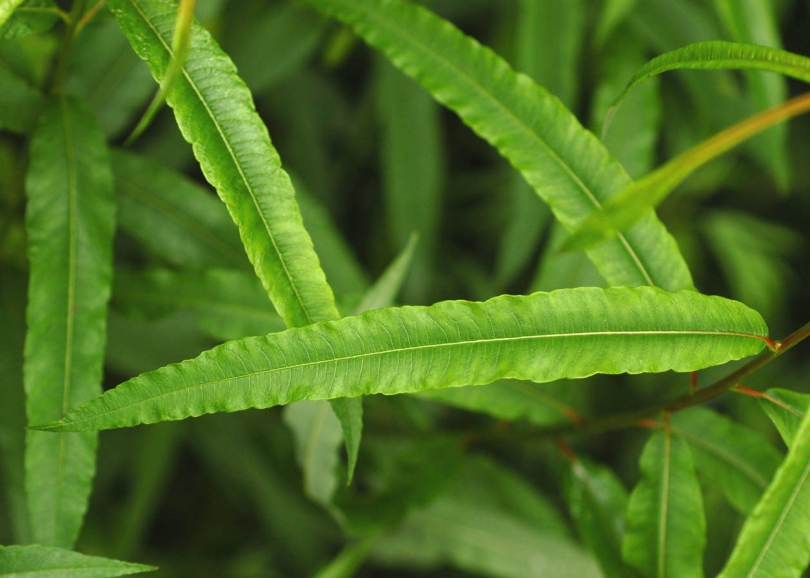
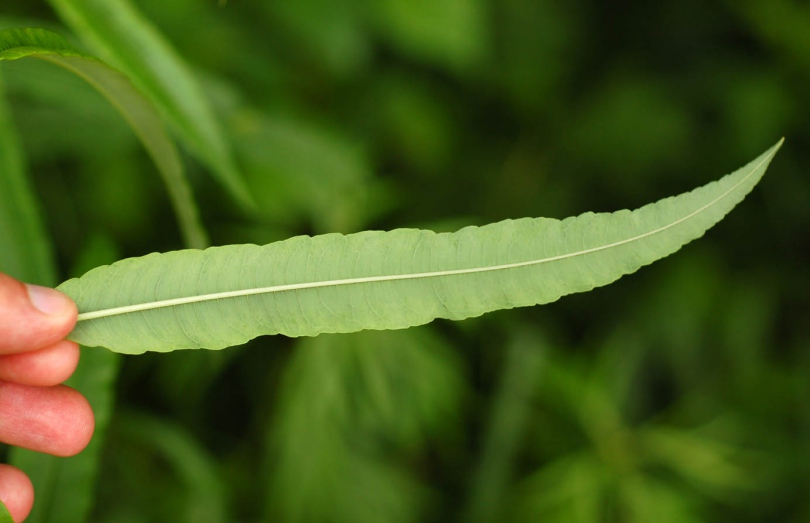
Leaves at emergence silky beneath, above sparsely ciliate, with the upper surface revolute. Young leaves elongate with a long-tapering base, shortly acuminate, less often obtuse at the tip, 2.5-4 cm long and up to 1 cm wide, with a sharp or finely serrate margin, with the margin revolute or flat, dark green and glabrous above, bluish-green beneath with appressed silvery or silky pubescence, with prominent lateral veins. Petioles whitish, up to 0.7 cm long, thin.
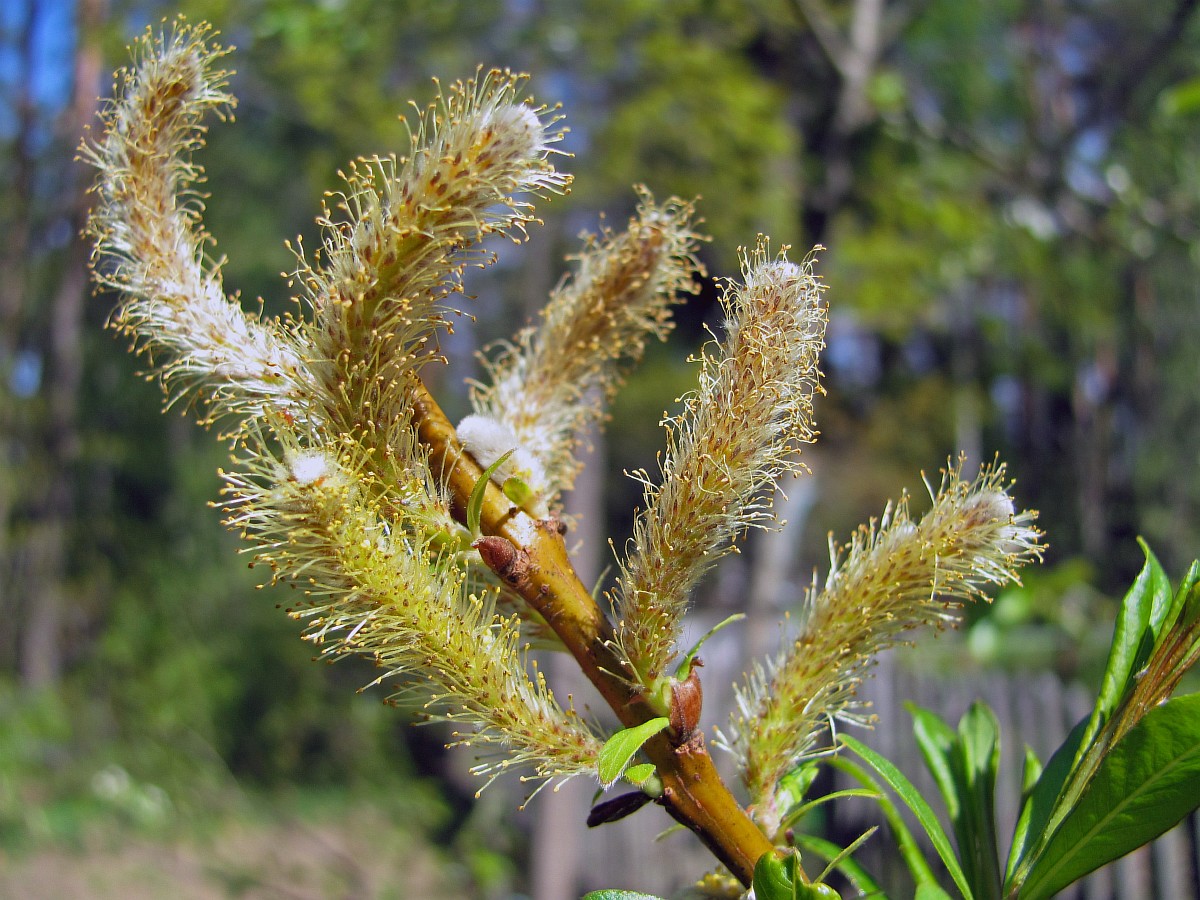 | 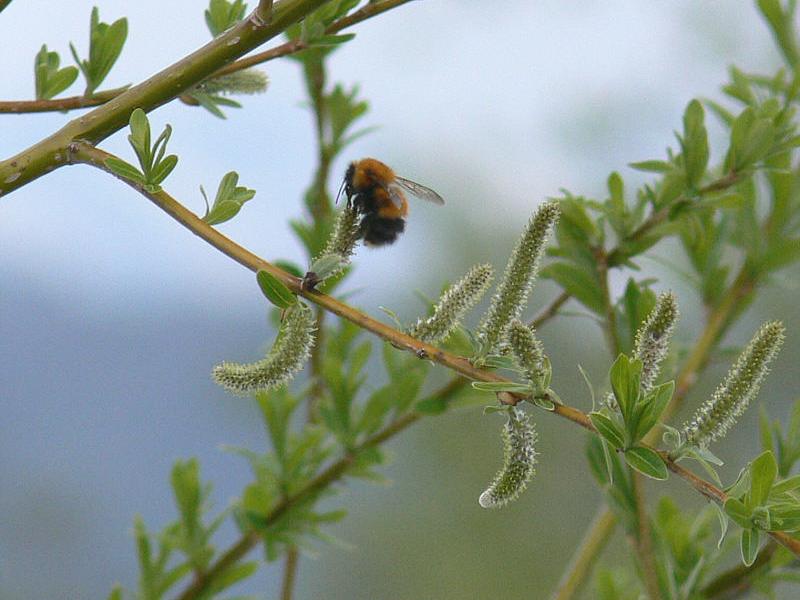 |
| Male catkins | Female catkins |
Flowers in May, simultaneously with leaf emergence. Catkins almost sessile, with 2 small deciduous leaves, cylindrical, on a short peduncle, at first dense, later with inflated, tightly seated ovaries. Male catkins 2-3 cm long, 0.5-0.6 cm in diameter, golden-yellow when in bloom. Female catkins larger. Bracts brown or dark at the tip, shortly pubescent, obtuse, up to 2 mm long, acuminate, ovate-lanceolate. Ovary up to 2 mm long, obtuse at the apex, brownish or greenish. Style up to 1 mm long, entire. Stigmas bifid, up to 0.7 mm long, yellow, with linear divergent lobes.
Fruits – dry capsules brown in color, up to 5 mm long, on a short stalk.
Hybrids: with Salix caprea L. – Salix × koidzumii Kimura
Cultivars: Salix udensis 'Sekka'
Hardiness zone: 5a (-29°C).
Location: light-loving but tolerates partial shade. Grows well in urban conditions. Not demanding regarding growing conditions. Requires a site sheltered from strong winds.
Soil: not demanding, grows on any sufficiently moist soil with good drainage. Prefers fertile soil, although it can grow on poor and dry soils.
Planting: Best planted in spring before budburst. When establishing a willow stand («ivnyak» - willow thicket) it is recommended to cultivate the soil in autumn to a depth of 30-80 cm, depending on its fertility and dryness. The top organic layer should be turned upside down. The recommended spacing between seedlings should be at least 0.6-2 m, depending on the species. Planting depth – 40-70 cm. Transplanting is recommended up to 3-4 years of age. On heavy soils, drainage of crushed stone or sand in a layer 20-30 cm thick is recommended.
Pruning: tolerates trimming and pruning well.
Care: practically requires no maintenance.
Propagation: propagated by summer and hardwood cuttings.
Pests: longhorn beetles, willow leaf beetle (Lochmaea caprea), Crepidodera aurata, larvae of hymenopterans (Trichiosoma sibiricum), lepidopteran caterpillars (Acleris cristana, Teleiodes notatella, etc.).
Diseases: affected by fungal diseases – fungi of the genera Melampsora, Rhytisma, Erysiphe, Phytophthora ramorum.
Use: used in rock gardens and rockeries, as small groups on lawns, and in combination with other low or tall shrubs. Looks good in solitary and group plantings near water bodies or in areas with excessive moisture.