
Deciduous shrubs
Far Eastern willow
Salix subopposita
Synonyms: opposite-leaved willow, S. repens var. Subopposita (Miq.) Seemen, S. sibirica var. subopposita (Miq.) Schneid., Salix repens var. subopposita (Miq.) Seem.
Far Eastern willow (Salix subopposita) – a species of flowering plants in the genus Salix (willow) of the family Salicaceae. Naturally occurs in Japan (the provinces Honshu and Kyushu) and Korea. The species was first described by Friedrich Anton Wilhelm Miquel. Often regarded as a variety of S. Repens, although most closely related to S. Rosmarinifolia.
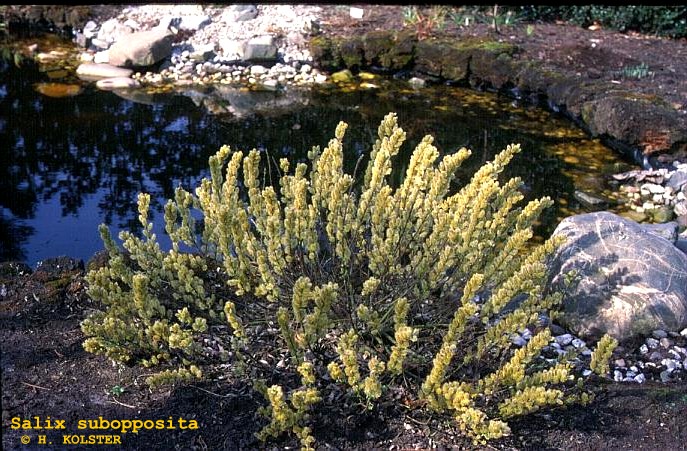
It is a compact, low-growing deciduous shrub 0.3-0.5 m in height. Crown dense, spherical. Stems thin, erect, densely covered with hairs, later becoming brown.
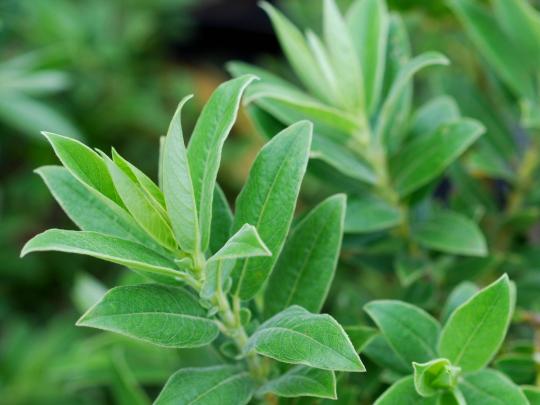
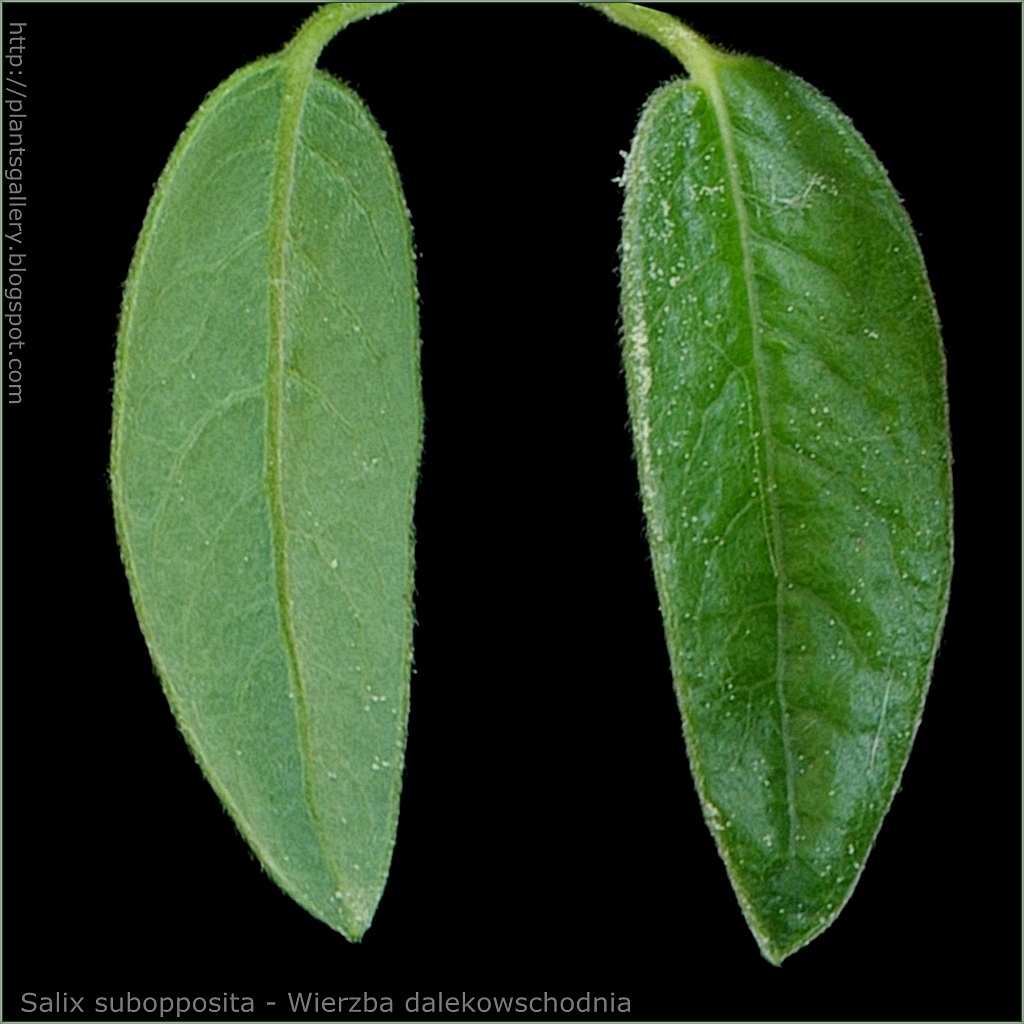
Leaves oblong or lanceolate, 1-3 cm long and 0.5-1 cm wide, with an acute apex, entire margins, hairy-silky, later blue-green, glabrous above and with yellow-gray hairs beneath. Stipules ovate, petiole up to 5 mm long. Leaves densely arranged, in almost opposite pairs, which gives an appearance similar to Hebe.
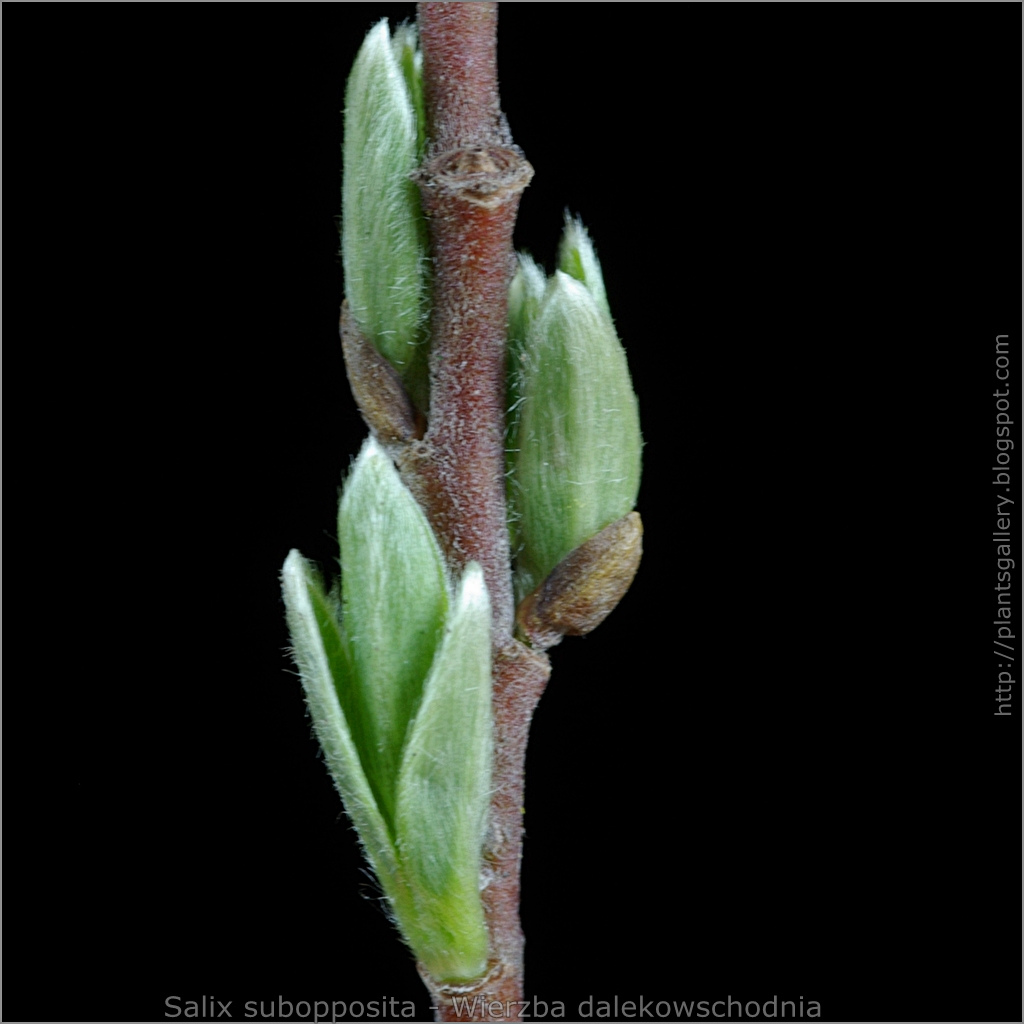
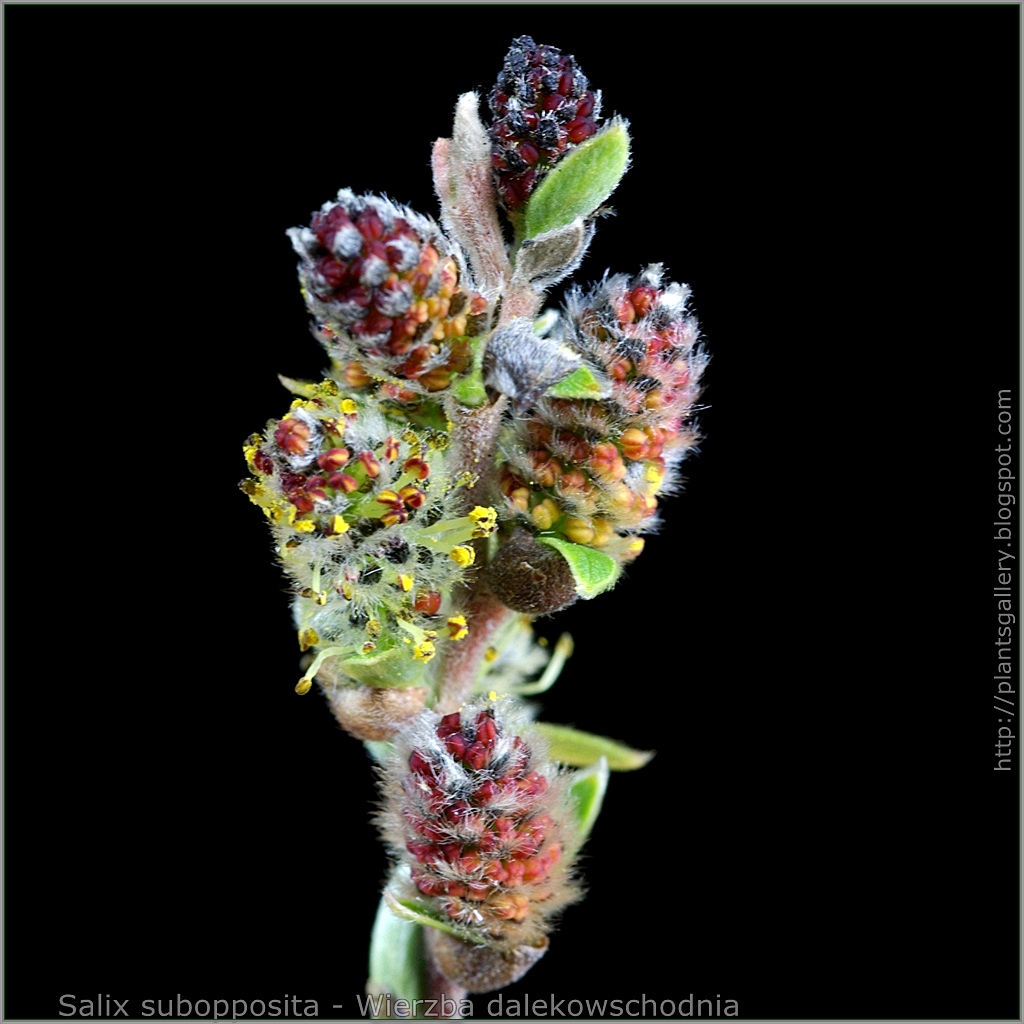
Flowers before leaf burst, in late April – early May. Male catkins cylindrical or oval, 1.5-2.5 cm long, yellow-red, scales covered with silky hairs; female catkins up to 2 cm long.
Hardiness zone: 6b (-23°C).
Exposure: sun-loving. Grows well in urban conditions. Not demanding regarding growing conditions. Requires a site protected from strong winds.
Soil: not particular about soil, grows in any sufficiently moist soil. Prefers sandy loam, sandy, rocky, loamy (clay) and sandy-clay soils.
Planting: Planting is best carried out in spring before bud burst. When establishing a "willow grove" (stands of willow) it is recommended to cultivate the soil in autumn to a depth of 30-80 cm, depending on its fertility and dryness. The top vegetative layer should be turned upside down. The recommended spacing between seedlings should be no less than 0.6-2 m, depending on the species. Planting depth – 40-70 cm. Transplanting is recommended up to 3-4 years. On heavy soils a drainage layer of gravel or sand 20-30 cm thick is recommended.
Pruning: tolerates trimming and pruning well. Regular pruning of dead shoots and shaping of the trunk and crown is recommended.
Care: practically requires no maintenance.
Propagation: propagated by seeds, by layering and by cuttings. Often propagated by grafting onto other species.
Pests: longhorn beetles, willow leaf beetle (Lochmaea caprea), Crepidodera aurata, sawfly larvae (Trichiosoma sibiricum), lepidopteran caterpillars (Acleris cristana, Teleiodes notatella, etc.).
Diseases: affected by fungal diseases – fungi of the genera Melampsora, Rhytisma, Erysiphe, Phytophthora ramorum.
Use: an attractive species of deciduous trees. Widely used in solitary and group plantings, for decorating ponds, in compositions, on rock gardens and alpine plantings, and for creating Japanese-style gardens.