
Flowers for the garden
Rudbeckia
Rudbeckia
Rudbeckia (lat. Rudbéckia) — a genus of annual, biennial and perennial herbaceous plants of the family Asteraceae (Compositae), comprising about 40 species.
The natural distribution area of species of this genus is in North America; many species grow in prairies. Some species are cultivated as ornamentals, often escape cultivation, and are found in Europe and Africa.
The scientific name of the genus was given by Carl Linnaeus in honor of the Swedish botanists Olof Rudbeck the Elder and his son Olof Rudbeck the Younger.
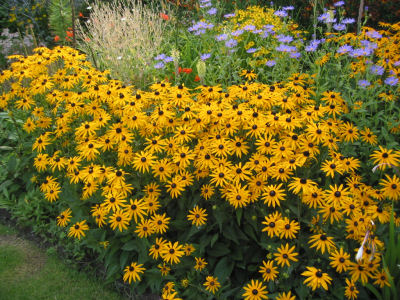
Perennials, less often annual or biennial, herbaceous rhizomatous plants. Stems erect, tall, simple or branching, stiffly pubescent, leafy, from 50 to 120 cm high. Leaves entire or pinnately dissected, oval or ovate, lower leaves on long petioles, upper leaves sessile.
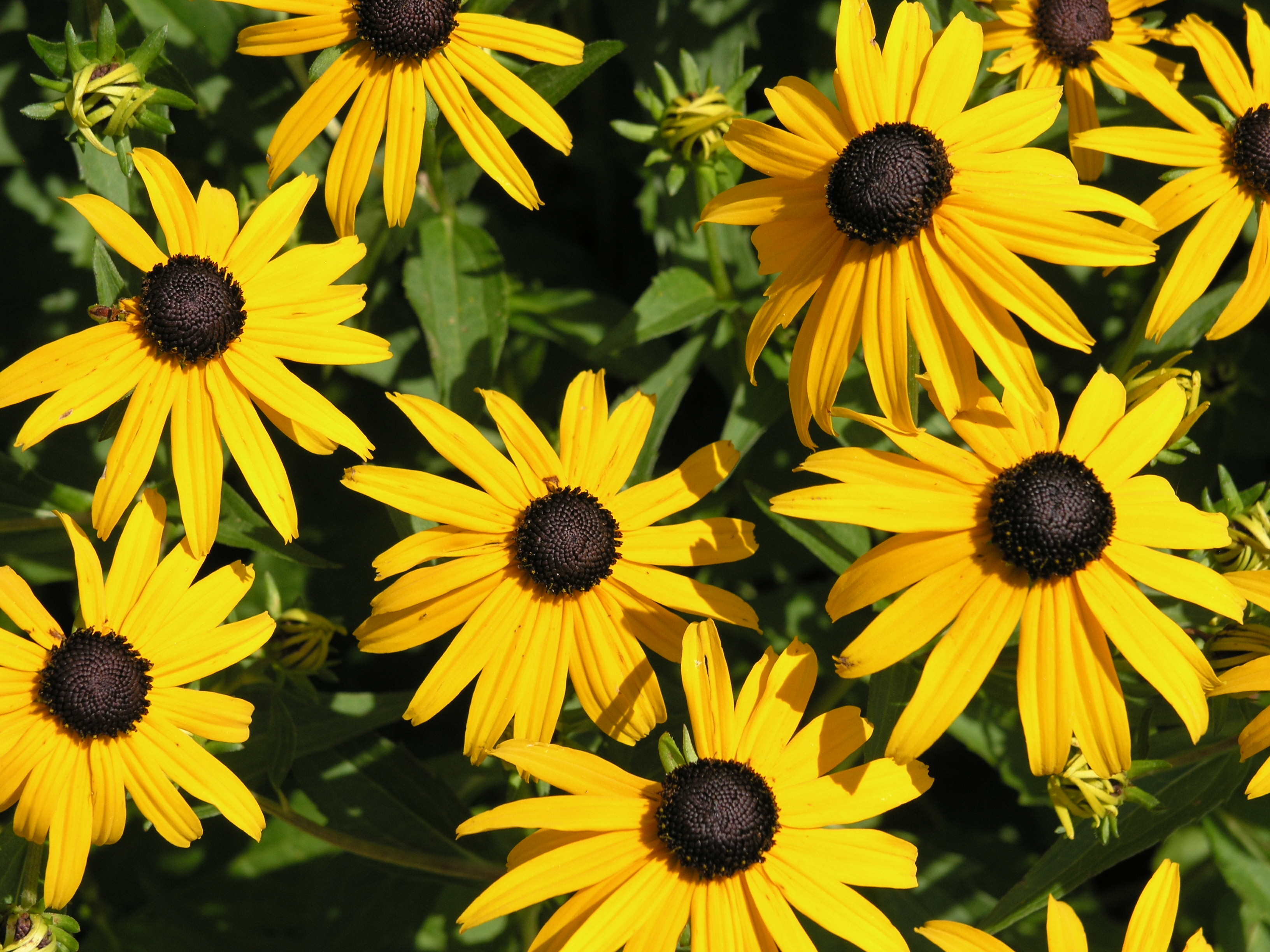
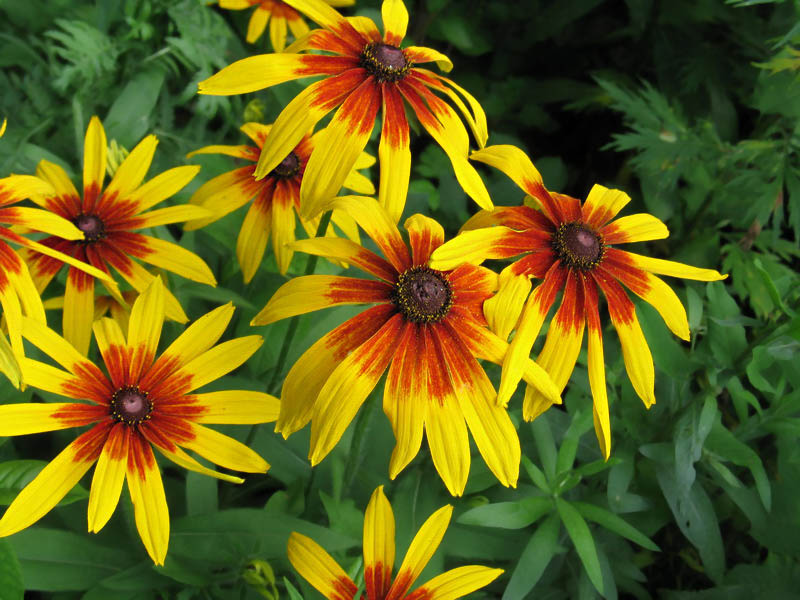
Inflorescences are flower heads (capitula) up to 15 cm in diameter. Ray florets are ligulate, yellow, orange or brown; disc florets are tubular, yellow, purplish-black or brown. The fruit is an elongated achene. Seeds are small, dark gray, shiny.
Location: grows well in open sites; in slightly shaded locations it may become leggy. Prefers fertile, clayey soils.
Care: The plant is undemanding, however it does not tolerate heat and drought well. Large species and cultivars require staking. Removing spent flower heads can extend the flowering period. In late autumn it is necessary to cut back completely.
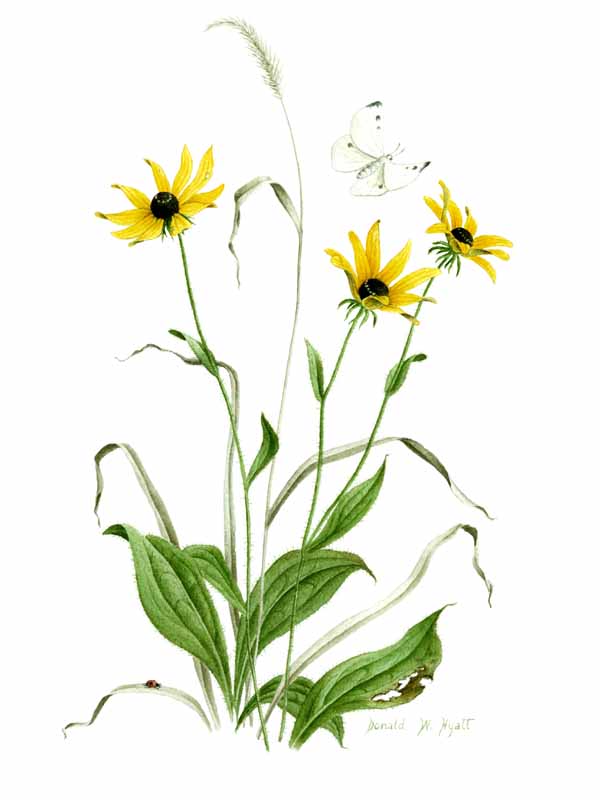
Propagation: Single-flowered forms and annual and biennial species – by seed; perennials and double-flowered forms – by division of rhizomes.
Zone: 4-9