
Deciduous shrubs
Red currant
Ribes rubrum L.
Synonyms: Ribes rubrum var. sativum Rchb., Ribes sativum (Rchb.) Syme, Ribes sylvestre (Lam.) Mert. & W.D.J.Koch, Ribes vulgare Lam., Ribes vulgare var. macrocarpum Jancz., Ribes vulgare var. sylvestre Lam., common currant, garden currant, porichka, parichka, porechka.
Red currant (Ribes rubrum L.) – a species of shrubs in the genus Ribes of the family Grossulariaceae (order Saxifragales). The genus was first classified by Carl Linnaeus in 1753 in Species Plantarum, Tomus I: 200.
In nature it occurs in the forest zone of Eurasia. It grows on forest edges, river and stream banks, where it forms thickets. In the mountains it can ascend to altitudes of 0–2200 m above sea level.
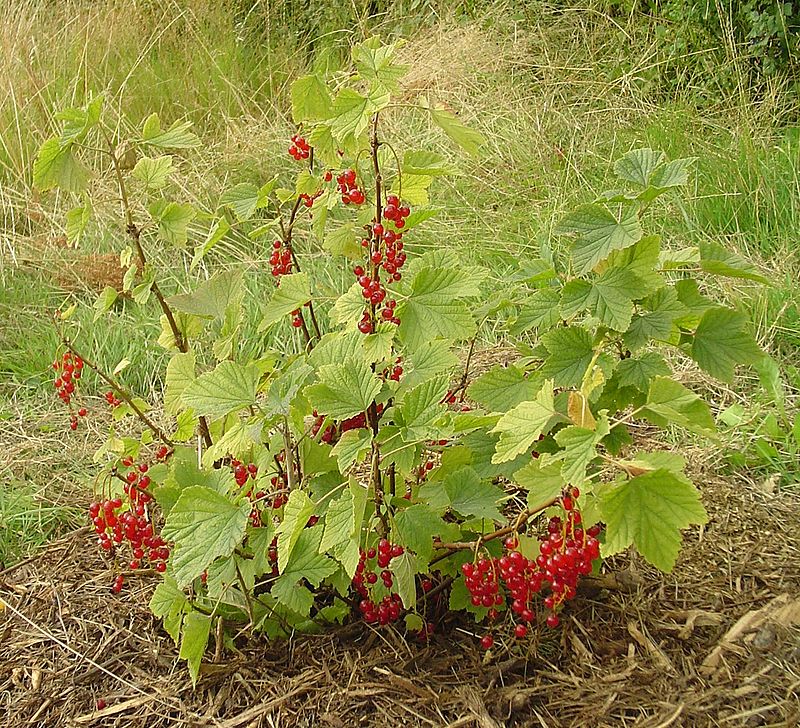
Photo Thue
It is a deciduous shrub 1–2 m high. The root system is strong, heavily fibrous, located up to 40 cm deep, with a radius of 50–60 cm. Shoots are erect, gray or yellowish-gray. Old branches are darker, with peeling bark. Buds are ovoid, the same color as the bark, exserted, and grow in clusters at shoot tips. The leaf scar is large, lighter than the buds. The pith is pale green, the wood greenish. The bark is not bitter to taste. Branches live 6–8 years.
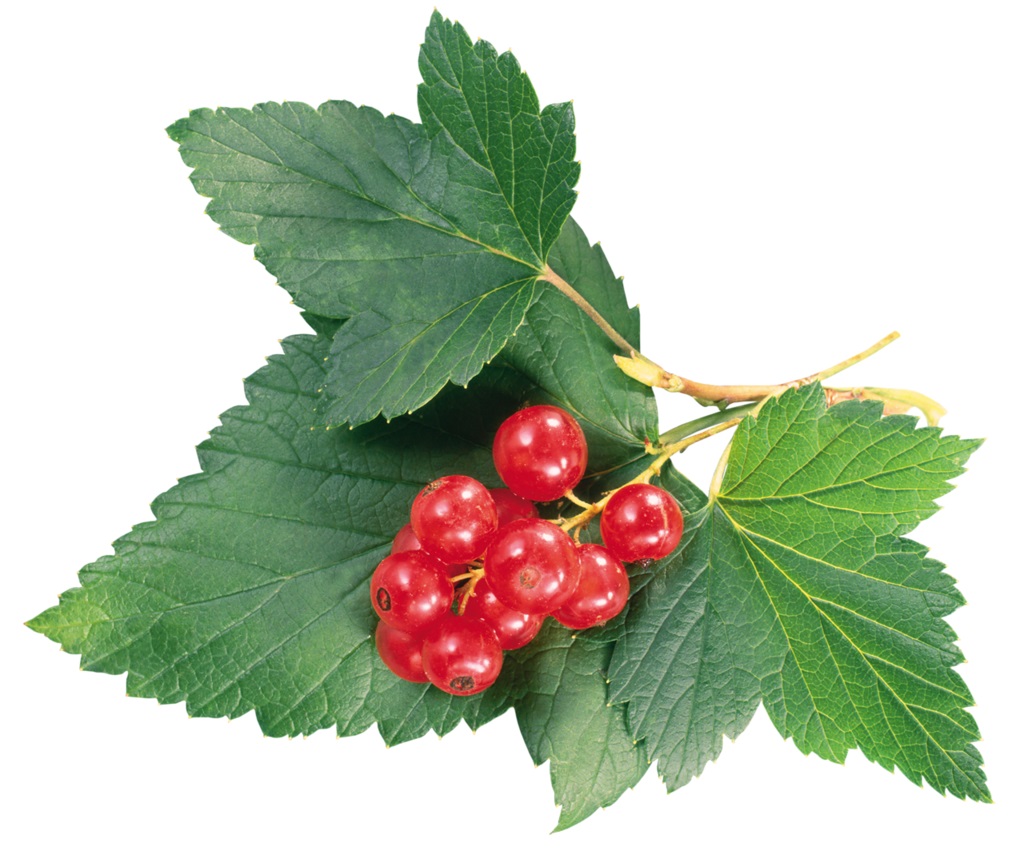
Leaves are dark green, upper surface smooth and glossy, lower surface lighter, 3–5-lobed, without a specific smell. Leaflets are broadly ovate-triangular, with serrated margins, with a truncate-cordate base and an acute tip; upper surface glabrous, lower surface sparsely pubescent along the veins. Petioles 3–6 cm long, glabrous.
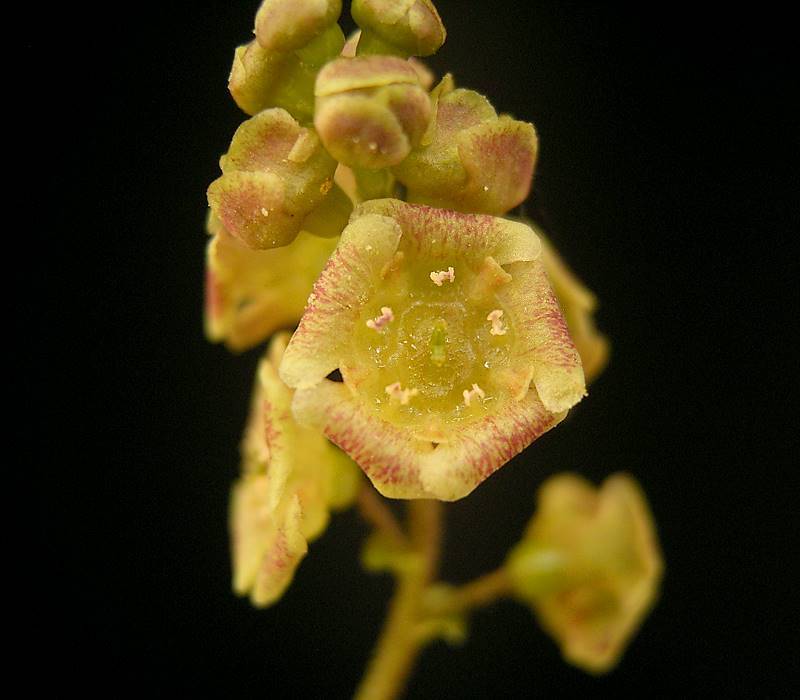
Photo Frank Vincentz
Flowers are inconspicuous, small, yellow-green or reddish-brown, flat, saucer-shaped or cup-shaped, arranged in racemes of 6–25 flowers, 4–12 cm long. Racemes are initially nodding, later pendent. Bracts are ovate, several times shorter than the pedicels, which are 3—5 mm long; the axis is glabrous. Pedicels glabrous, up to 6 mm long. Petals widely spaced, erect, 0.3–1 mm long. Stamens almost the same length as the petals; filaments linear, glabrous, longer than wide (0.2–0.3 mm), anthers white. Sepals glabrous, turned outward. Style thin, split to half or less. Blooms in May.
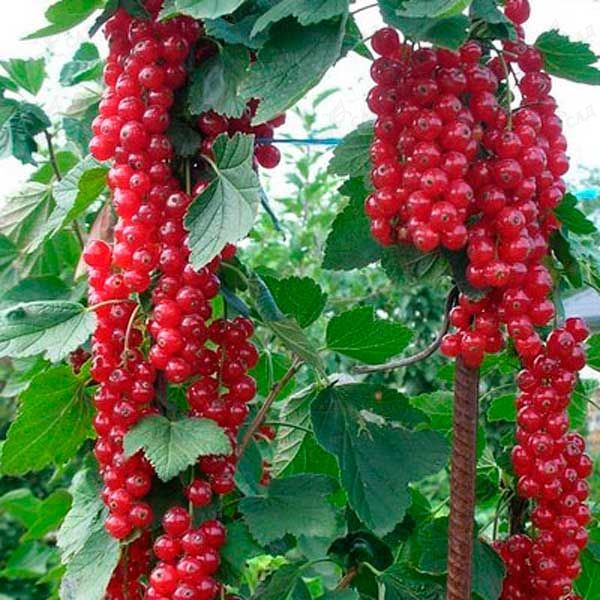
Red currant «Rovada»
Fruits are juicy bright-red berries, up to 1.5 cm in diameter, glabrous, round, pear-shaped or elongated, tart in taste, with 8–16 seeds inside. Fruits ripen in July. Fruiting continues for 20–25 years, best yield at 10 years. Berries contain 6.2–10.9% sugars, up to 2.1–3.5% organic acids, 0.74–1.60% pectins, mineral salts, vitamin C 26-86-180-300 mg/100 g, P-active substances 400–500 mg/100 g, vitamins A, B1, B2, B6, folic acid. Productivity 3–17 kg per bush, 80–120 (on average 50–60) centners/ha.
Varieties:
- Ribes rubrum var. alaskanum (Berger) B.Boivin
- Ribes rubrum var. albinervium MacMill.
- Ribes rubrum var. glabellum
- Ribes rubrum var. palczewckii
- Ribes rubrum var. propinquum
- Ribes rubrum var. pubescens
- Ribes rubrum var. sativum
- Ribes rubrum var. scandicum
- Ribes rubrum var. subglandulosum Maxim.
- Ribes rubrum var. sylvestre
- Ribes rubrum L. var. virescens Regel
Cultivars: Виксне, Ровада, Чулковская, Щедрая, Ранняя сладкая, Первенец, Красный крест, Файя плодородная, Виктория, Голландская красная, Ютерборгская, Задунайская, Константиновская.
Hardiness zone: 4a (-34°C)
Site: prefers well-lit locations but can grow in partial shade; moisture-loving but does not tolerate waterlogging or excessive wetness. Does not like heavy clay soils; the groundwater level should not be higher than 75 cm below the soil surface. Not demanding regarding soil fertility, grows well on any garden soil. Prefers slightly acidic, well-drained, sandy loam, light or medium-loam soils.
Planting: planting is carried out in August. For this, beds or trenches are dug and bushes are planted at a distance of at least 1.3 m from each other (otherwise bushes will shade each other and berries will be small). The soil mixture consists of topsoil and manure. After planting in dry weather, plants are watered at a rate of 1 bucket per bush.
Care: during the growing season additional feedings are applied – early in spring apply nitrogen fertilizers – ammonium nitrate (30 g per bush) or urea (20 g per bush); after flowering and at the beginning of fruit set apply chicken manure (1:12) or cow manure (1:6), at a rate of 1–1.5 buckets per currant bush, and after harvest.
Pruning: tolerates trimming well, suitable for forming hedges and borders. Requires thinning (removal of old stems). Pruning is done in spring: young shoots are shortened to 5–6 buds and old ones are removed. Each bush should consist of 10–15 stems. Old branches are removed because large berries grow on 3–4-year-old stems.
Propagation: propagated vegetatively (dividing the bush, grafting, green cuttings, vertical or horizontal layering) or by seed. For vertical layering, bushes are heavily pruned almost to the ground level in spring; in July young shoots are earthened up. In autumn young shoots are planted in the nursery. For horizontal layering, rooted shoots are left until the next spring, then bent down, earthened, and separated from the parent plant in autumn.
Diseases: powdery mildew, septoria and anthracnose.
Pests: gall aphid, yellow gooseberry sawfly, currant clearwing.
Uses: berries are eaten fresh, used for making jams, beverages, puddings, as pie fillings, and in soups.