
Deciduous shrubs
Black currant "Titania"
Ribes nigrum "Titania"
Black currant "Titania" (Ribes nigrum "Titania") – a popular cultivar of black currant. Bred by pollinating the cultivar «Altayskaya Dessertnaya» with the Swedish cultivars «Consort» and «Kajaanin Musta-Tamas» in 1980.
It is a medium-sized dense bush up to 1.5 m in height. The crown is dome-shaped, reaching 1.5 m in diameter. Shoots are thick, light green, upright, and provide good vegetative growth.
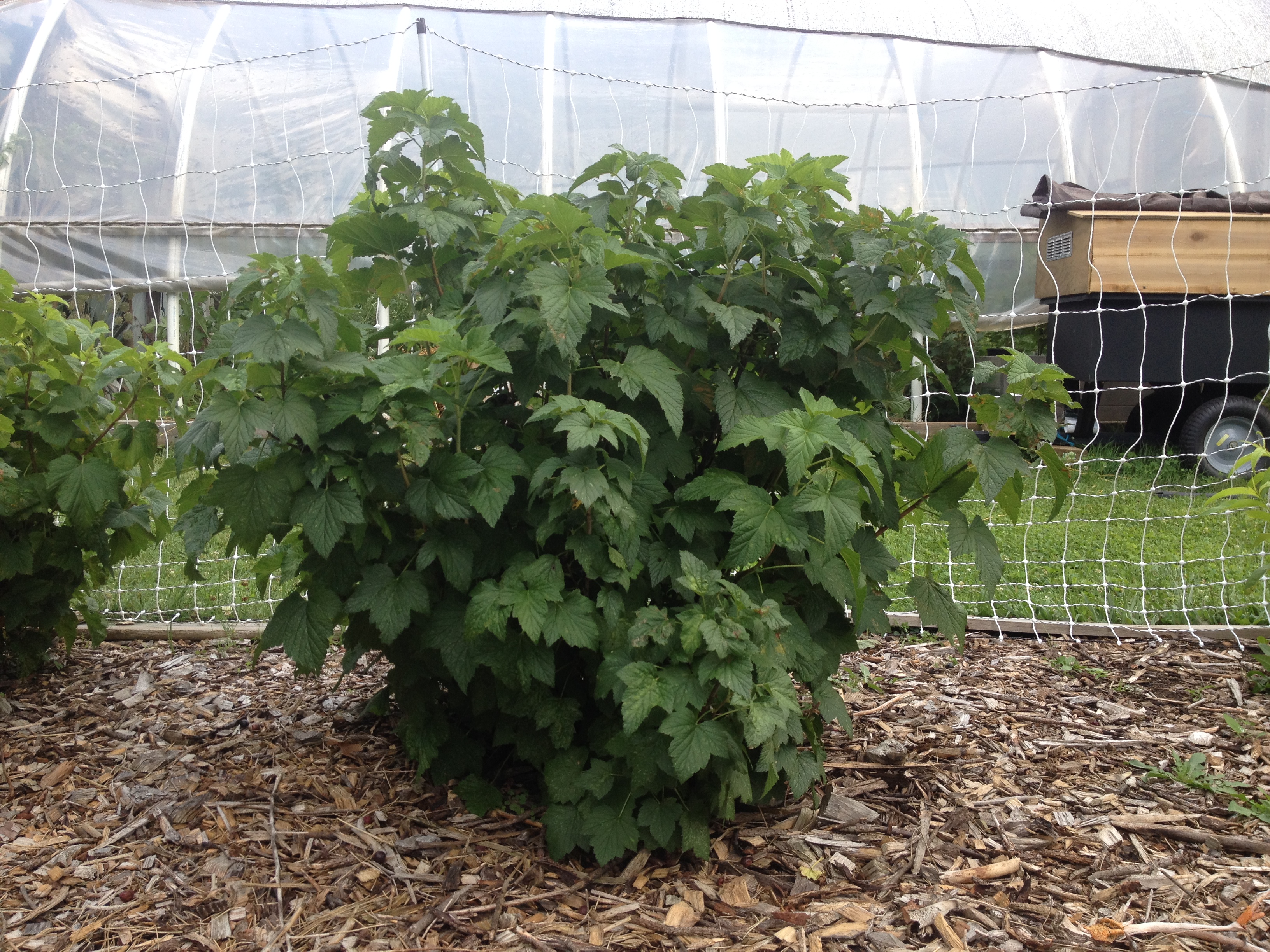
The cultivar is self-fertile. Berries are large, 14-18 mm in diameter, weighing 1.4-4 g, rounded, black with a glossy sheen, gathered 20-23 pieces on long racemes. The flesh is green, with a dessert, slightly winey taste. Sugar content is high - 6.6%, acids - 3.2%. The first berries are harvested in early July; ripening is extended, allowing staged harvesting over 20-25 days. Yield up to 12 kg per bush.
Hardiness: 4a (-34°C); resistant to spring frosts.
Location: prefers well-lit sites but can grow in partial shade, moisture-loving but does not tolerate waterlogging or over-wetting. Does not like heavy, clay soil; the groundwater level should not exceed 75 cm below the soil surface. Not demanding in terms of soil fertility, grows well in any garden soil. Prefers slightly acidic, well-drained sandy-loam, light or medium loamy soil.
Planting: planting is carried out in August. Beds or trenches are dug and bushes are planted at a distance of at least 1.3 m from each other (otherwise bushes will shade each other and the berries will be small). The soil mixture consists of soil and manure. After planting, in dry weather plants are watered at a rate of 1 bucket per bush.
Care: during the growing season additional feedings are carried out – in early spring nitrogen fertilizers are applied - ammonium nitrate (30 g per bush) or urea (20 g per bush); after flowering and at the beginning of fruit set - poultry manure (1:12) or cow manure (1:6), at a rate of 1-1.5 buckets per currant bush, and after harvest.
Pruning: tolerates trimming well, suitable for forming hedges and borders. Requires thinning (removal of old stems). Pruning is done in spring: young branches are shortened to 5-6 buds and old ones are removed. Each bush should consist of 10-15 stems. Old branches are removed because large berries grow on 3-4-year-old stems.
Propagation: propagated mainly vegetatively (division of the bush, grafting, green cuttings, vertical or horizontal layering) or by seeds. For vertical layering bushes are heavily pruned in spring almost to soil level; in July young shoots are mounded. In autumn the young shoots are planted in a nursery. To obtain horizontal layers, rooted shoots are left until the next spring, then bent down, earthen up and separated from the mother plant in autumn. For growing in a standard (stem) form plants are grafted onto golden currant. In seed propagation seeds are sown immediately after harvest or in spring after 2-4 months of stratification. After sowing, in the first year plants grow to a height of 20-40 cm.
Diseases: high resistance to anthracnose, powdery mildew, white and brown leaf spot.
Pests: currant bud mite, currant gall midge, narrow-bodied green jewel beetle, rose leafroller.
Usage: the cultivar is distinguished by high yield, large and attractive berries with excellent taste qualities. Transportability is good; the Titania cultivar is suitable for mechanical harvesting. Berries can be consumed fresh, and are also suitable for processing and freezing. Can be grown on an industrial scale.