
Deciduous shrubs
Black currant
Ribes nigrum L.
Black currant (Ribes nigrum L.) – a species of shrubs of the genus Ribes in the family Grossulariaceae, order of dicotyledonous flowering plants Saxifragales. The genus was first classified by Carl Linnaeus in 1753 in Species Plantarum, Tomus I: 201.
In nature it is found throughout almost all of Europe, in the forest and European parts of Russia (Siberia, from the Urals to the Yenisei and Lake Baikal), Kazakhstan, China, and the northern part of Mongolia. Introduced to North America. Grows in riparian thickets, in moist deciduous, mixed and coniferous forests and at their edges, on river and lake banks, pond margins, on wet floodplain meadows, solitary and in small thickets. In mountains it rises to 2300–4300 m above sea level.
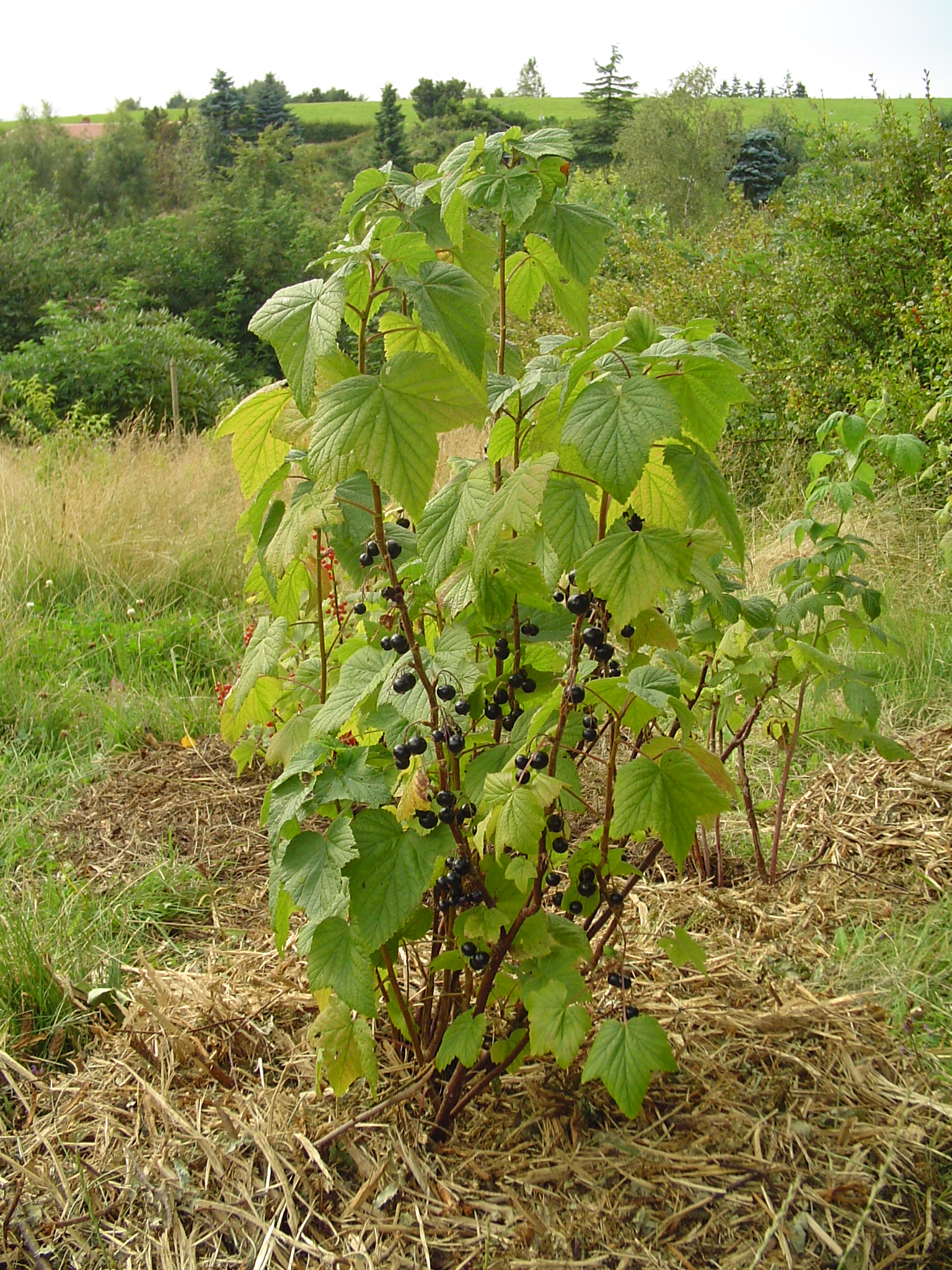
Photo credit Thue
It is a deciduous shrub 1–2 m high. Young shoots are at first pubescent, yellow-green, later yellow-brown or dark gray, nearer the tips covered with amber-yellow glands. The entire above-ground part has a characteristic scent. Buds 4–10 mm long, located on short stalks, scales light, reddish, with amber-yellow glands, whitish-hairy at the margin. Leaf scar with 3 marks. Pith light-brown, broad, rounded.
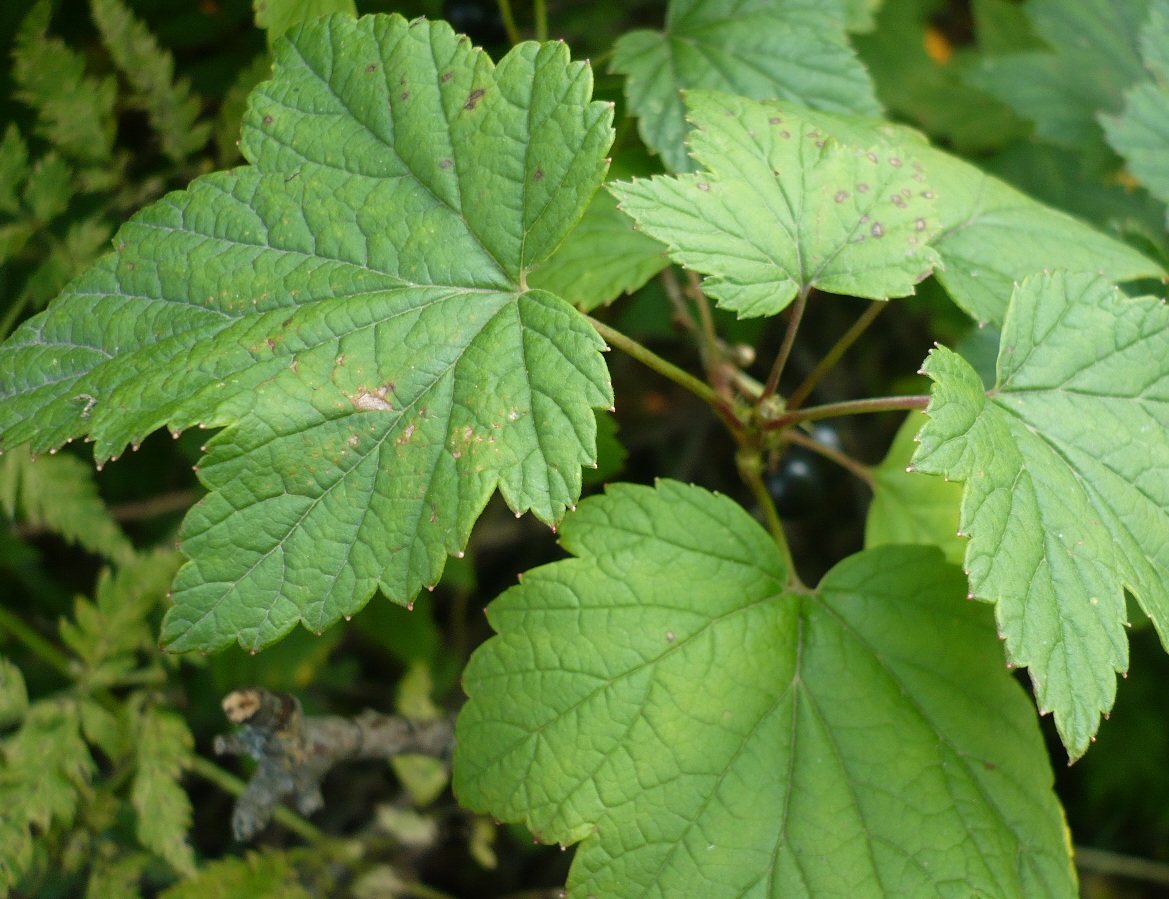
Photo credit E.Nosikov
Leaves 3–5-lobed, 3–5 (12) cm long and wide, base truncate, rounded or cordate, smooth or wrinkled, with golden glands along the veins, dark green in color, upper leaf surface dull, glabrous, underside pubescent along the veins. Lobes broadly triangular, acute, doubly serrate at the margin, teeth with a light, large and sharp tip, the central lobe often considerably larger than the others.
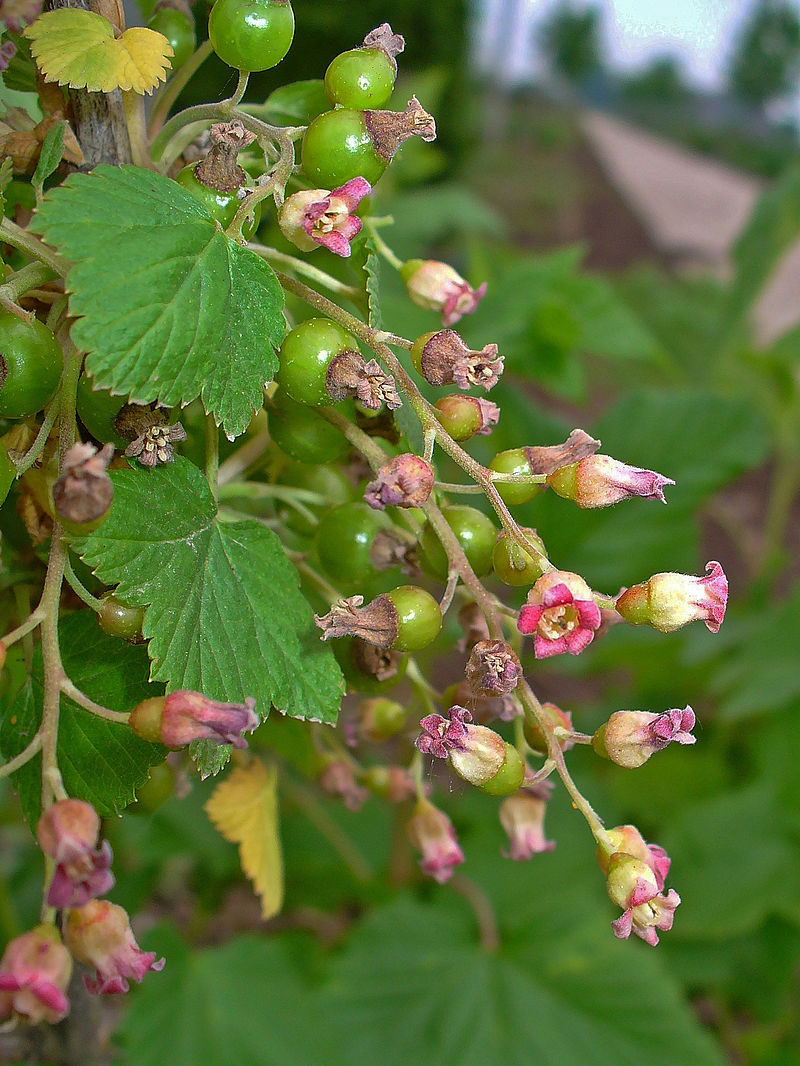
Photo credit H. Zell
Flowers are bisexual, 0.7–0.9 cm long, 4–6 mm in diameter, five-parted, bell-shaped, lilac or pinkish-gray in color, densely pubescent outside. Flowers are grouped in drooping lax racemes of 5–10 on glabrous or pubescent pedicels 3–8 cm long. Bracts 1–2 mm long, from ovate to linear-lanceolate. Receptacle inflated, broad. Sepals reflexed, ligulate, twice as long, obtuse, green outside, often lilac-tinged at the margins, sometimes bright, inside often reddish, both sides cobwebby; petals ovate, whitish or reddish, shorter than the sepals; stamens almost equal to the petals; ovary half-inferior, glandular. Flowers in May–June.
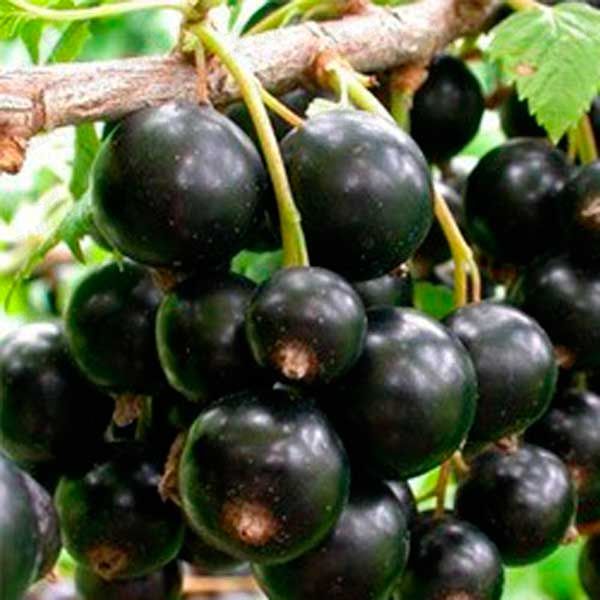
Black currant 'Triton'
Fruits – edible fragrant berries, up to 1 cm in diameter, black-brown or greenish, with glossy skin, covered with scattered glands, glabrous, sour, juicy, with 3—37 seeds. About 3330 berries per 1 kg, or 714 thousand seeds. Weight of 1,000 seeds 0.9—1.8 g. Fruits in July.
Varieties: (according to Wikipedia)
- Ribes nigrum var. europaeum – typical form
- Ribes nigrum var. sibirica E.Wolf
- Forms: (according to Wikipedia)
- Ribes nigrum f. aconitifolium Kirchn. — leaves deeply divided;
- Ribes nigrum f. apiifolium Kirchn. — leaves deeply divided, lobes bi-pinnate;
- Ribes nigrum f. aureo-variegatum hort. — with variegated leaves;
- Ribes nigrum f. chlorocarpum Spaeth — fruits green;
- Ribes nigrum f. reticulatum Nichols. — leaves densely covered with yellow speckles;
- Ribes nigrum f. xanthocarpum Spaeth — fruits yellow or whitish.
Cultivars: 'Бен Алдер', 'Краса Львова', 'Сокровище', 'Тисел', 'Титания', 'Тритон', 'Чернеча', 'Bong up Black', 'Ogdens Black Currant', 'Cassis de Maples', 'Victoria', 'Жёлтоплодная', 'Борцоволистная', 'Пёстролистная', 'Караидель', 'София'.
Hybrids: hybrid of black currant, Ribes divaricatum (spreading gooseberry) and Ribes uva-crispa (common gooseberry): Ribes × nidigrolaria = Ribes nigrum × Ribes divaricatum × Ribes uva-crispa - Йошта
Hardiness zone: 4a (-34°C)
Location: prefers well-lit sites but can grow in partial shade, moisture-loving but does not tolerate waterlogging or over-saturation. Dislikes heavy, clay soils; groundwater level should not be higher than 75 cm below soil surface. Not demanding about soil fertility, grows well on any garden soil. Prefers slightly acidic, well-drained, sandy loam, light or medium-loamy soils.
Planting: planting is carried out in August. For this, beds or furrows are dug and bushes are planted at a distance of at least 1.3 m from each other (otherwise the bushes will shade each other and the berries will be small). The soil mixture consists of garden soil and manure. After planting in dry weather, plants are watered at a rate of 1 bucket per bush.
Care: during the growing season additional feedings are applied – in early spring apply nitrogen fertilizers - ammonium nitrate (30 g per bush) or urea (20 g per bush); after flowering and at the beginning of fruit set apply chicken manure (1:12) or cow manure (1:6), at a rate of 1–1.5 buckets per currant bush and after harvest.
Pruning: tolerates trimming well, suitable for shaping hedges and borders. Needs thinning (removal of old stems). Pruning is done in spring: young shoots are shortened by 5–6 buds and old ones removed. Each bush should consist of 10–15 stems. Old branches are removed, since large berries develop on 3–4-year-old stems.
Propagation: mainly vegetatively (division of the bush, grafting, green cuttings, vertical or horizontal layering) or by seeds. For vertical layering bushes are heavily pruned in spring almost to ground level; in July young shoots are earthened. In autumn young shoots are planted in the nursery. For horizontal layering rooted shoots are left until the next spring, then bent down, earthened and separated from the parent plant in autumn. For growing in standard (single-stem) form plants are grafted onto golden currant. With seed propagation seeds are sown immediately after harvest or in spring after 2–4 months of stratification. After sowing, plants in the first year grow to a height of 20–40 cm.
Diseases and pests: currant bud mite, American powdery mildew, currant gall midge, narrow-bodied green jewel beetle, rose leafroller.
Uses: ornamental shrub, used for creating clipped hedges. Berries are consumed fresh and are also suitable for processing. Buds are used in the food and liqueur industry. Leaves are brewed as tea, and also used for pickling and brining.