Deciduous trees
Smooth sumac
Rhus glabra
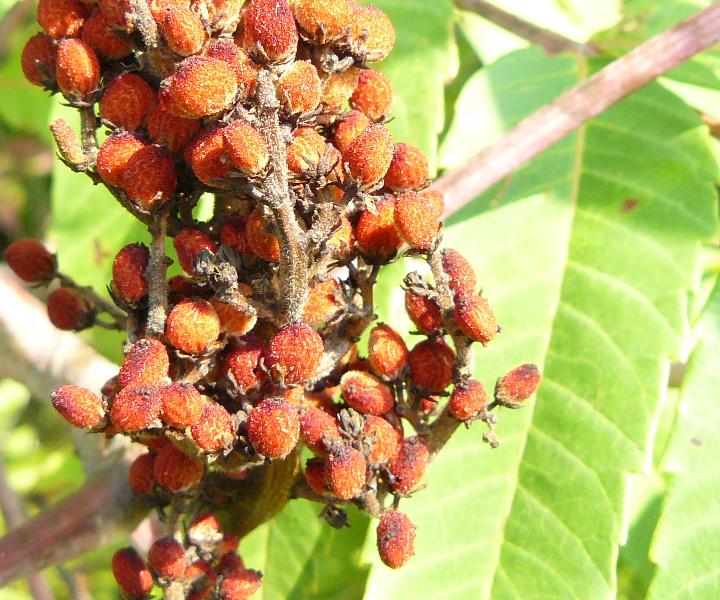
Sumac is very decorative and unusual for our flora with its large odd-pinnate foliage, giving the impression of a "palm-like" exotic. Its ornamental forms are especially striking. It deserves wide use in landscaping as solitary and group plantings, for dressing rock gardens and stabilizing soils prone to wind and water erosion. The scarlet autumn leaf color, which adorns the plant for a long time, creates a colorful spot in the garden-park landscape, enriching its autumn palette, especially against the background of dark coniferous plantings. Large, dense panicles with bright fruits decorate this graceful plant throughout the winter. In cultivation since 1602.
Appearance: In its native range it is a shrub or small tree, not exceeding in height
Flowers: unisexual; female flowers (pistillate) are bright red, gathered in dense compact pyramidal panicles up to
Fruits: globose, slightly flattened drupes covered with red bristly pubescence; they ripen in September and persist throughout the winter. The plant flowers and fruits from 6 years of age.
Leaves: very decorative, compound, consisting of 11–13 lanceolate leaflets up to
Requirements: sun; tolerant of high temperatures, not winter-hardy, wind-resistant, suitable for urban conditions.
Soils: from dry to moist, on any well-drained, relatively fertile substrates, from acidic to alkaline.
Zone: 6a