
Deciduous trees
Large-fruited oak
Quercus macrocarpa Michx.
Family Fagaceae. A North American species, growing as a tree up to 30 m tall, with a thick trunk and a spreading, tent-shaped crown. The bark on the trunk is light brown, fissured.
In growth rate it is almost not inferior to the pedunculate oak; in frost hardiness it is close to it and to the red oak, but more moisture-loving than these species. Ornamental, used in green construction, like other species. In cultivation since 1826.
Large-anthered oak, or eastern (Caucasian high-mountain) - Q. macranthera Fisch. et Mey.
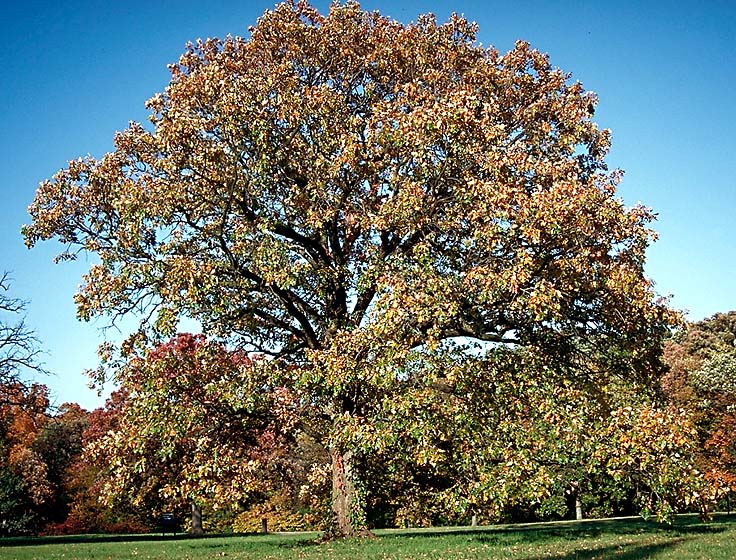
Occurs wild in the Caucasus and the Near East. Present in many Caucasus nature reserves. Forms forests in the mountains at altitudes of 1350-2650 m on rich humus-carbonate loams. A light-loving mesoxerophyte.
Differs from other species by smaller dimensions, height 15-20 m, and large beautiful foliage; leaves up to 18 cm long with 8-10 pairs of blunt, short lobes, entire-margined or coarsely toothed, dark green and almost glabrous above, yellowish-gray beneath due to dense pubescence. Young shoots at the beginning of the growing season also have yellow-gray pubescence. Acorns up to 2.5 cm, erect or on short peduncles, half enveloped by the cupule.
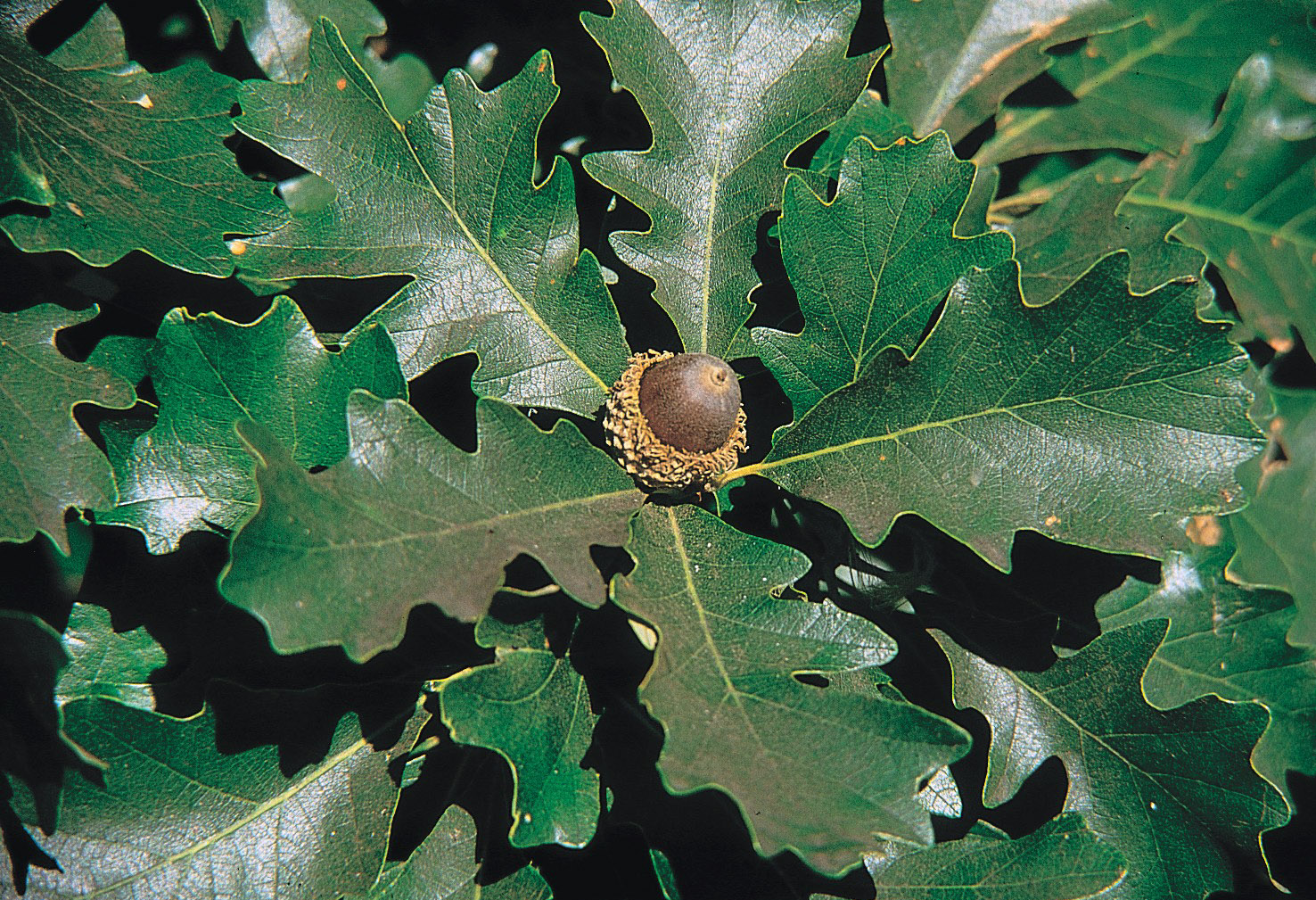
Grows slowly, frost- and drought-resistant. In cultivation since the middle of the last century.
Has a pinnately divided (f. pinnatifida) form and a number of hybrids obtained by S. S. Pyatnitsky: Timiryazev's oak (Q. macranthera x Q. macrocarpa); Michurin's oak (Q. macranthera x Q. rubra); Vysotsky's oak (Q. macranthera x Q. robur); Komarov's oak (Q. macranthera x Q. alba).