
Flowers for the garden
Puya
Puya
The genus Puya (in the Mapuche language «puya» - 'point'), comprises 222 species of plants. It was described in 1782 by the Chilean priest and naturalist-botanist Juan Ignacio Molina. The range of the genus is mainly associated with the Andean region, including the territories of Brazil, Chile, Argentina, Bolivia, Peru, Ecuador, Colombia, Venezuela, and Costa Rica. The genus belongs to the family Bromeliaceae.
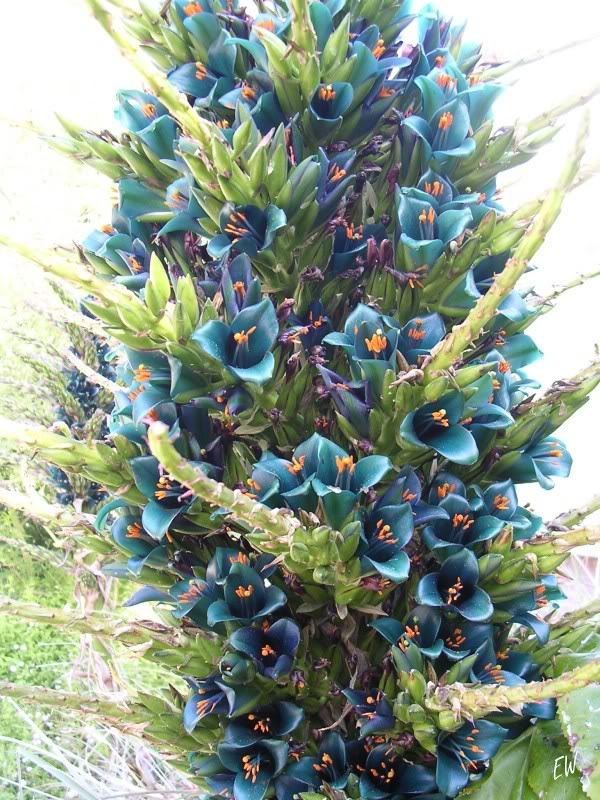
Mostly occur in the mountainous regions of the Andes, found on dry slopes, high-altitude plateaus, in mountain forests, and also (exceptionally) in bogs. Perennial, polycarpic, rarely monocarpic, terrestrial herbs, xerophytes. The root system is powerful, branched; roots are mostly basal, but in species with prostrate stems they can develop on different parts of the stems, thus facilitating vegetative reproduction; rarely (exceptionally) there are tuber-like storage organs. Stems simple, or more often branched, more or less thick (up to 1.5 m in diameter), covered with scars from fallen leaves; sometimes the stem is very short. Leaves in rosettes, linear, usually with broad sheaths, grooved, stiff, leathery, more or less succulent, often with strong spines on the margins, covered with scales at the base, beneath, or less commonly on both sides. Scapes basal, usually long, sturdy, more or less thick, naked or covered with scales, bear bracts: the lower ones similar to the rosette leaves, the upper ones usually broadly ovate with an acute apex, often with spines on the margin, leathery, or thin, membranous, sometimes deciduous; rarely the scape is reduced. Inflorescences simple or compound, racemose, spike-like, paniculate, more or less dense, many-flowered, or loose and few-flowered; rarely the inflorescence is reduced to a single flower. Flowers actinomorphic, on pedicels, with a bract, leathery or thin, papery, colored or uncolored. Sepals free, narrowly triangular or broadly ovate, acute or obtuse; usually leathery, glabrous, or more often covered with scales, not exceeding the petals in length. Petals free, ovate or broadly linear, usually obtuse, or sometimes with a small acumen, always longer than the sepals, in shades of yellow, blue, red, green, or white. The perianth after flowering coils spirally. Stamens free, slightly shorter than the petals. Fruit a loculicidal, or rarely late septicide capsule. Seeds small, with a dorsiapical, winged appendage.
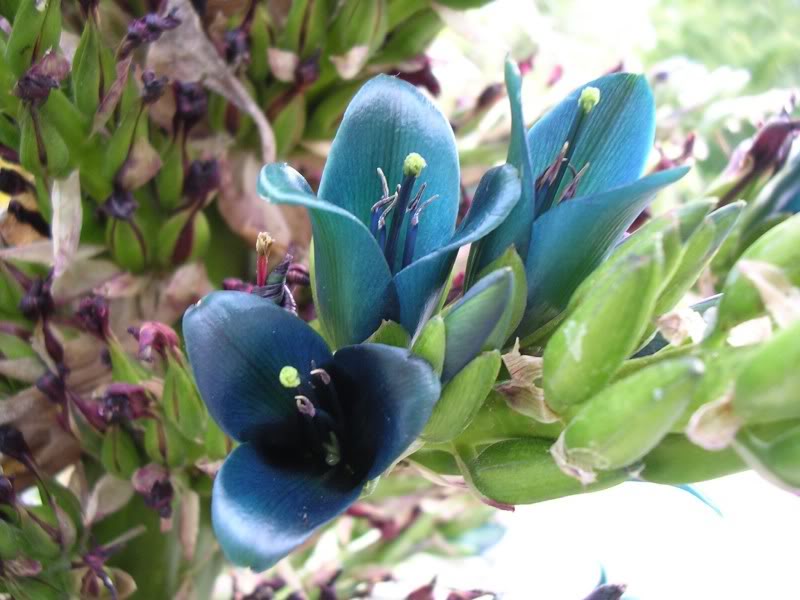
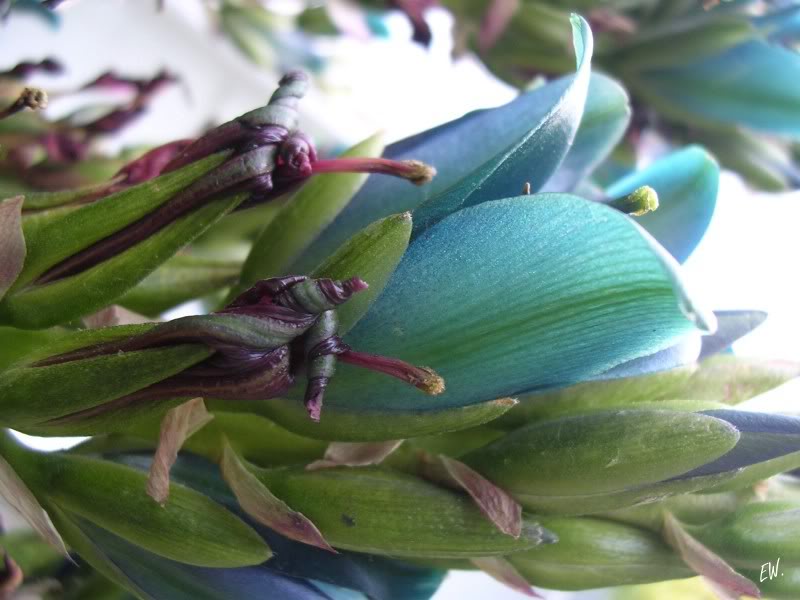
Alpine Puya (Puya Alpestaris)
Puya Alpestaris. Leaves up to 60 cm long, up to 2.5 cm wide, stiff, with spines on the margins, bright green, glabrous above, densely covered with white scales beneath. Scape erect, up to 150 cm long, thick up to 2.5 cm wide, covered with scattered scales; bracts broadly ovate, with a long acuminate tip, membranous. Inflorescence paniculate, pyramidal, loose, the ends of the inflorescence branches glabrous. Bracts ovate, membranous, always longer than the sepals. Flowers on pedicels, up to 5 cm long. Sepals free, 2.5 cm long, narrowly linear, obtuse or slightly acute. Petals free, up to 5 cm long, ovate, obtuse, blue with a greenish tint. Fruit a loculicidal capsule. Seeds narrowly triangular, up to 5 mm long. Found on the dry slopes of the Andes of southern Chile.
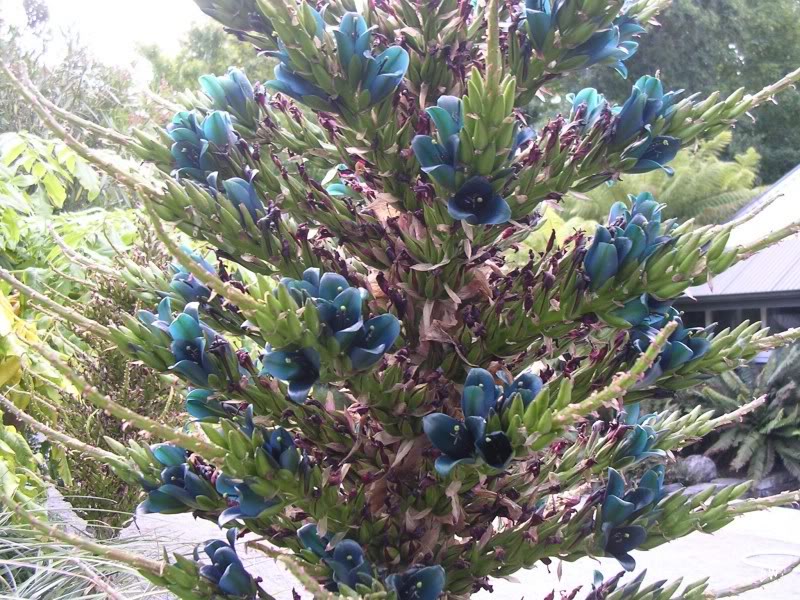
Requires minimal watering. Grown in bright sunlight.
Cultivated as a highly ornamental bromeliad because of its striking electric-blue flowers.
Source:www.zoometod.mybb.ru