
Flowering shrubs
Chinese quince
Pseudocydonia sinensis C.K.Schneid.
Synonyms: Cydonia sinensis Thouin., Chaenomeles sinensis (Thouin) Koehne., Pyrus sinensis (Thouin) Poir., Pyrus cathayensis Hemsl. ex Forb. & Hemsl., Pyrus chinensis Spreng.
Chinese quince (Pseudocydonia sinensis (Thouin) C.K.Schneid.) – a species of woody plants from the monotypic genus Pseudocydonia (Pseudocydonia) of the family Rosaceae (Rosaceae). The species was first described by the Austrian botanist Camillo Karl Schneider in 1906 in «Repertorium Specierum Novarum Regni Vegetabilis 3(38/39): 181.»
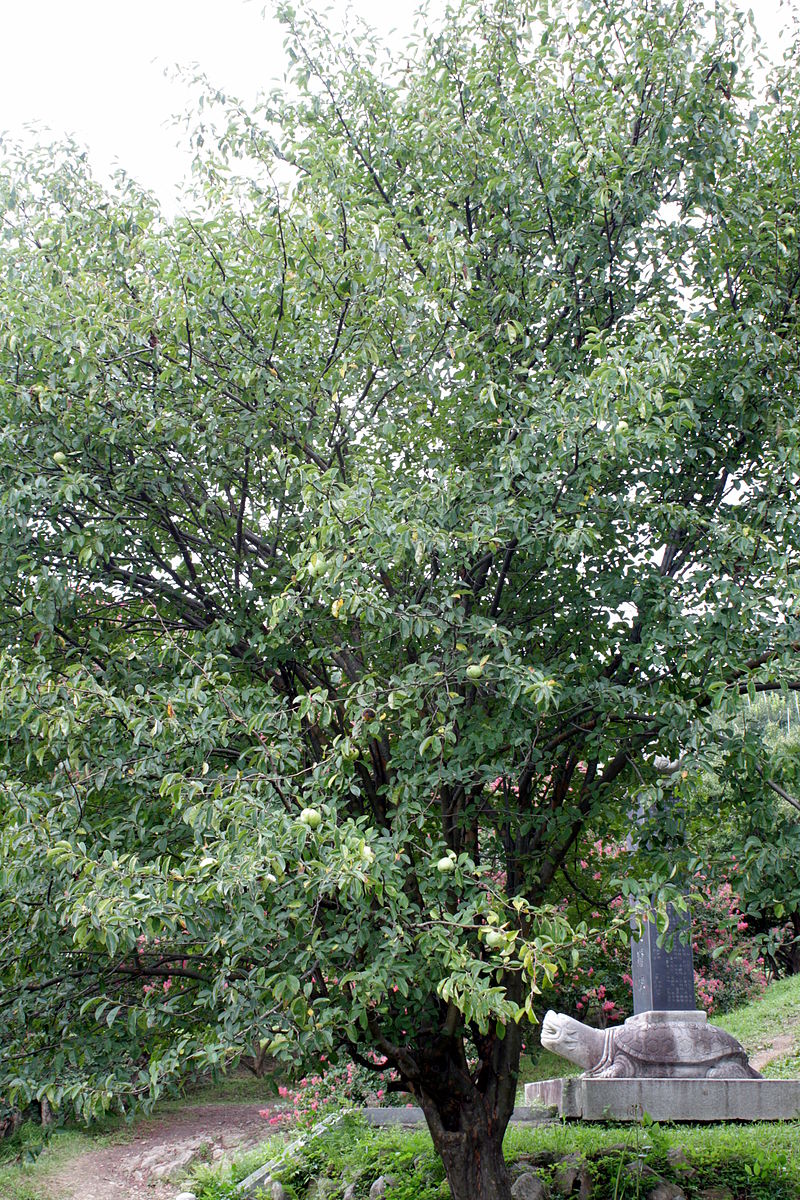
Occurs naturally in East Asia (China: Anhui, Zhejiang, Fujian, Hebei, Hubei, Jiangxi, Jiangsu, Guangdong, Guizhou, Shandong, Shaanxi, Guangxi; Korea, Japan). Grows in swampy areas. Ascends mountains up to 1000 m above sea level.
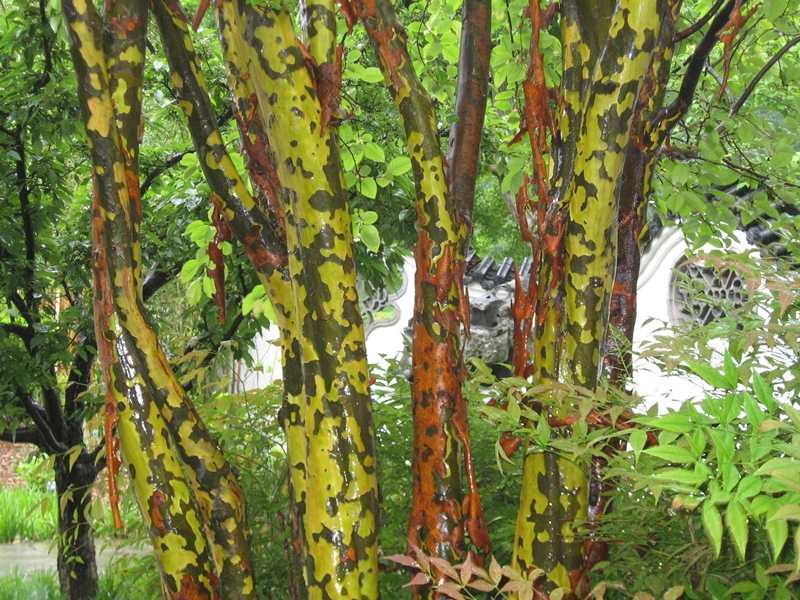
A medium-sized tree 10-18 m tall, more rarely a shrub. Crown dense, oval, trunk almost always crooked. Bark ornamental, peeling in large plates, grey, with patches of orange and olive. Twigs purplish-red, circular in cross-section, initially pubescent, later glabrous, covered with grayish lenticels. Buds purple-brown, glabrous, obtuse. Stipules oblong-ovate, rhomboid or lanceolate, 5-12 mm long, almost glabrous, more rarely glandular-pubescent, acute at the apex.
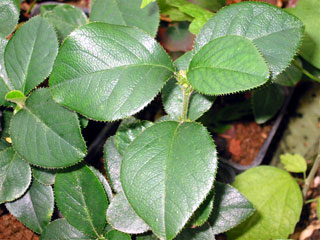
Leaves elliptic-ovate or elliptic-lanceolate, more rarely obovate, 5-8 cm long and 3.5-5.5 cm wide, yellowish-white tomentose at first, later glabrous, greenish with brownish margins, base cuneate or rounded, apex acute, margins serrate. The underside of the leaves is brownish-green, slightly pubescent. Petiole 5-10 mm long, pubescent. In autumn the leaves take on yellow, orange and red tones.
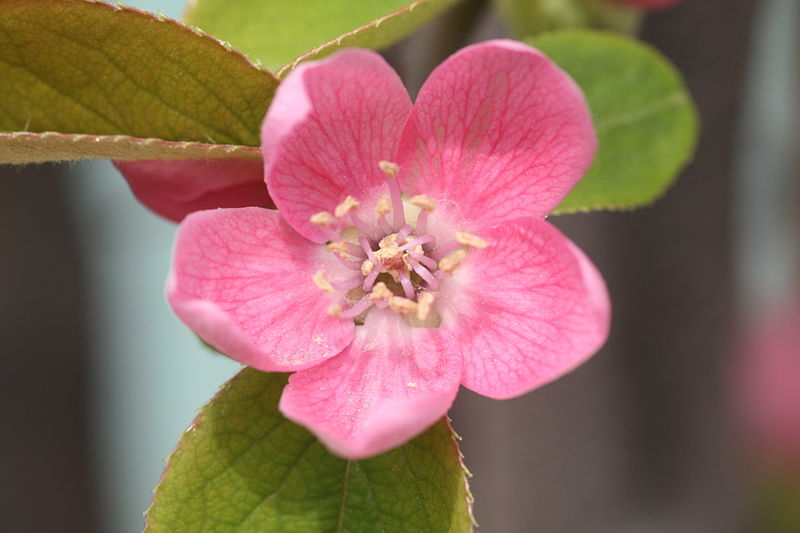
Flowers solitary, 2.5-3 cm in diameter, pale pink, inconspicuous beneath the leaves. Hypanthium bell-shaped. Sepals reflexed, triangular-lanceolate, 6-10 mm long, acuminate, glabrous on the outside, brownish and woolly on the inside. Peduncles short, glabrous, 5-10 mm long. Petals pink, obovate, apex rounded. Stamens numerous, about half the length of the petals. Carpels 3-5 in number, fused at the base. Sepals deciduous. Flowers in April.
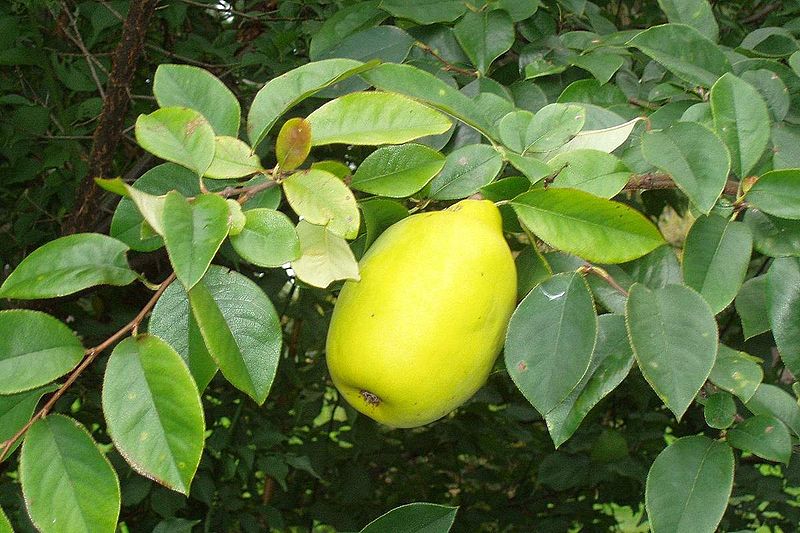
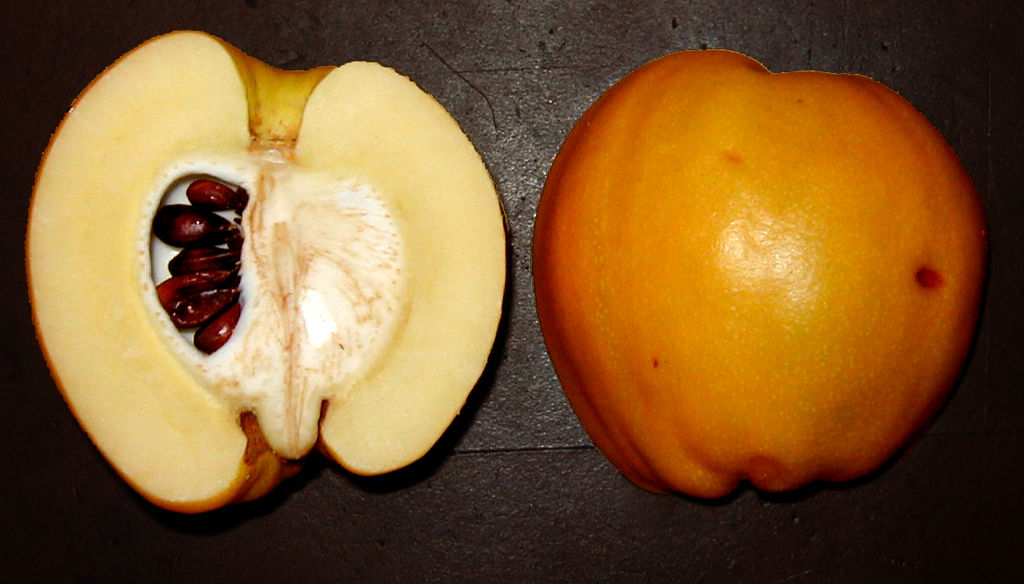
Fruits very fragrant, apple-shaped, dark yellow, edible, narrowly ellipsoid in shape, 10-15 cm long, under favorable conditions weight may reach 1.5 kg, oily to the touch. Fruit stalk short. Fruits ripen in September-October.
Hardiness zone: 6a-8b.
Location: prefers sunny spots with medium-moisture soil and good drainage. Tolerates poor soil and short drought, but grows better in fertile garden soil.
Planting: in Ukraine it is mainly cultivated as an indoor plant.
Care: requires very little maintenance. Organic fertilizer with low nitrogen content can be applied.
Pruning: tolerates pruning well. Can be grown in bonsai style. Requires annual formative pruning.
Diseases and pests: highly resistant to diseases and pests. May be affected by bacterial blight.
Propagation: by grafting onto common quince, by seed, by root suckers, by layering, by green cuttings.
Uses: ornamental for its dense crown, multicolored bark, leaves, delicate flowers and aromatic yellow fruits. Used as a specimen planting on lawns and along garden paths. Fruits are rich in vitamins and beneficial oils, eaten and used for making confectionery, compotes and preserves. Fruits have an attractive commercial appearance and store well in the refrigerator.