
Conifers
Blue Spruce 'Glauca'
Picea pungens Glauca
Blue Spruce ‘Glauca’ (Picea pungens Glauca) - a form of Picea pungens. This name refers to all wild or cultivated seedlings with bluish foliage. Selected and named clones form the 'Glauca' group of cultivars. Cultivated in Europe since the 19th century. Introduced into cultivation in Ukraine at the Nikitsky Botanical Garden in 1858.
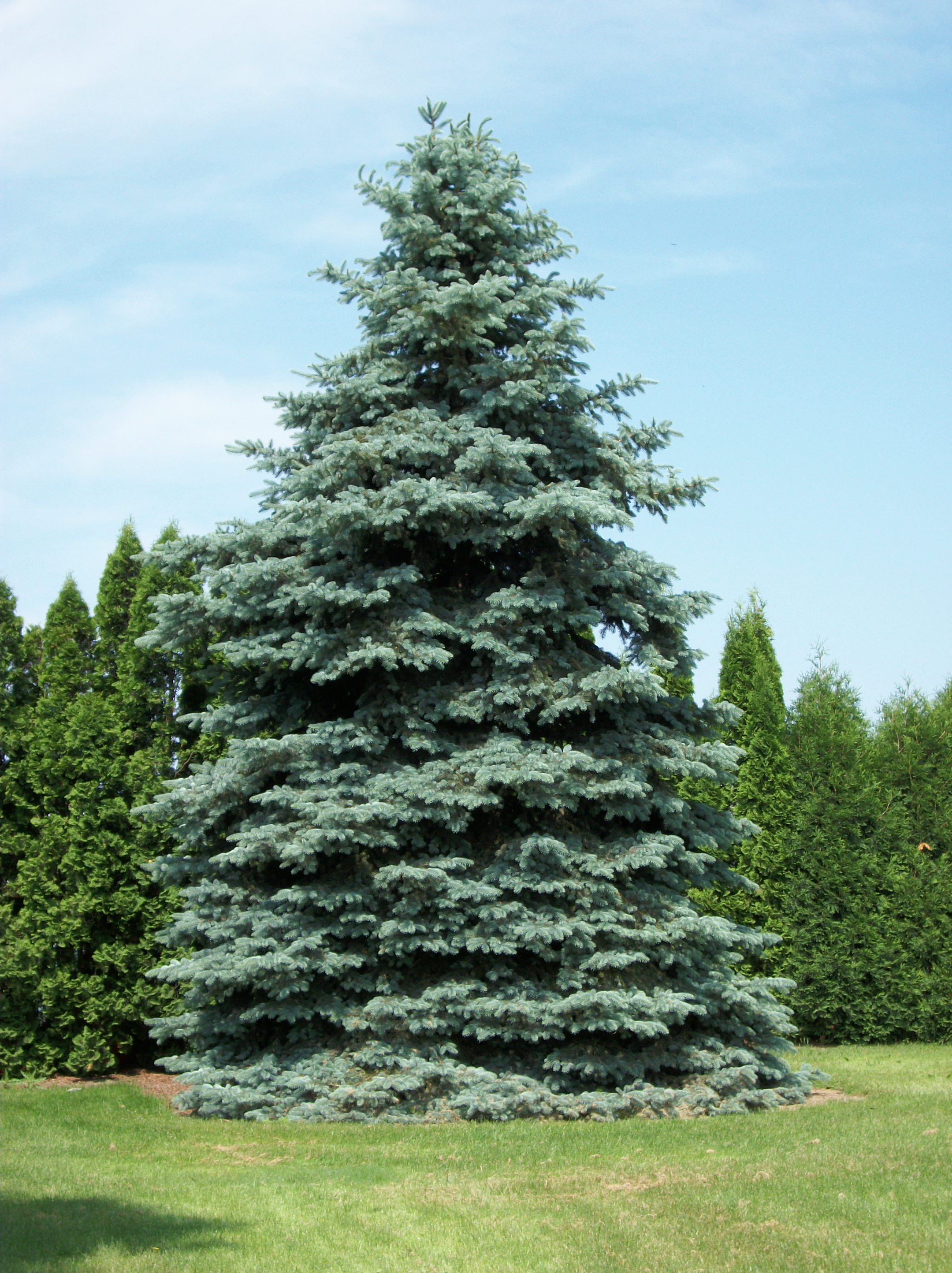
It is a coniferous tree up to 20 m in height with a spread of 7–8 m. Annual increment up to 30 cm. Crown conical in shape, symmetrical, branches arranged in regular dense tiers, horizontal or at a slight angle. Bark gray-brown, thick, fissured. Root system shallow, wide, sensitive to soil compaction and waterlogging.
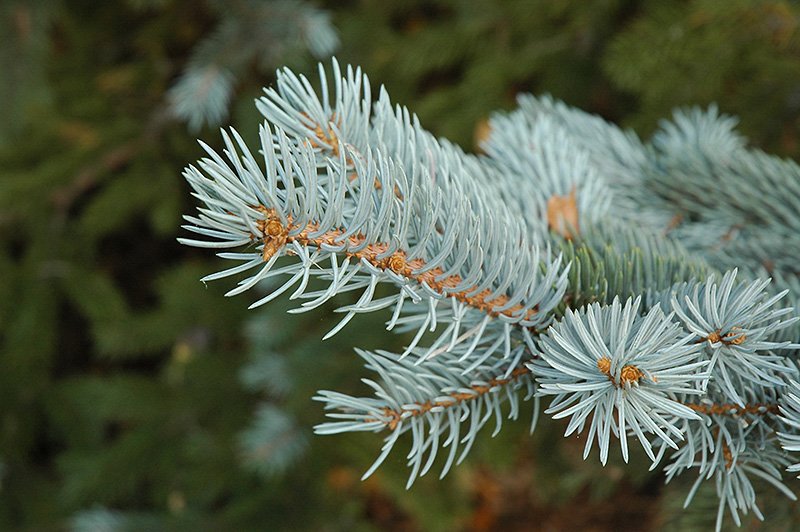
Foliage bluish with a steely sheen, stiff, prickly, slightly falcate, with a waxy coating, up to 3 cm long. Needle retention 3–10 years.
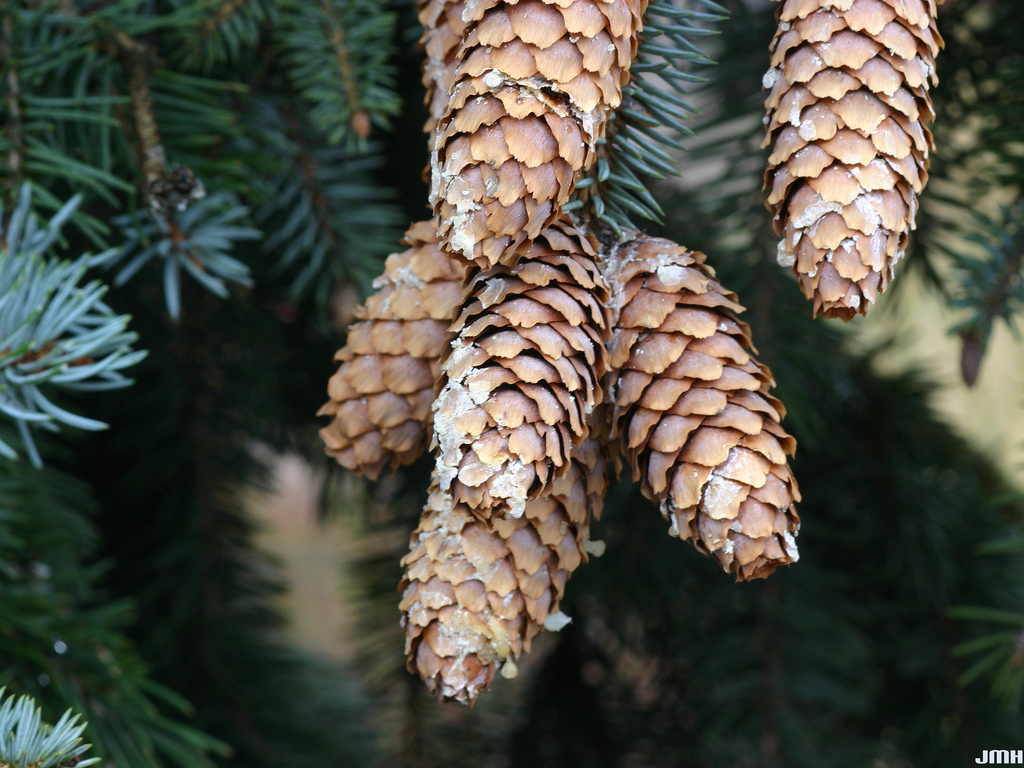
Cones ovoid-cylindrical, 5–10 cm long, light brown. Seeds black, 3–4 m in length, with a light brown wing 10–13 mm long.
Hardiness zone: 2–8 (-45°C).
Site requirements: Light-loving, but tolerates light partial shade. Prefers moist, fertile soil, light or medium loam. The topsoil layer should be well-drained so that roots receive adequate aeration. Poorly tolerant of waterlogging and soil compaction. Not very demanding in terms of moisture. Resistant in urban conditions to smoke, soot, dust, and wind. Branches do not break under the weight of wet snow. Frost-hardy and drought-resistant.
Planting: The optimal time for planting is late April to late June. Soil mix: turf, leaf soil, sand, peat in a ratio of 2:2:1:1.
Care: Responds well to fertilization. The area around the trunk should be periodically weeded and loosened, but not dug over. It is also advisable to mulch the trunk circle with peat or loose compost with subsequent incorporation. During dry periods regular watering is recommended, avoiding complete drying of the root-inhabited soil layer, as well as evening crown sprinkling. Manure or compost application in early summer is also possible. When grown in polluted locations, it is recommended to wash the spruce at least once a month.
Pruning: Tolerates trimming well; pruning is carried out once a year after shoot growth has ceased. By pinching out the central buds of lateral shoots and shortening new growth in summer, a more compact crown can be obtained.
Diseases: shütte, snow shütte, fusariosis, stem and root rot, bark necrosis, ulcerative (wound) canker, cone rust, spruce verturn.
Pests: red spider mite, spruce sawfly.
Propagation: when sown from seed, more than half of the seedlings inherit the bluish foliage. The rooting rate of winter cuttings taken from 10-year-old plants is 53%.
Uses: Used to create large stands, small groups, as solitary specimens and in avenues. Planted in prominent places in cities, on industrial enterprise territories, in gardens, squares, and streets.