
Conifers
Weeping Serbian Spruce
Picea omorica Pendula
Weeping Serbian Spruce (Picea omorika Pendula) – a collective name for forms of Serbian spruce. The name was first used in Germany in the 1920s, and has been sold commercially since 1941. It is applied to clones with a weeping crown habit, from semi-dwarf to full-sized forms.
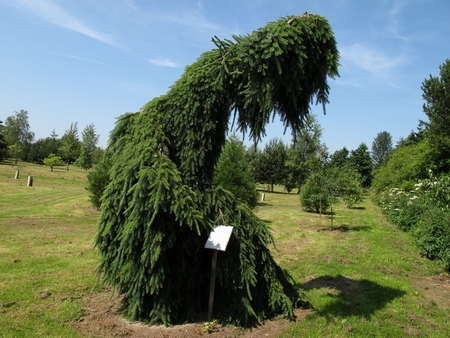
They are a semi-dwarf or full-sized tree up to 10-15 m in height and 1.5 m in diameter. Grows slowly, in height up to 10 cm per year, in width up to 3 cm; in 10 years it reaches 2.5-3 m. Trunk straight or crooked, with many scaffold branches and dense branching. As the branches hang, they often wrap around the trunk. This structure often results in a weeping habit. Shoots densely pubescent, yellowish-brown.
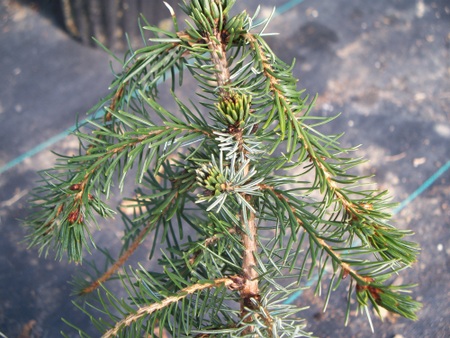
Needles dark green and glossy above, bluish beneath, needle-shaped, 8-18 mm long and up to 2 mm wide, keeled on both sides, compressed, with 2 broad stomatal bands on the underside. Persist on shoots for 8-10 years.
Flowers sterile, does not produce fruit.
Hardiness zone: 4a (-34°C).
Location/Site: Less shade-tolerant than common spruce. Relatively tolerant to smoke and gases. Requires air humidity, but tolerates dryness better than common spruce.
Soil: Performs poorly on very acidic and compacted soils; in such locations the needles begin to yellow.
Planting: The optimal time for planting is late April – late June. Spacing in group plantings: 2-3 m. Planting hole depth: 60-70 cm. The root collar should remain at ground level. Soil mix: turf and leaf soil, peat and sand in ratio 2:2:1:1. The bottom of the hole should be filled with drainage of crushed brick and sand 15-20 cm thick.
Care: After planting, you can apply 100-150 g of
© plantatlas.bio Use of site materials is permitted only with the permission of the copyright owners.