
Deciduous trees
Amur cork tree
Phellodendron amurense Rupr.
Synonyms: Phellodendron amurense, Amur cork tree
Amur cork tree (Phellodendron amurense Rupr.) – a species of dioecious plants of the genus Phellodendron, family Rutaceae. The species was first described by the botanist F.I. Ruprecht in 1857 in his work Bull. Cl. Phys.-Math. Acad. Imp. Sci. Saint-Pétersbourg 15:353. In cultivation since 1885. It is a relict species that grew before the glaciation.
The range extends in the Far East, in the forests of Manchuria, Khabarovsk, the Amur region, Primorye, in China, Korea, Taiwan, Sakhalin, the Kuril Islands, and Japan. Occurs in lowland mixed broad-leaved forests, less often on mountain slopes and hill slopes, at altitudes of 500-700 m above sea level, where it appears as a minor component in mixed coniferous-broadleaf and secondary forests.
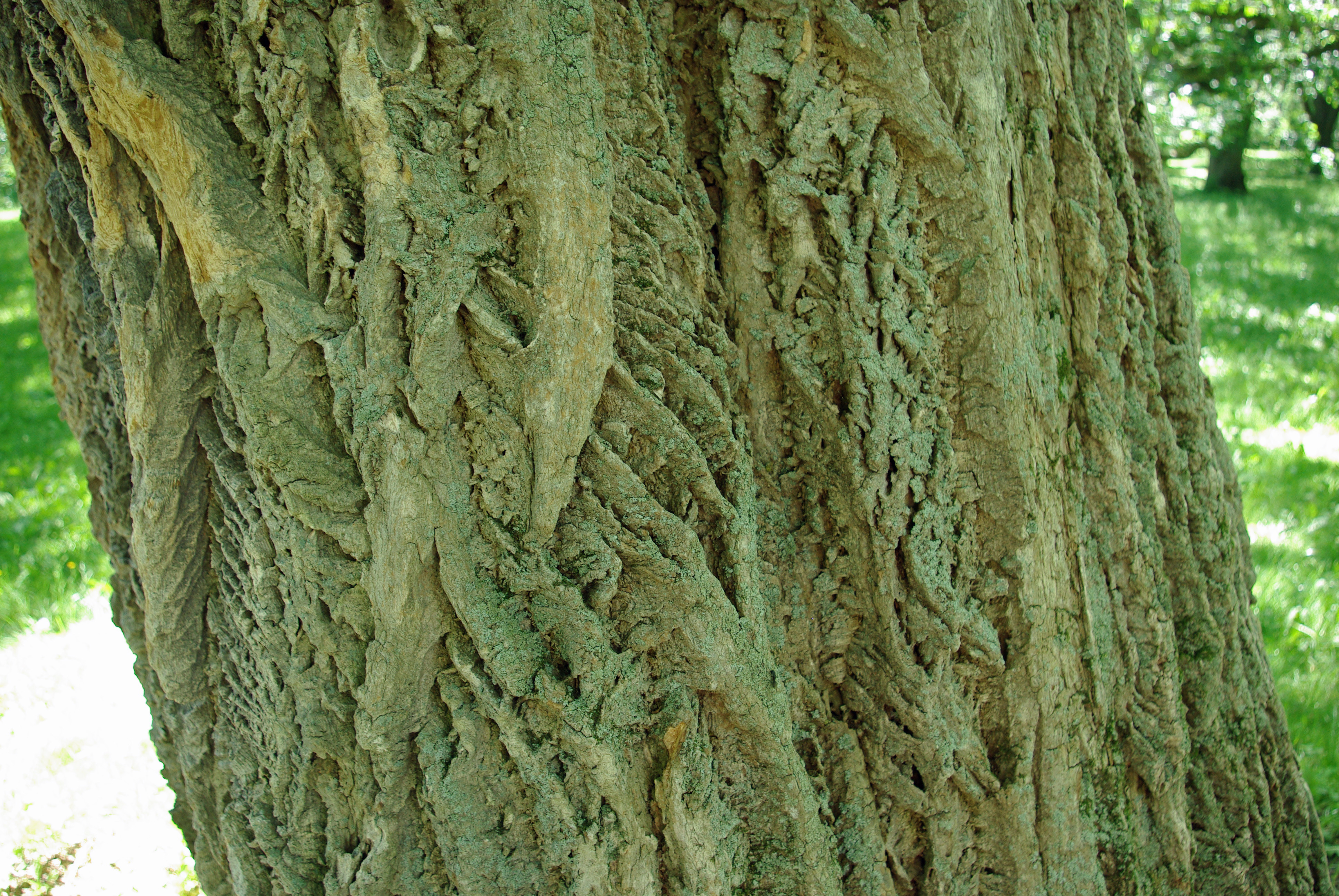
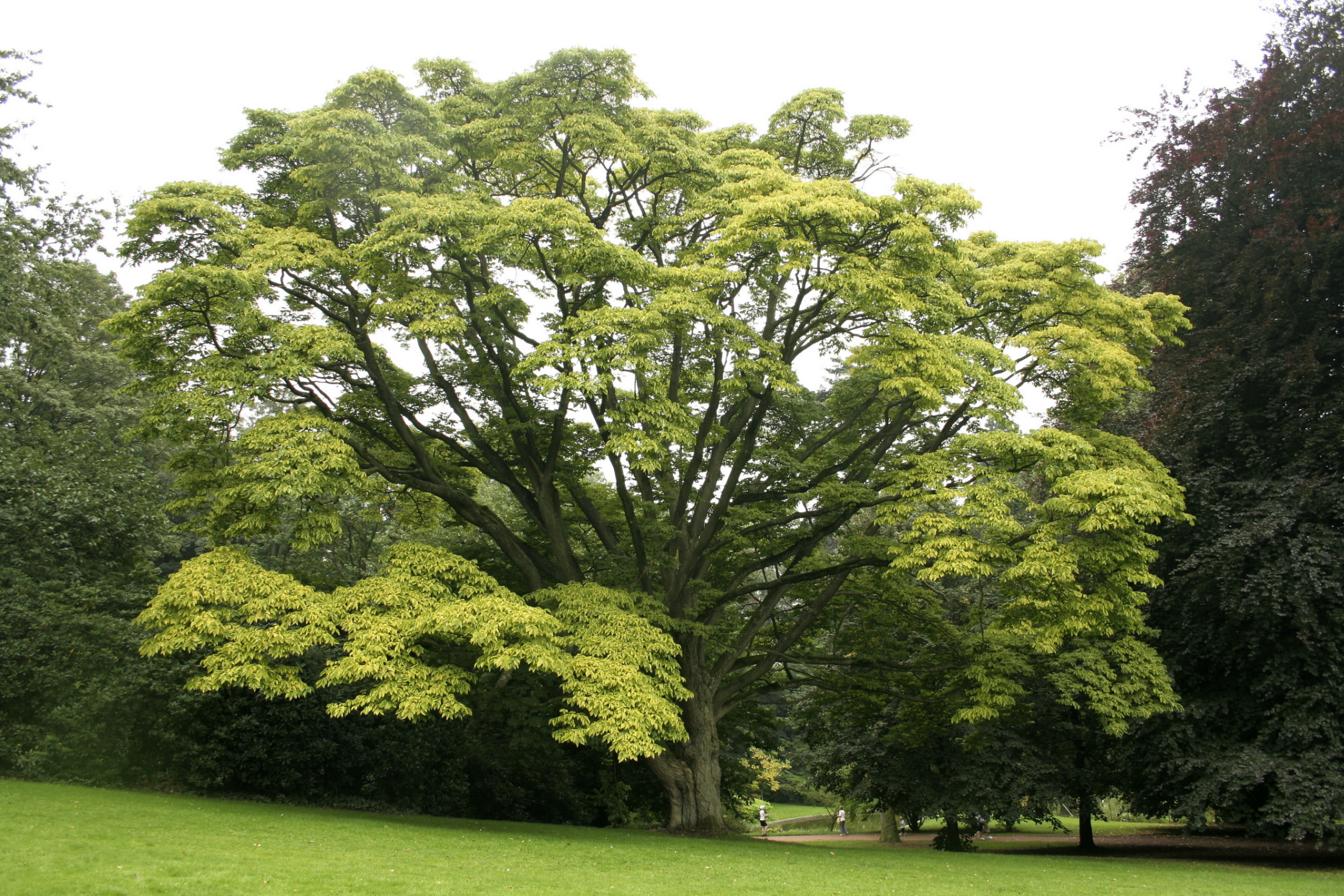
It is a dioecious deciduous tree 25-28 m in height, the trunk reaches 90-120 cm in diameter, grows quickly, lives up to 300 years. In the forest the crown is held high, in open sites it is pyramidal, airy; when low-planted it reaches 10-12 m in diameter. Bark up to 7 cm thick, ash-gray in color, very decorative, consists of two layers: a cork layer (up to 5 cm thick) and an inner phloem layer, sharply separated from the brownish heartwood, with a characteristic odor; in young trees the bark is silvery-gray, velvety, soft, longitudinally wrinkled and deeply furrowed. Young shoots are gray and smooth.
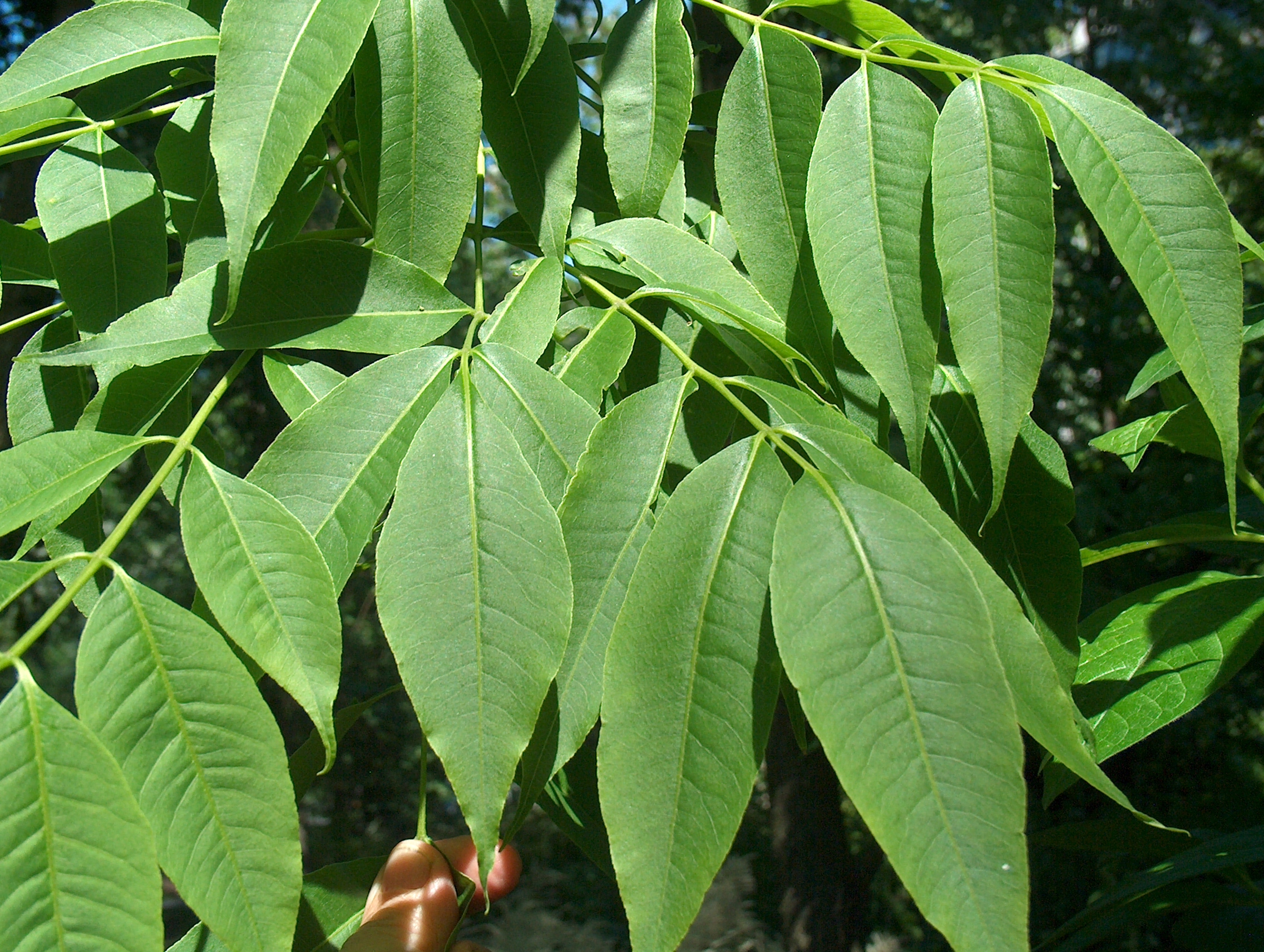
Leaves odd-pinnate, petiolate, arranged alternately, in the upper part opposite, in shape resembling ash leaves. Leaflets lanceolate, with a finely crenate margin, with an unpleasant odor. Leaves unfold later than those of other deciduous species – in late May – early June. Flowers in June-July.
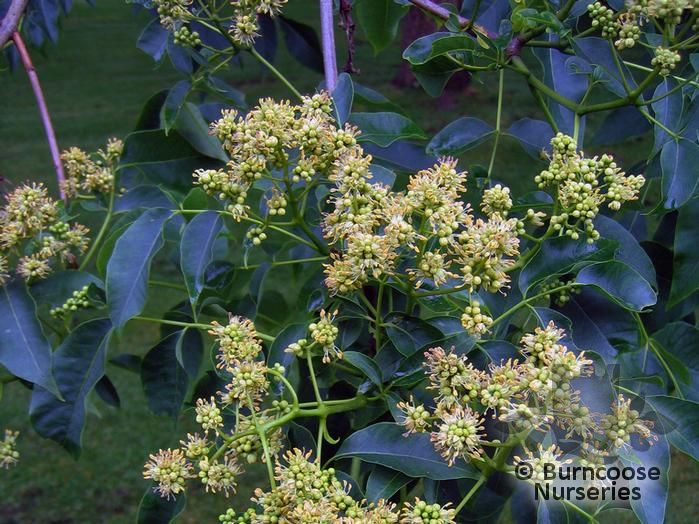
Begins to flower at 18-20 years of age. Flowering can be observed in June — early July, about 10 days. Flowers are small, up to 0.8 cm in diameter, inconspicuous, yellowish-green, regular, five-parted, unisexual, gathered in paniculate clusters up to 12 cm long. Pollinated by insects.
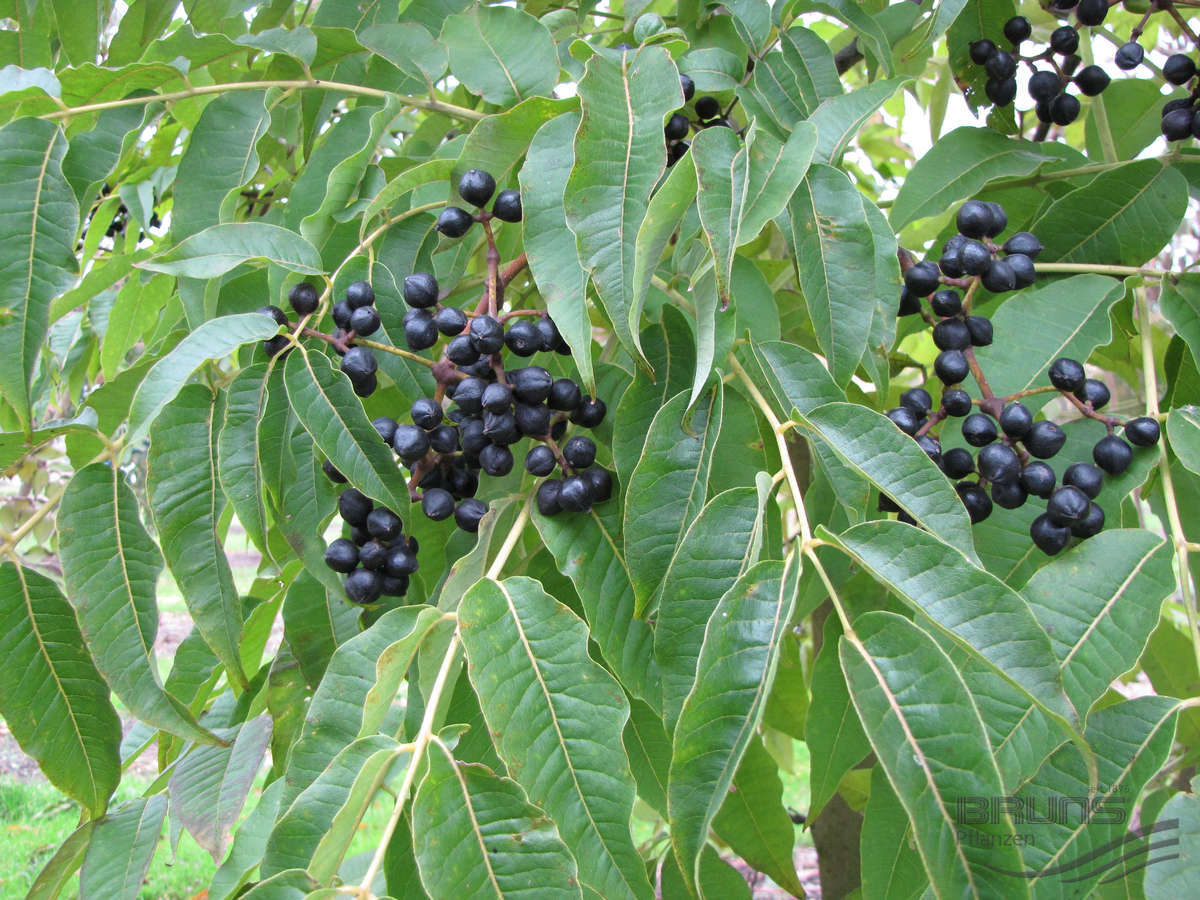
Fruits are globose inedible drupes, up to 1 cm in diameter, glossy, black, with a strong characteristic odor. Stones usually number five. Fruits annually, yielding up to 10 kg of fruit.
Varieties: Phellodendron amurense var. wilsonii
Hardiness zone: 3a (-40°C).

Site: thermophilic, light-loving. Prefers loamy soil, does not tolerate sandy soil.
Planting: planting hole size - 0.5-0.65 m, fill it with a mixture of garden soil, turf soil, humus and sand in the ratio 2:2:2:1. Planting is carried out in spring or autumn (no later than mid-October; if later, the plant is preferably heeled in at an angle until spring). Ideal age for transplanting – 1-2 years.
Watering: after planting the plant requires frequent watering – keep the soil moist. Later water only in dry periods.
Care: apply fertilizers and feeds in the first half of summer; well-rotted organic matter and a complete mineral fertilizer broadcast under the crown with subsequent digging are suitable.
Pruning: pruning must be done very carefully – trees are pruned in spring and wounds are sealed with garden wound dressing (pruning paste).
Pests and diseases: practically not affected.
Propagation: readily propagated by stratified seeds. Can also be propagated by cuttings or root suckers.
Uses: ideal for creating avenues in parks and large gardens, looks good as a specimen on a lawn. Pairs well with low-growing shrubs: thuja, juniper, barberry. Presents effectively with birch, spruce, oak and maple.