
Indoor plants
Phalaenopsis Orchid
Phalaenopsis
Synonyms: Doritis Lindl. (1833), Grafia A.D.Hawkes (1966), Kingidium P.F.Hunt (1970), ingiella Rolfe (1917), Lesliea Seidenf. (1988), Polychilos Breda (1827), Polystylus Hasselt ex Hassk. (1855), Stauritis Rchb.f. (1862), Stauroglottis Schauer (1843), Synadena Raf. (1838)
Phalaenopsis Orchid (Phalaenopsis) – a genus of epiphytic or lithophytic herbaceous plants of the Orchid family. The first representative of the genus was found on Ambon Island (the Moluccas) by the German traveler and naturalist G. Rumph. In 1752 the Swedish pastor P. Osbeck found another plant on a small island near Tenate and sent it to Carl Linnaeus's herbarium. He described this plant under the name Epidendrum amabile (the charming epidendrum) from the Greek. Epidendrum – «living on a tree». In 1825 the director of the Leiden Botanical Garden K. Blume found another plant on an islet of the Malay Archipelago. Observing the jungle at dusk with a field binocular, he took the orchids for white night moths. In memory of his mistake Blume named the genus Phalaenopsis, which means «moth-like» (phalania — «night moth», opsis — «resemblance»).
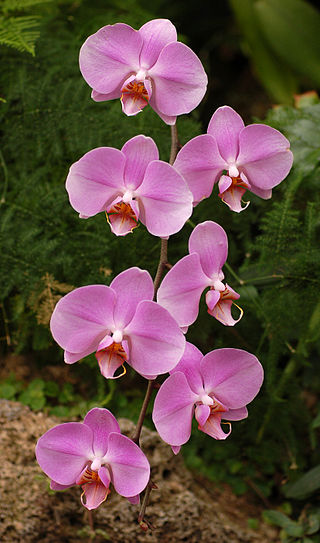
In the wild occurs in Southeast Asia, the Philippines and northeastern Australia. In natural conditions they inhabit humid lowland and montane forests.
They are monopodial plants with a shortened stem. Leaves evergreen, leathery, 5—30 cm long. In some species the leaves have a beautiful marbled pattern. From the axils between the leaves the plant produces aerial roots and inflorescences. An adult plant usually has 4—6 leaves.
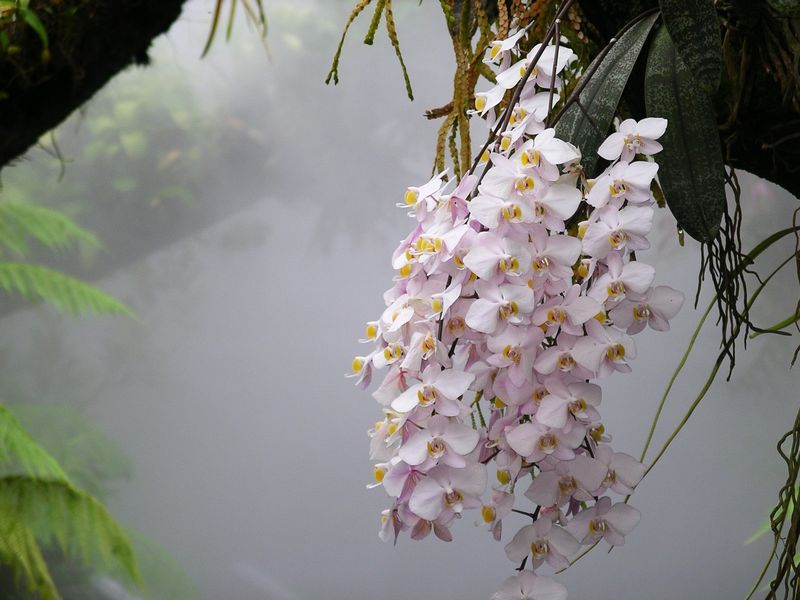
Inflorescences axillary, long, often branching, in many species with a large number of fairly large flowers. The flower resembles a butterfly in shape. In some species the flowers are fragrant.
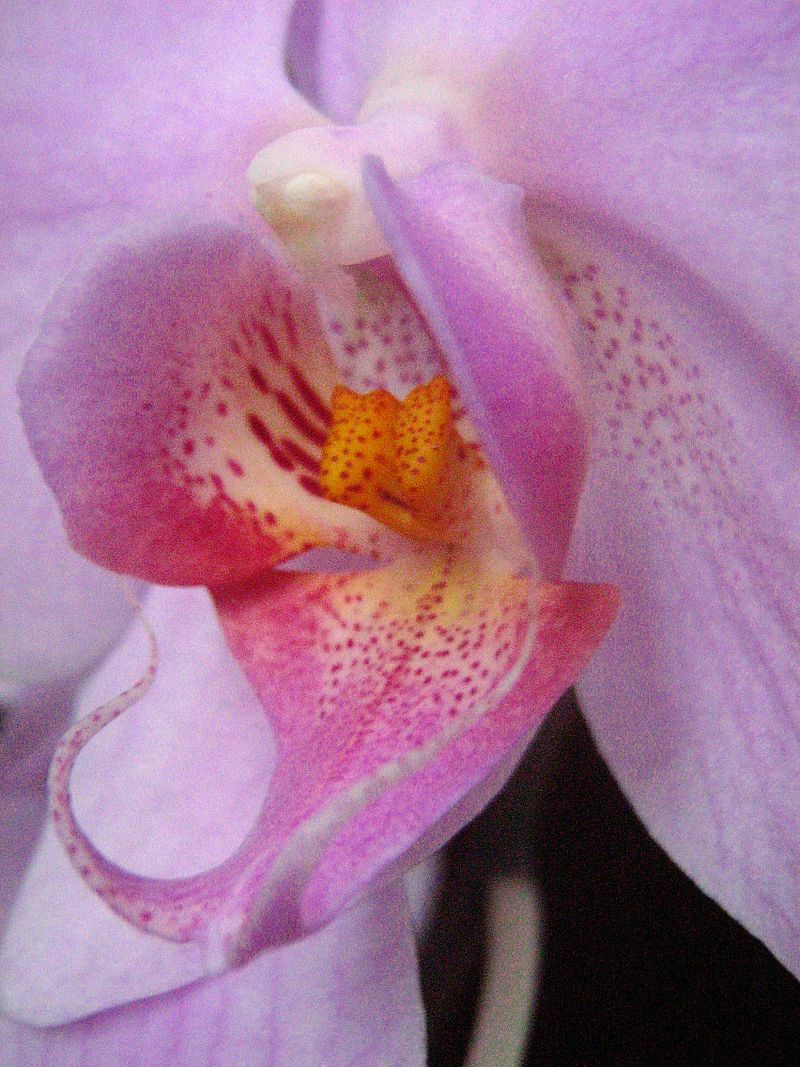
Roots aerial with a thick layer of velamen, sometimes flattened; in some species greenish due to the presence of chlorophyll.
Species: the genus comprises about 70 species.
Hardiness zone: 6 (-25°C).

Temperature: In winter and summer a favorable temperature is 22—25 °C, at night not below 21 °C. For successful flowering a difference between day and night temperatures of 5—10°C is desirable.
Light: in winter they need bright illumination; from spring to autumn they must be shaded from direct sunlight. An east- or west-facing window is ideal in the summer.
Watering: abundant watering is necessary during the growth of pseudobulbs; after their formation watering is reduced for about 2-3 weeks. Watering is resumed after the appearance of a new inflorescence. The standard watering method is to immerse the pot to 2/3 of its height in a container with water for approximately 20-30 minutes. The substrate should dry well before the next watering. In warm weather water approximately once a week; in cool weather or rain – once every 2 weeks. It is recommended to use filtered, settled or boiled water – this species reacts strongly to water quality. Water must not get on the pseudobulbs. It is better to let the orchid dry out than to overwater it.
Fertilization: feed the orchid from the beginning of young shoot development until the flowering period – 1-2 times a month. The concentration of the solution should be halved, as this species of orchids has very delicate roots. When fertilizing, immerse the pot completely in the water with fertilizer. During and after flowering, until the start of growth of new pseudobulbs, do not fertilize.
Air humidity: can be maintained at a relative humidity of 40—50 %
Repotting: repot once every 2-3 years. Main reasons for repotting – substrate compaction and insufficient pot volume. Ideally repot when the young roots on the new bulb have not yet appeared and their growth is only expected. Potting medium – standard substrate for orchids and epiphytes of medium and fine fraction. If the indoor air is too dry, a little agroperlite or vermiculite can be added to the substrate to retain moisture. Drainage or large pieces of bark can be placed at the bottom of the pot; do not cover the bulbs with substrate on top. Plastic or ceramic pots are suitable. The root system of Cambria does not like light (unlike Phalaenopsis), so it is better not to repot it into glass pots and cachepots. After repotting it is recommended not to water, fertilize or move the orchid to another place for a week.
Propagation: by division of the clump so that each half has the same number of bulbs. When dividing it is very important not to damage the fragile roots; if a root does break, it is recommended to dust the cuts and breaks with powdered activated charcoal. After potting the divisions do not fertilize or water them for a week.
Diseases: may be affected by fungal and bacterial diseases.
Pests: orchid aphid, red spider mite, thrips. Control method – use of specialized treatments.