
Indoor plants
Phalaenopsis
Phalaenopsis
Phalaenopsis (Phalaenopsis) – a genus of epiphytic or lithophytic herbaceous plants from the family Orchidáceae. They grow in Southeast Asia, the Philippines and northeastern Australia. In nature they occur in montane forests and humid valleys.
Many representatives of the genus and hybrids are often used in indoor horticulture and in botanical gardens.
The first representative of the genus was discovered by the German naturalist and traveler Georg Rumph. In 1752 the Swedish pastor Peter Osbeck found another plant on a small islet near Ternate. The pastor sent the plant to Carl Linnaeus, who described it in his famous work «Species Plantarum». Linnaeus named the plant Epidendrum amabilis (Epidendrum amabilis). The word «epidendrum» from Ancient Greek translates as «living on a tree». The name Phalaenopsis («moth-like») was given by the director of the botanical garden Carl Blume, who in 1825 found another plant on an island of the Malay archipelago. While observing the jungle at night through a telescope, Carl mistakenly took it for white nocturnal moths.
The genus includes about 40 species. These are monopodial plants with a shortened stem and leathery broad leaves. The plant grows only upward. From the leaf axils Phalaenopsis sends out inflorescences and aerial roots.
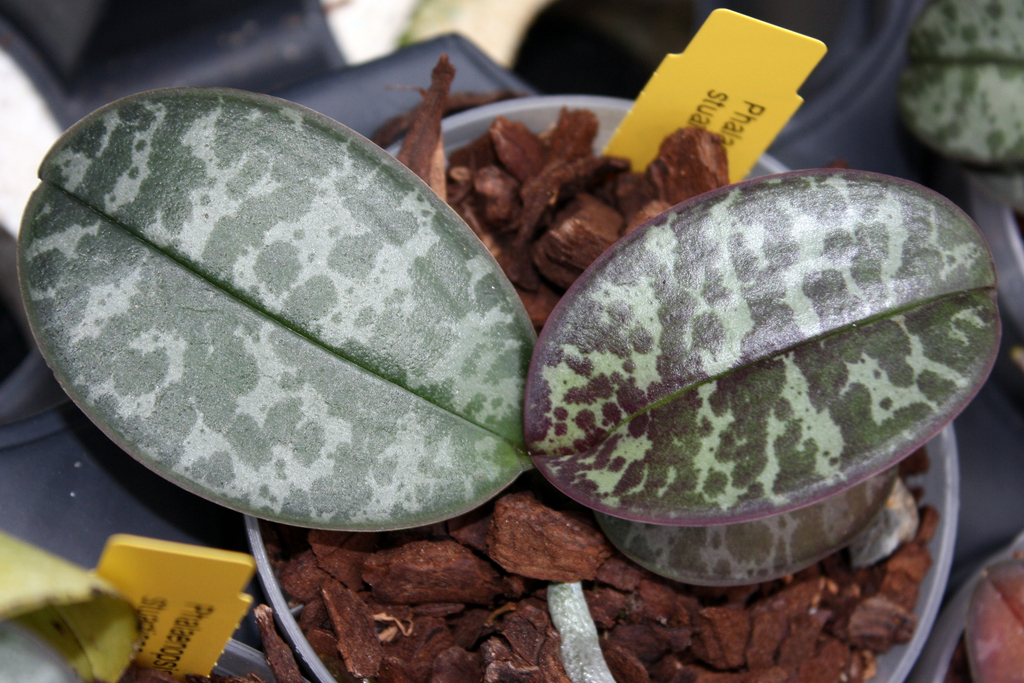
An adult plant typically has 4 to 6 leaves. Leaves are 5-30 cm long, evergreen, light green or dark green in color. Some species have a marbled pattern on the leaves.
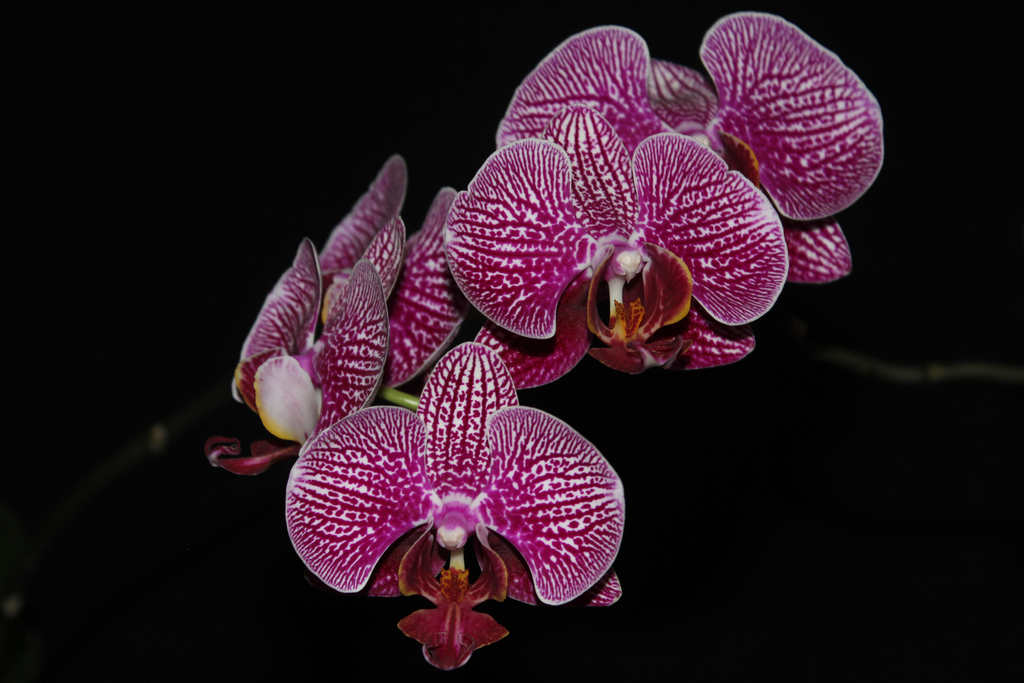
The inflorescences are located in the axils, tall, often branching. In many species a large number of sizable flowers grow on the inflorescence. The flowers are butterfly-shaped.
The roots are aerial, covered with a thick layer of velamen, often flattened; some species have greenish roots due to the presence of chlorophyll in them.
Popular species: Phalaenopsis amabilis, Phalaenopsis cornu-cervi, Phalaenopsis lueddemanniana, Phalaenopsis schilleriana, Phalaenopsis stuartiana.
Temperature: most species and hybrids require warmth. In winter and summer the optimal daytime temperature is 22-25 °C; at night it should not fall below 21 °C. For better flowering a day-night temperature difference of 5-10 degrees is necessary. Does not tolerate drafts.
Light: diffused light is required. At home an east or southeast window or a spot about one meter from it is ideal. Does not tolerate direct sunlight. In winter it needs additional lighting to extend the photoperiod to 12-16 hours. Phalaenopsis also grow well under artificial light.
Watering: Phalaenopsis do not have a clearly defined dormancy period. They grow and bloom well year-round under indoor conditions. Therefore watering is required throughout the year. Only distilled or boiled water should be used for watering, as the plant does not tolerate substrate salinization. It is recommended to pour water through the substrate several times so that the bark absorbs the necessary moisture. You can also place the pot in a basin of water for 10-20 minutes. Watering is done as the substrate dries out (approximately once a week).
Fertilizer: feed with a special orchid fertilizer or a balanced mineral fertilizer once every 1-2 weeks. To improve flowering during the formation of the inflorescence a potassium-phosphorus fertilizer may be applied.
Air humidity: daily misting with distilled or boiled water is recommended, avoiding the flowers. Optimal humidity 50-80%.
Repotting: carried out once a year after flowering in late spring or summer. When repotting, immerse the plant in water for a few minutes, then carefully pull it out of the pot. After that clean the roots from old substrate and remove rotten, dead or soft roots (cut only the damaged part of the root back to healthy tissue – green or white). Tools must be disinfected before work, and cut surfaces treated with special agents (antiseptics that do not contain alcohol, dust with cinnamon, crushed activated charcoal powder, garlic solution or sulfur; the use of iodine or brilliant green is not recommended). Then remove old and yellow leaves, as well as yellowed or drying inflorescences. After these procedures the plant should be dried before planting in a new pot.
Potting: the plant should be planted in a special orchid substrate. The substrate can also be prepared yourself – 70% conifer bark, 10% peat, 10% charcoal, 10% sphagnum. It is recommended to disinfect the substrate before planting (boil for 4-5 minutes).
Propagation: at home propagation is carried out by separating lateral offshoots – "plantlets" that have grown from dormant buds on the stem or inflorescence. When a plantlet has developed at least 3 roots of 4-5 cm each, it can be removed from the mother plant and planted in a separate pot. Large plants with many aerial roots can also be divided into parts. This method of propagation is recommended only if you are sure there are live buds left on the lower part of the stem. Meristem (cloning) and seed propagation are also used.
Diseases: black rot, root rot, brown rot, fusarium rot, gray rot, anthracnose, rust, leaf spot, cymbidium mosaic, odontoglossum ring virus, cattleya mosaic.
Pests: spider mite, flat mite, bulb mite, scale insects, mealybugs, aphids, thrips, greenhouse grasshoppers, sciarid flies (fungus gnats), woodlice, slugs and snails, weevils, springtails.