Flowers for the garden
Poppy
Papaver L.
Family: Papaveraceae. For ornamental purposes several species and a large number of poppy cultivars with single and double flowers are used. Plant height ranges from 45 to 120 cm (depending on species and cultivar). Flower colors: white, pink, red, yellow, purple with shades from pale to almost black-purple. Flowers bloom in June–July. For successive sowings it is necessary to have flowering poppies from June until autumn.
The most important species are:
Peony-flowered double poppy (Papaver paeoniflorum), native to Asia Minor. Stem smooth, up to 90 cm high. Leaves irregularly toothed and lobed. The whole plant is glaucous-green. Flowers large, double, with numerous entire-margined petals. Cultivars differ in flower color. Half-open flowers, cut early in the morning, keep well in water.
Opium poppy (Papaver somniferum), native to Asia Minor. Plant up to 90 cm high with flowers of various colors.
Double opium poppy (with cut petals). Flowers large, very double with a cut edge to the numerous petals. There are many cultivars with different flower colors. Flowers are good for cutting.
Low double opium poppy. Height up to 60 cm; displays a variety of flower colors.
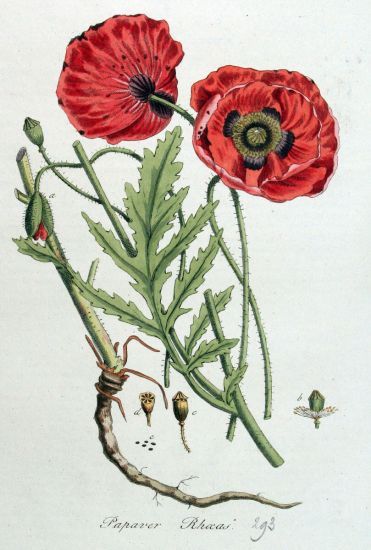
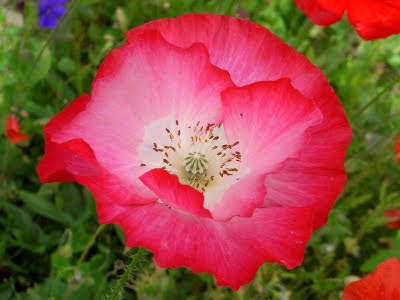
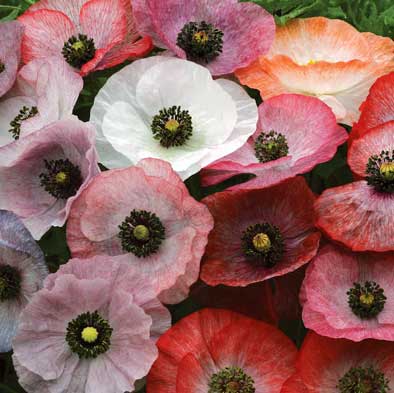
Shirley self-seeding poppy (Papaver rhoeas Shirley), height up to 75 cm. Flowers single and double, in delicate shades, various colors, and also bicolored. Blooms abundantly; especially good for undersowing in a flowering lawn.
Location: For abundant flowering and bright flower color a sunny, open position is necessary.
Soil: Not demanding as to soil, provided it is worked deeply.
Propagation: By seed. Seeds are sown directly into the ground in autumn on well-prepared soil or in early spring – in late April to early May. The seeds are small. Therefore before sowing they are mixed with 5–8 times the amount of sieved sand. Seedlings at an early age are thinned to 5–10 cm apart; later, at the second thinning, leave 20–25 cm between plants, otherwise they become leggy and flower poorly. They do not tolerate transplanting well.
Usage: Mainly for sowing in a flowering lawn and for cut flowers.