
Indoor plants
Palisota
Palisota
The genus is named after the French traveler and botanist J. Palisot de Beauvois (1752-1820). 25 species distributed in West Africa. Rarely cultivated as a houseplant. Palisota is very undemanding.
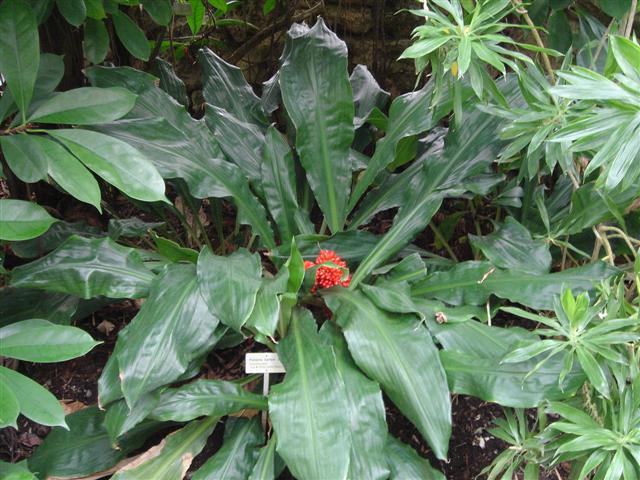
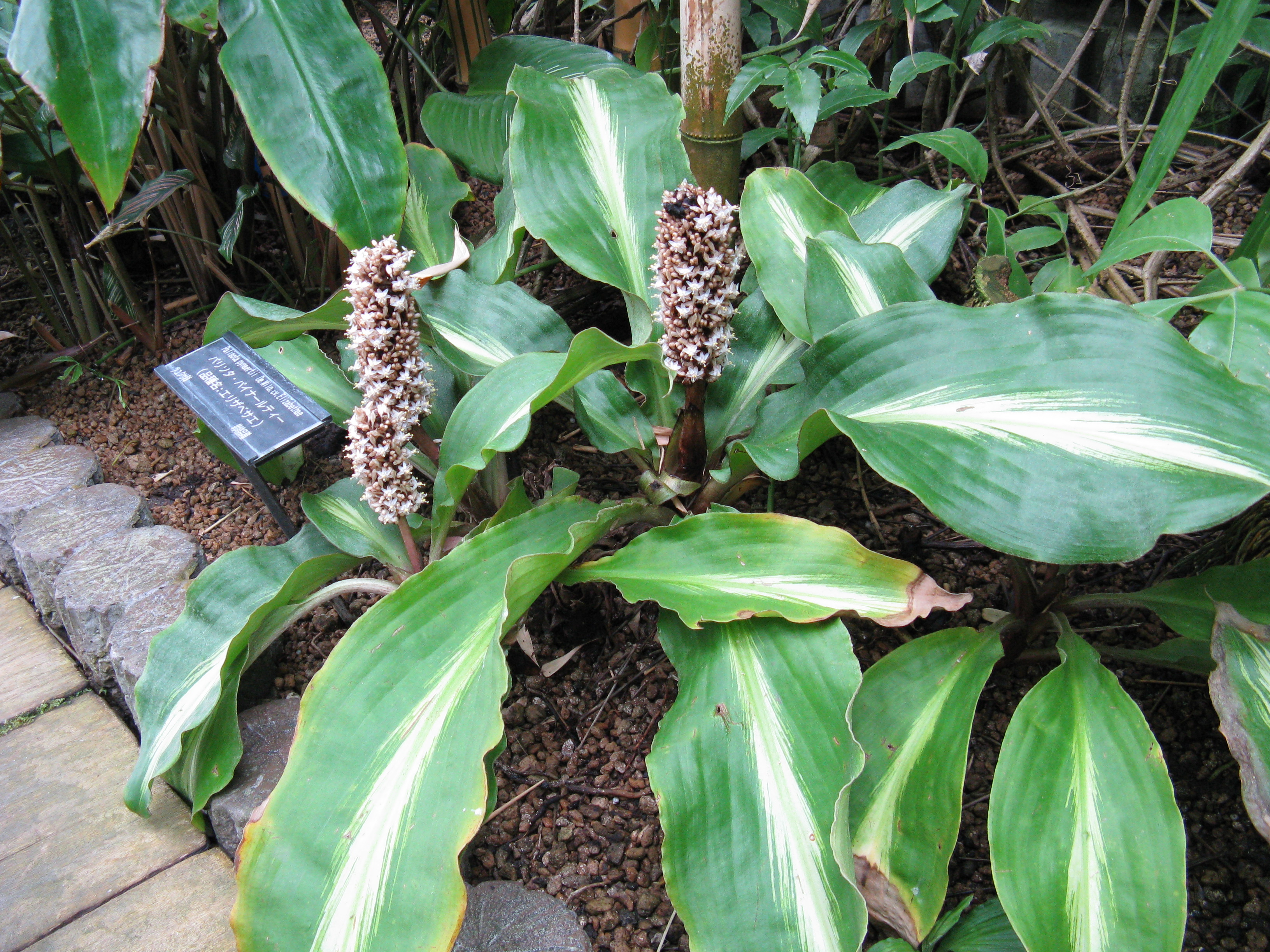
Palisota barteri - Palisota barteri Hook. f. A perennial rosette-forming herbaceous plant. Leaves on long petioles, the bases of which are expanded into sheaths and clasp one another, oblong or obovate, acuminate at the tip, large, 20-40 cm long, 10-15 cm wide, light green with a prominently raised midrib on the underside. The entire plant is silky-pubescent with long white appressed hairs, especially dense and long on the petioles and along the margins of the sheaths, where they have a reddish coloration. Small white or pale pink flowers are gathered in a short dense terminal panicle. The plant's remarkable ornamental appeal is provided by its bright cinnabar-red, berry-like, densely clustered fruits. Native to West Africa. In cultivation since the mid-19th century.
Location: tolerates considerable shading. In winter it withstands temperature drops only down to 15-17 °C.
Lighting: shade-tolerant.
Watering: requires abundant watering and constant misting of the leaves.
Humidity: high; frequent misting of the leaves is necessary.
Care: with good care it will reward with abundant flowering, the most beautiful among the commelinaceous plants, after which red berries will set. They will hang throughout the winter.
Fertilization: feed once every two weeks during the growing season.
Propagation: by offsets or seeds. Offsets are produced at the root after the mother rosette is cut.