
Indoor plants
Fine-haired Opuntia
Opuntia microdasys (Lehm.) Pfeiff.
Opuntia microdasys (Opuntia microdasys (Lehm.) Pfeiff.) – a species of the genus Opuntia (Opuntia) in the family Cactaceae. It was first described as Cactus microdasys by the German botanist I. Lehmann in 1827.
Occurs naturally in the valleys of central Mexico (state of Hidalgo) at an altitude of about 1000 m above sea level.
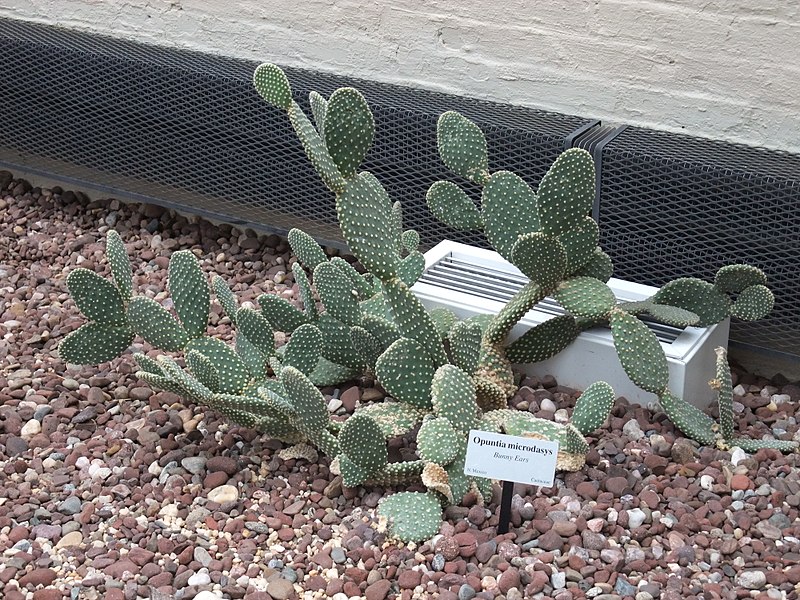
It is an erect, branching, shrubby plant. It reaches a height of
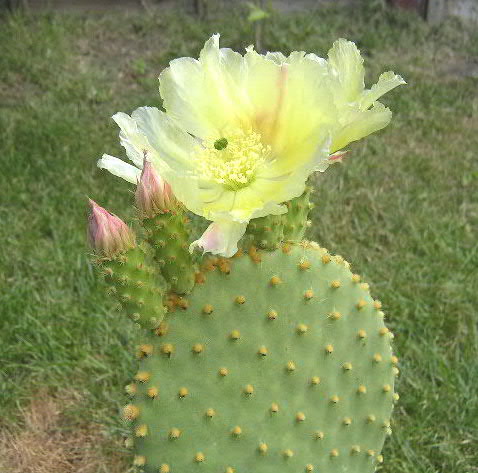
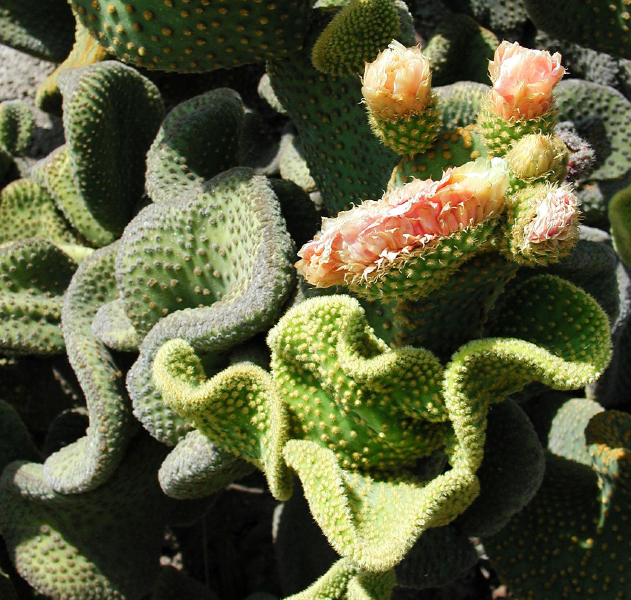
Flowers are numerous, up to 10 flowers on a single segment. Blooms in mid-summer. Flowers are lemon-yellow, 3—5 centimeters in diameter. Fruits are juicy, lilac-red. It flowers mainly in greenhouses once it has reached a sufficiently large size. When grown in an apartment, it is rather difficult to get it to bloom. It is recommended to grow Opuntia in very wide containers. For the whole growing season the cactus should be placed outdoors, trying to avoid moving the pot with the plant. It blooms most readily after a prolonged dry winter rest.
Hardiness zone: 10b (

Temperature: Moderate. In winter a resting period at 7-10°C, minimum 5°C, with dry conditions.
Light: Opuntias like a lot of light, but they should be acclimated to spring sun gradually. Without sufficient light the plants become etiolated and lose their decorative appeal. Wintering should also be well lit. With insufficient sunlight new segments deform, becoming cylindrical in shape.
Watering: Moderate in spring and summer, reduced from autumn, and very infrequent in winter. In summer, mimicking fog, the plant can be misted, taking care to protect it from direct sunlight until the surface has completely dried. Substrate should be 50% mineral — a mix of sand, expanded clay; 50% humus mixtures.
Fertilizer: From late spring until mid-summer feed with a special cactus fertilizer.
Air humidity: Opuntias tolerate dry air. However, regular misting with warm water from a very fine sprayer will not harm.
Repotting: Soil - 1 part turf, 1 part leaf mould, 1 part peat earth, 1 part sand and brick grit. For mature and old cacti the turf soil makes up 2 parts. Young plants are repotted annually or every other year; older ones every one to two years.
Propagation: By seeds and cuttings (individual segments).