Encyclopedia - Plants for ponds
Nymphoides or Marshflower
Nymphoides peltata
The genus Nymphoides includes about 20 species, distributed mainly in tropical and subtropical zones, especially in South Asia. Some authors of floristic treatments (Voroshilov, 1982, 1985) place this genus in the family Gentianaceae Juss. (the gentian family). The leaf blades of Nymphoides resemble waterlily leaves, although these plants are not related and belong to different families.
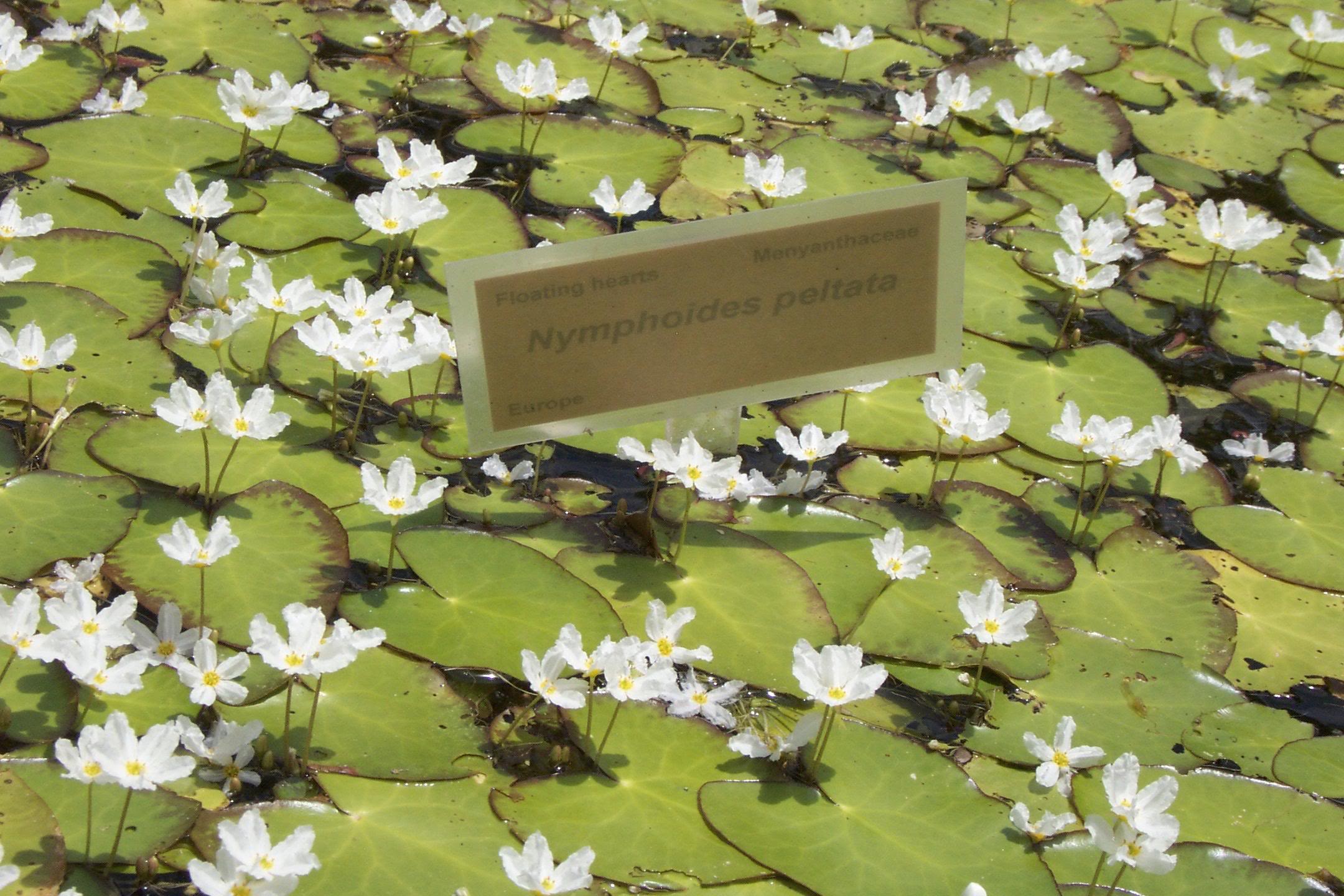
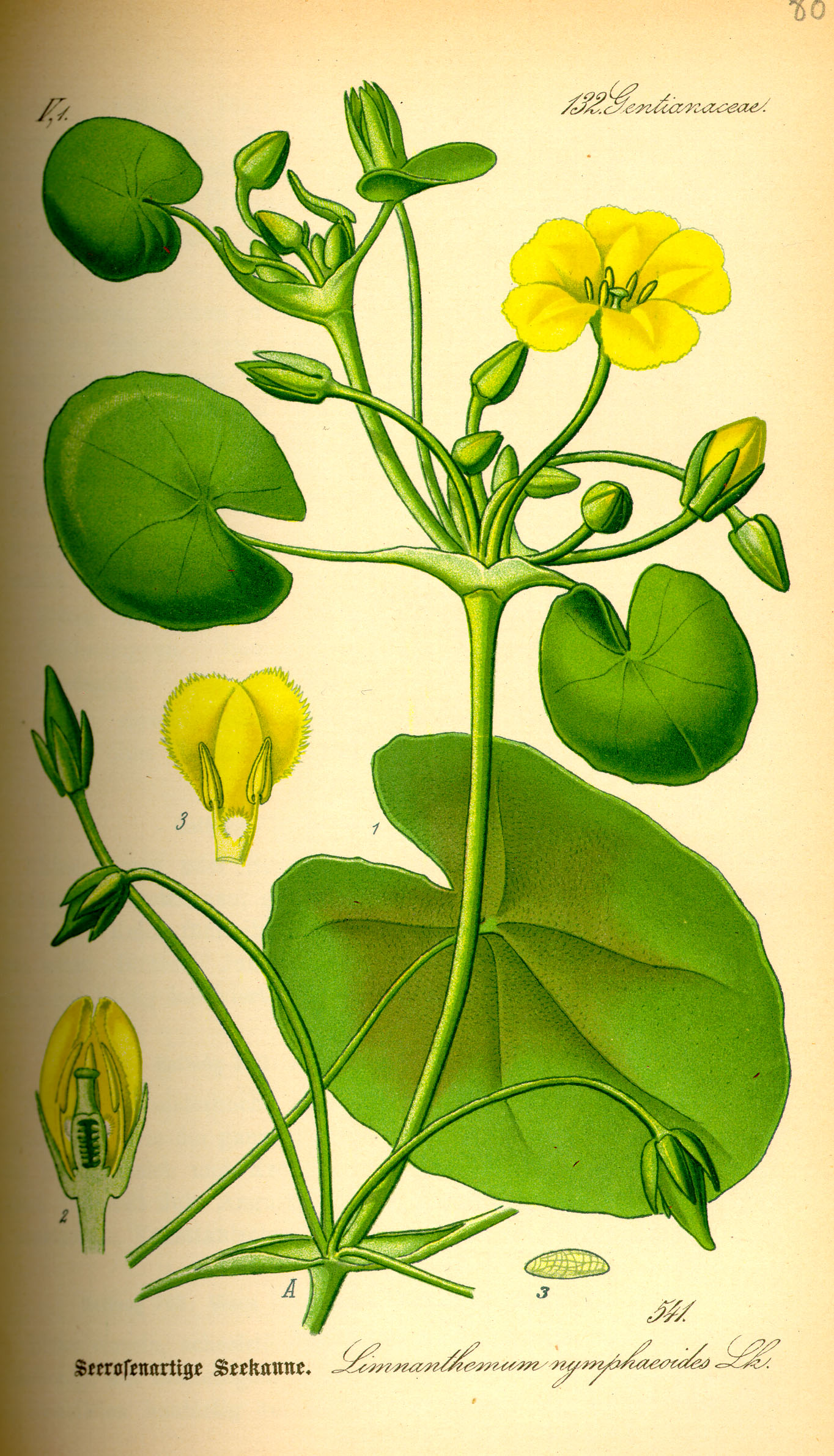
Perennial aquatic plant with floating leaves. Rhizome thin, creeping. Stems are long and equal to the water depth in the locations where Nymphoides grows. It has a wide ecological amplitude: it can grow in areas with strong water currents and in standing bodies of water. After flood waters recede it often ends up on dried ground.

In these cases its leaves are raised above the soil surface, becoming firm and stiff. Leaves are long-petioled, with a floating, round or round-elliptical blade up to 12 cm long and 9 cm wide. Leaf blades are cordate at the base, with overlapping lobes, entire-margined, dark green and glossy on the upper surface; the underside of the leaf is green-violet with dark glandular pits. Leaves appear on the water in June.
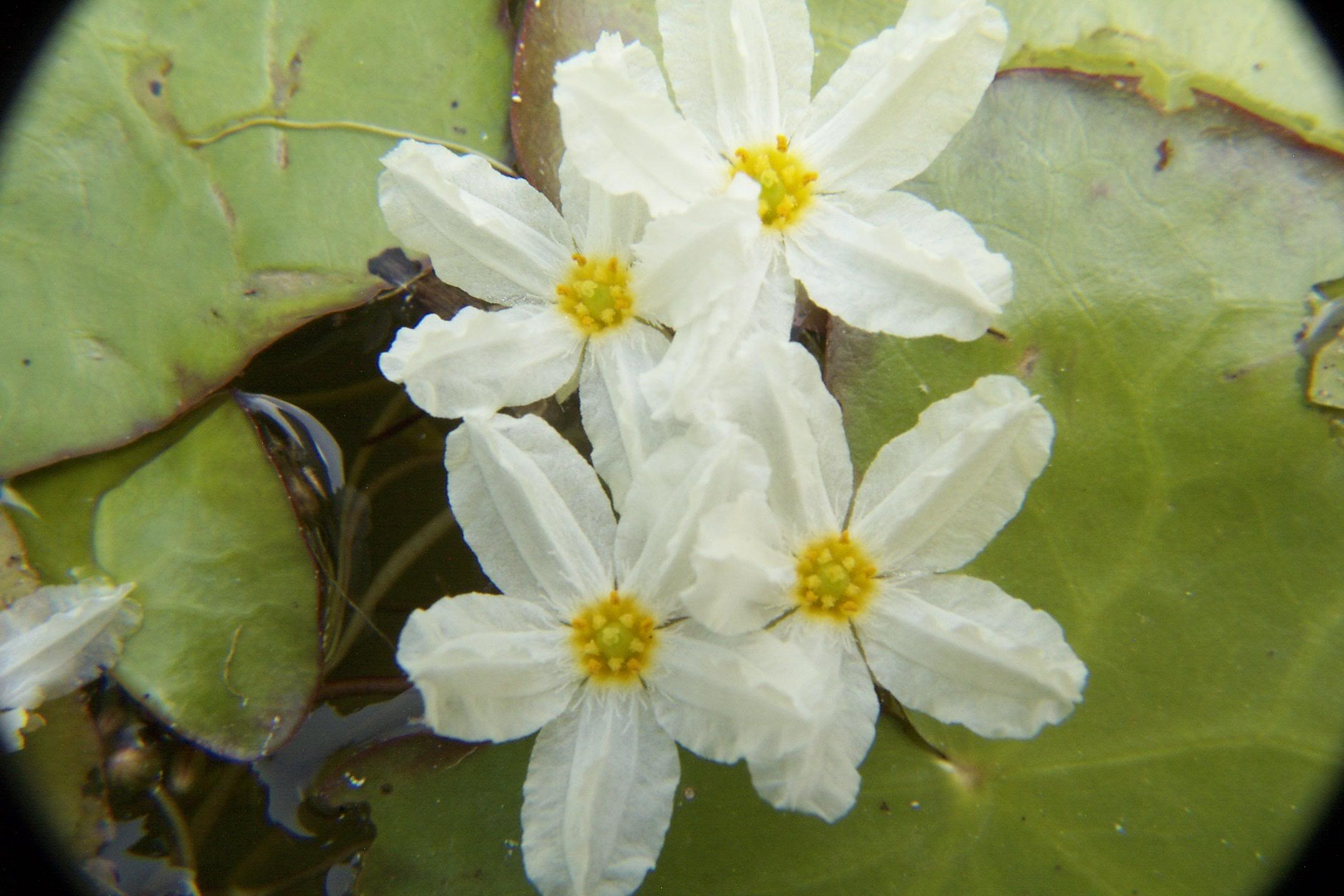
Nymphoides peltata var. alba
Inflorescences in the form of umbels are located at the top of the stem and its branches, as well as in the axils of the upper leaves. Buds develop underwater and only at the moment of opening appear on the water surface and, under the rays of the sun, the yellow flowers open. The perianth is double: the calyx, divided almost to the base, consists of lanceolate, blunt sepals; the bright yellow corolla is twice as large as the calyx, 3.5–4.5 cm in diameter.

The petals are two-thirds split into obovate lobes, notched at the apex. The adaxial surface of the corolla lobe has abundant long cilia. There are 5 stamens, and at the base of each stamen there are two tufts of long hairs, and below (in the corolla tube) there are 5 fringedly incised appendages alternating with the stamens. Stamens have long anthers. The style of the pistil is longer than the ovary. The stigma is bilobed. The lobes of the stigma are serrated and curly at the edges. It flowers in July–August (more rarely in September); during this period buds, flowers and fruits can be seen on the same specimen.
The fruit is a capsule of ovoid shape up to 2.6 cm long, flattened, with a persistent hardened style at the apex. Seeds are oval, flattened, with a wide rim set along the edge with long cilia.

Location: sunny with any, but preferably fertile, soil. Hardiness is good in bodies of water that do not freeze to the bottom. It is better to plant in a container and submerge it to depth. If there is soil on the bottom, it will very soon transplant itself there. Planting depth from 5 to 60 cm below the water level.
Care: spreads too rapidly and requires constant control. Try to control its spread by pruning and continually repropagating by cuttings. But it will probably escape into the wild anyway.
Propagation: by cuttings, by dividing the rhizomes in late spring or summer.