
Encyclopedia - Plants for ponds
Nymphaea or tiger waterlily
Nymphaea lotus
Synonyms: Tiger waterlily, Castalia edulis Salisb.,Castalia lotus Tratt., Castalia mystica Salisb., Castalia pubescens Wood, Castalia pubescens Blume, Castalia sacra Salisb., Leuconymphaea lotus Kuntze, Nymphaea dentata Schumach. & Thonn., Nymphaea liberiensis A.Chev., Nymphaea lotus var. rogeonii A.Chev., lotus
Egyptian nymphaea (Nymphaea L.) – a species of aquatic plants of the family Nymphaeaceae. The genus was first described by the Swedish systematist Carl Linnaeus in 1753 in Species Plantarum 1: 511. It was introduced into cultivation in 1802 at the Loddiges nursery (United Kingdom).
In the wild it occurs in countries of tropical, southern and northern (Egypt) Africa. It has been introduced to North and South America.
Flowers are large, with 19—20 petals, 15—25 cm in diameter, white, sometimes with a pinkish tint on the outer side of the petal, with a light pleasant fragrance; stamens are yellow. There are 4 sepals. Flowering lasts 4 days.
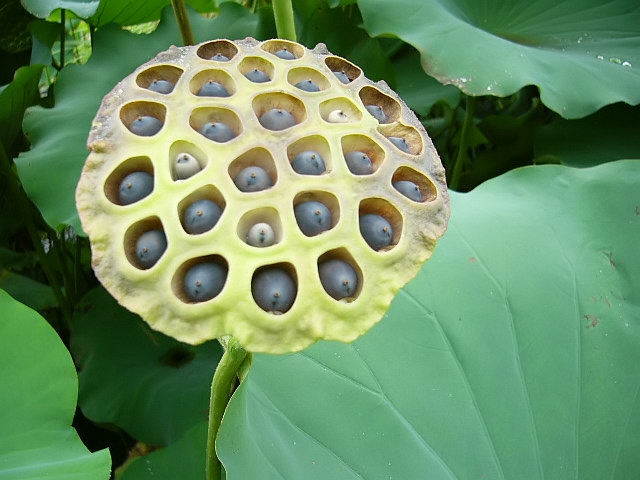
Fruits are solitary, on long pubescent peduncles, yellowish-green, 6—9 cm in size, flattened-spherical in shape, many-seeded. Seeds are glossy brown.
Subspecies:
- Nymphaea lotus var rubra
- Nymphaea lotus var. thermalis
- Nymphaea lotus var viridis
- Nymphaea lotus var. dentata
Hardiness zone: 6a (-23°C). Overwinters under snow.
Soil: prefers standing or slowly flowing waters. It requires a deep layer of nutrient-rich silty or clay soil. The substrate should contain a lot of organic matter. As a base for aquarium substrate it is better to use fine gravel. Clay or a mixture of clay and peat and charcoal should be added to the general aquarium substrate. In very large aquariums and in ponds it is advisable to grow nymphaea in separate pots. In this case a special substrate can be prepared for the plant. Fine gravel and sand are laid on the bottom of the pot, then a layer of substrate consisting of 1 part humus, 2 parts turf soil, 1 part coarse sand. The pot is filled two-thirds full. After this the nymphaea is planted and coarse sand and fine gravel are added to fill the pot to the top.
Temperature: The optimal temperature is 24-28 °C; at lower temperatures growth slows and flowering does not occur.
Water: should be soft, preferably not more than 4°. In hard water the plant forms clumps, produces a large number of floating leaves and does not flower. A slightly acidic water reaction is preferable. Optimal pH is 6-6.8. The plant prefers old water with a sufficient content of humic acids. Regular water changes are not necessary.
Lighting: bright. With insufficient lighting the leaf coloration deteriorates, the clump loses shape, and the petioles of submerged leaves lengthen. Direct sunlight is very beneficial for the nymphaea. For artificial lighting, fluorescent lamps of the LB type or special phyto-lamps used in greenhouses and conservatories can be used. Incandescent lamps are less suitable. Lamps should be of high power and installed high above the aquarium (to avoid overheating the plant). For attractive flowering the power of fluorescent lamps should be 0.5-0.6 W per 1 L of aquarium volume. Day length 12-14 hours.
Care: During periods of vigorous growth mineral feeding is highly desirable. A good result is obtained by weekly application of 1.5-2 g of complex mineral fertilizers with microelements per 100 L of water. When the plant is grown in water harder than 6°, it forms many basal offshoots. A dense growth forms that must be thinned. Otherwise the plants become very weak and stretch upward. In soft water the formation of basal offshoots may occur after flowering.
Propagation: Flowers can be artificially pollinated using a soft brush. Ripe seeds are sown in separate dishes with sand covered by water and kept at a temperature of about 26 °C.
Dormancy period: At the beginning of the winter period, after flowering and seed formation, the nymphaea enters a period of relative dormancy. At this time it is better to maintain the water temperature at 20-22 °C.