Indoor plants
Nertera granadensis
Nertera granadensis
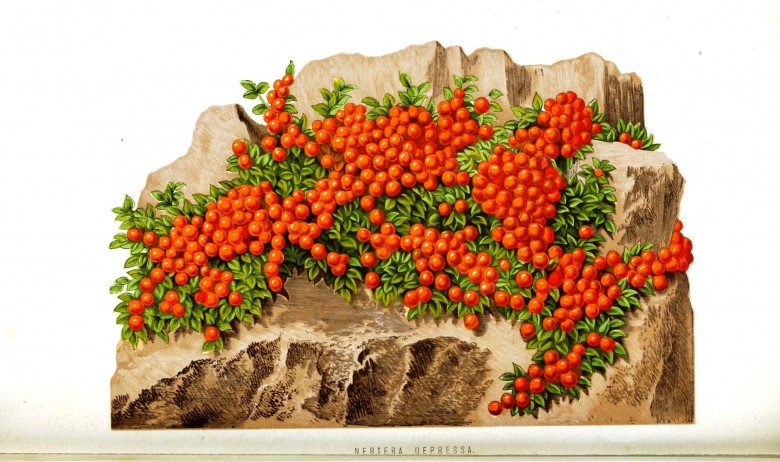
Nertera (lat. Nertera) — a genus of flowering plants of the family Rubiaceae (Rubiaceae), according to various sources comprising from 6 to 8–12 species. It occurs in the tropics and subtropics of both hemispheres (South America, New Zealand, Southeast Asia, Australia). Nertera is among the groundcover plants.
The name comes from the Greek "nerteros", meaning low, small.
Small creeping perennial and herbaceous plants. Leaves are bright green, oval and glossy, about 0.5 cm in diameter.
Flowers are white and solitary, 4—5-parted with a tubular or funnel-shaped green corolla, opening in late spring.
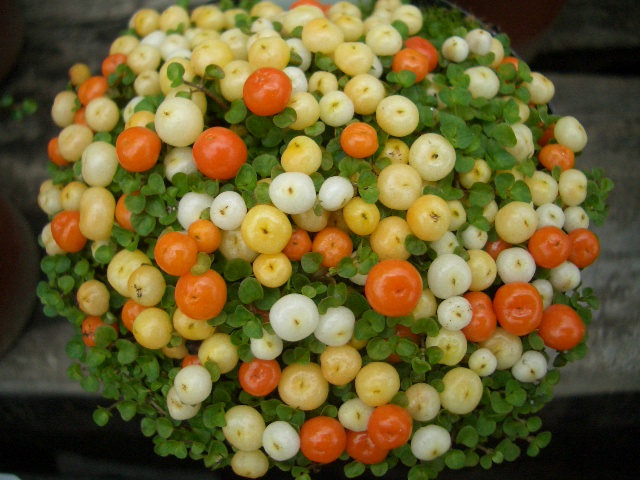
After some time fleshy red (in some species orange or yellow) fruits 8—10 mm in size appear, which is why the plant has gained its second name — coral moss.
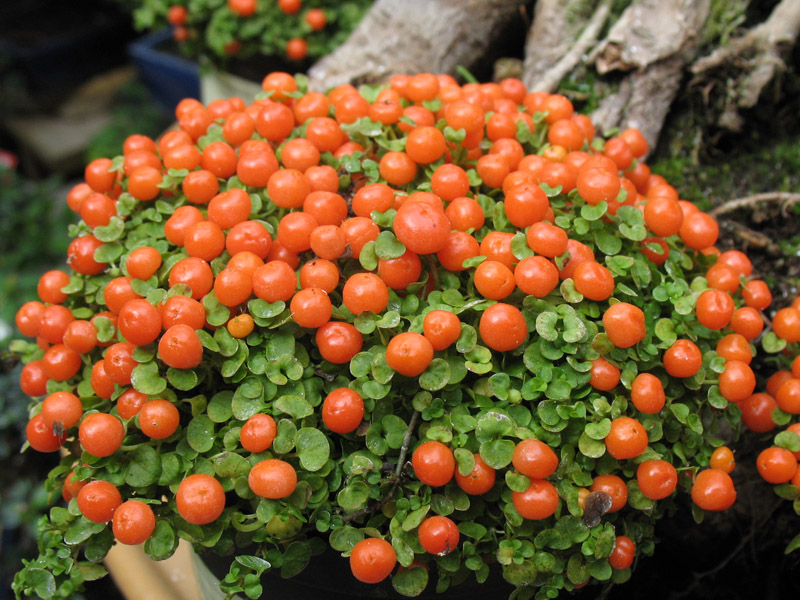
Because of its ground-covering stems and tiny (0.6 cm) leaves, Nertera can at first be easily mistaken for Helxine, but with the appearance of berries any doubts disappear.
In cultivation:
Nertera depressa or granadensis (Nertera depressa = N. granadensis) – a perennial creeping plant with stoloniferous stems and small rounded leaves about 0.5–0.6 cm in diameter, arranged oppositely. It blooms with very small greenish-white flowers, in place of which bright orange berries appear in summer and persist for several months. It prefers higher humidity and diffused light. Well suited as a groundcover for potted plants.
Temperature: Cool conditions; in summer not above 20°C, in winter to avoid plant loss an optimum is about 10–12°C, but not below 7°C.
Lighting: Nertera prefers a well-lit location, with a small amount of sun in the morning or evening. In winter it also needs good lighting. It grows well on east-facing windows that are not shaded. In a too-dark location the plant will grow poorly and set few fruits.
Watering: Abundant in spring and summer, restricted in winter with cool keeping, but the frequency of watering directly depends on the specific temperature. Under all conditions the soil should not dry out completely.
Air humidity: It is beneficial to mist Nertera periodically if the temperature is above 15°C; at lower temperatures misting is not necessary.
Repotting: If the plant has successfully overwintered, it is repotted in spring before the start of flowering. The container for Nertera should be wide and shallow. The soil should be loose and moisture-retentive. Composition - 1 part clay soil, 1 part leaf mold and 1 part sand. Good drainage is essential. When repotting the soil should not be compacted or tamped down; it must retain its looseness and allow good air circulation.
Propagation: by division and by seeds.