
Deciduous shrubs
Wax myrtle
Myrica
Synonyms: Cerothamnus Tidestr., Faya Webb & Berthel., Gale Duhamel, Morella Lour., wax myrtle, Mirica, mirika
Wax myrtle (Myrica L.) – a genus of plants in the family Myricaceae. First described by Carl Linnaeus in 1753 Sp. Pl. 2: 1024. The Latin name translates as fragrant, aromatic. In cultivation since the late 17th century.
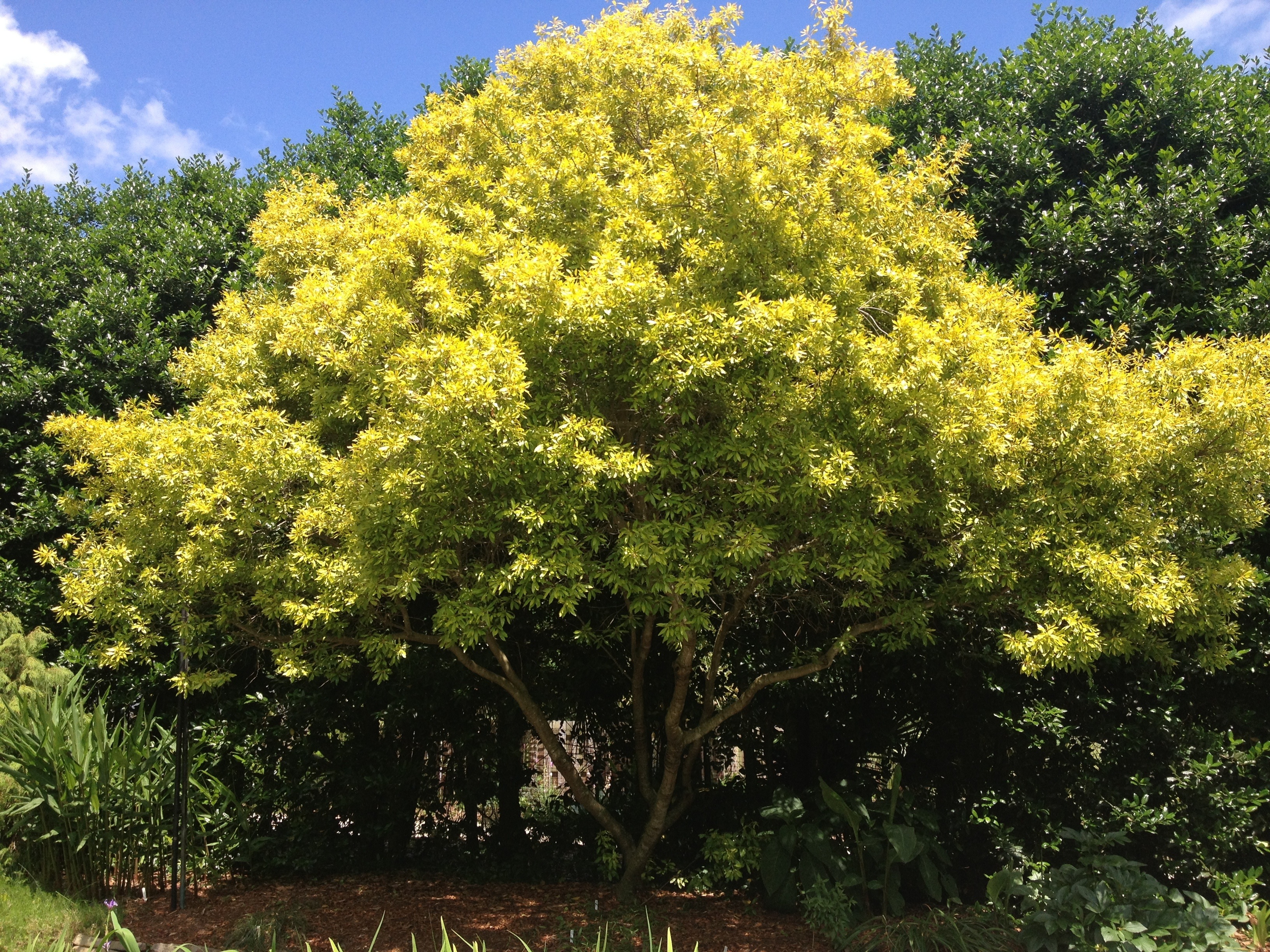
Wax myrtle ‘Soleil’
The range extends across Africa, Asia, Europe, North and South America.
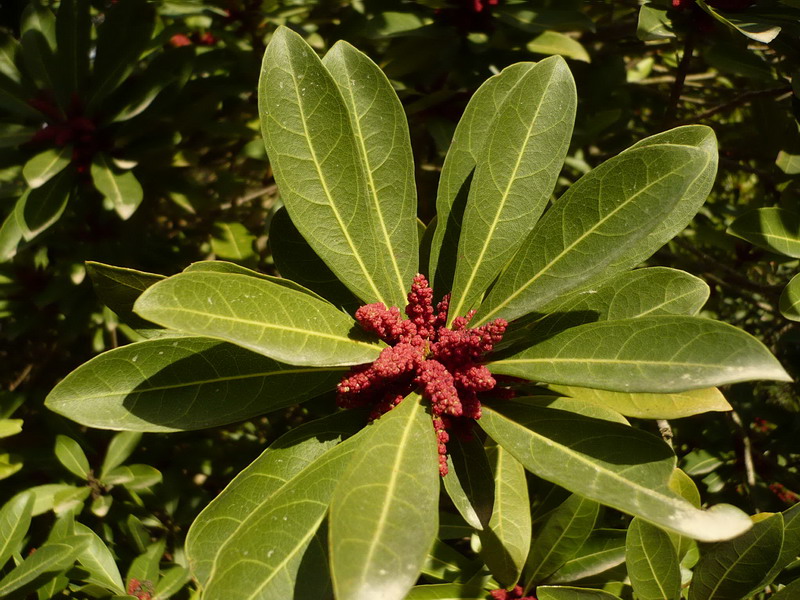
Red bayberry. Author N. Golubev
They are evergreen, less often deciduous shrubs up to 1 m high or trees up to 20 m tall. The crown is rounded, dense, globular. The root system is shallow; nitrogen-fixing bacteria live on the roots, which allow Myrica to grow on nitrogen-poor soils.
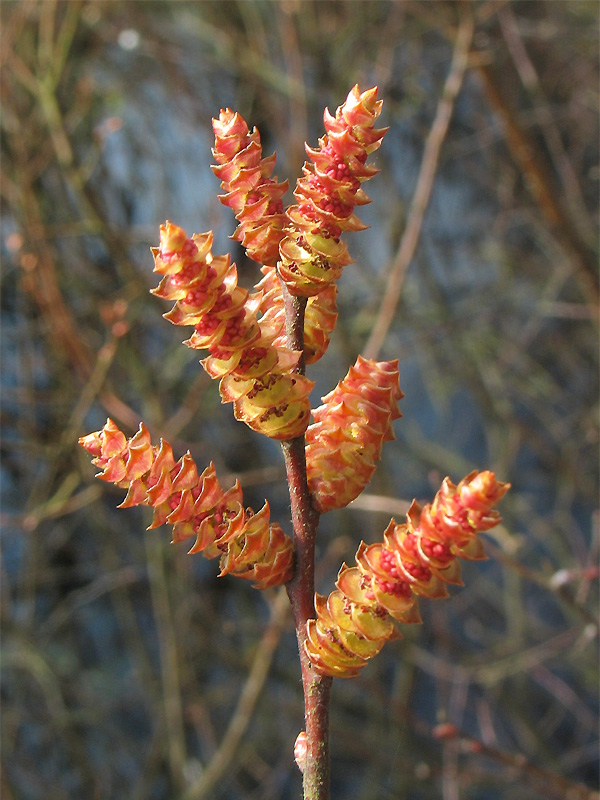
Male catkins of bog myrtle. Author A. Kovalchuk
Leaves are alternate, arranged spirally, entire or toothed, less often with small lobes, of irregular shape, 2-12 cm long, with resinous, golden or whitish glandular dots, aromatic, sessile or on short petioles, without stipules.
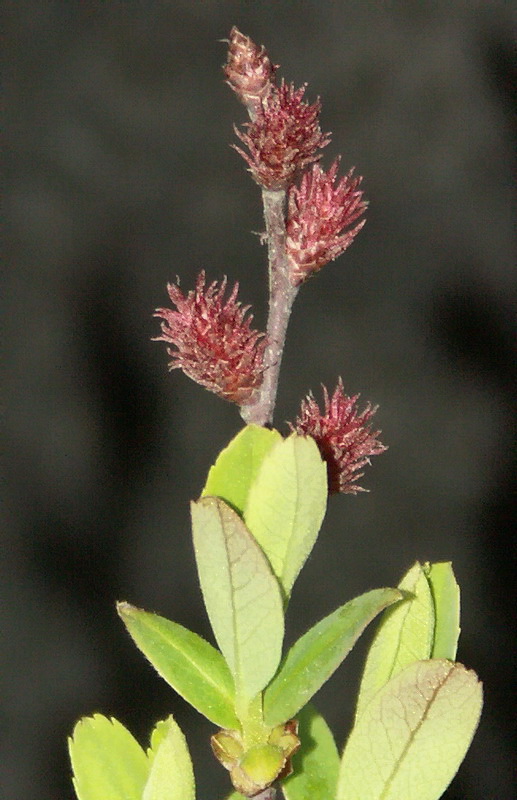
Female flowers of bog myrtle. Author G. Konechnaya
Flowers are unisexual, small, without a perianth. Plants are dioecious, less often monoecious. Male flowers are grouped in large numbers in short, cylindrical, erect, sessile catkins, with 2-8 stamens. Female flowers are in ovate, short, sessile catkins. The ovary is one-chambered, formed from 2 carpels, fused with 2 bracts in the axil of the covering scale (bract). Bracts are ovate, glabrous or variously pubescent. Flowers in April – May, before leafing out or concurrently with it.
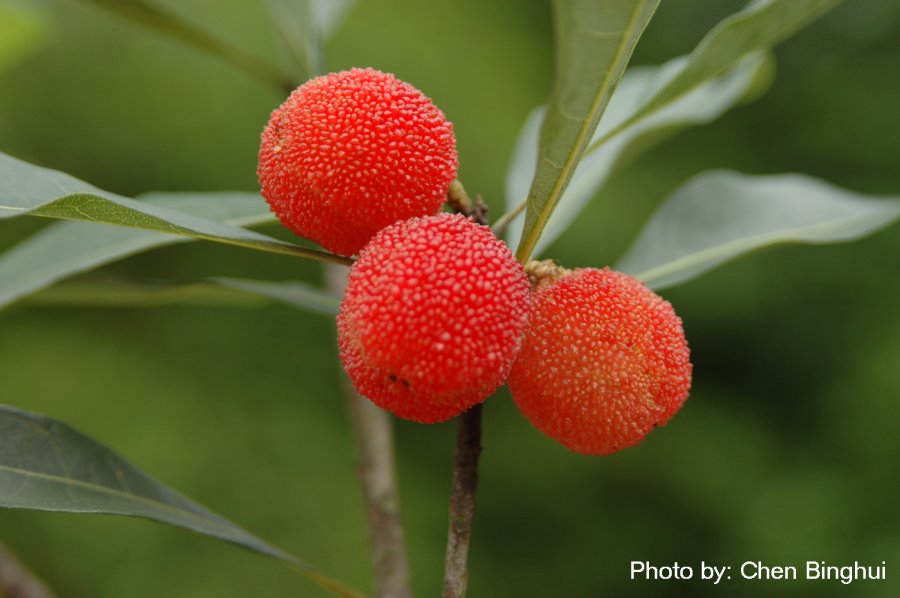
Red bayberry
Fruits are globose or ovoid drupes or small nuts, covered with glands, often with a waxy coating, dry; in some species they have juicy, aromatic and edible flesh. Each fruit contains one seed.
Seeds of common bayberry
Species: the genus includes 35-50 species. Seven are used in ornamental horticulture. Some of them (according to Wikipedia):
- Myrica adenophora
- Myrica californica – California bayberry
- Myrica cerifera — Wax myrtle or southern bayberry
- Myrica esculenta
- Myrica faya
- Myrica gale — Common bayberry or bog myrtle
- Myrica hartwegii
- Myrica heterophylla
- Myrica holdrigeana
- Myrica inodora
- Myrica integra
- Myrica nana
- Myrica parvifolia
- Myrica pensylvanica — Northern bayberry
- Myrica pilulifera
- Myrica pubescens
- Myrica rubra — Red bayberry
- Myrica serrata
- Myrica tomentosa — Woolly bayberry
Hardiness zone: 4a (-29°C).
Location: sun-loving, but also grow in partial shade. Some species are moisture-loving and in nature grow on waterlogged soils or peat bogs, but most are drought-tolerant, preferring moderately dry sites and do not tolerate prolonged or stagnant waterlogging. Plants are undemanding, not particular about fertility, and can grow on any cultivated soils, including very poor ones. Preferably grown on low-fertility or very nutrient-poor, loose and light, peat, sandy or light loamy soils, free of lime. On rich soils they produce numerous root suckers and can become invasive.
Pruning: sanitary pruning is performed in spring.
Care: not required
Pests and diseases: practically unaffected.
Propagation: by root suckers, layering, less often by rooting semi-ripe cuttings in spring. Seeds should be soaked for a day in warm water with added biostimulants before sowing. After soaking, sow them in a specially prepared substrate consisting of upper peat and sand in a 3:1 ratio. Seeds are sown 1 cm deep, covered with film and placed in a warm, light place. Seedlings appear after 2 months. A 30-day cold stratification can accelerate germination. Seedlings are pricked out at the stage of 3-4 pairs of true leaves.
Uses: grown in gardens and parks. Suitable for heather gardens. Used for dune stabilization, decorating wastelands and waterlogged areas. Looks good in complex plantings.