
Indoor plants
Microsorum
Microsorum
Microsorum belongs to the family Polypodiaceae. The genus Microsorum includes more than 50 species of ferns. Microsorum are perennial ferns with a creeping rhizome; leaves sessile or petiolate, arising from the rhizome, simple or pinnately divided with reticulate venation; sori are irregularly scattered over the entire underside of the leaf, or arranged in one or two rows along the midrib, sporangia are not covered by an indusium.
Microsorium punctatum
Spotted Microsorum (Microsorum punctatum) – about 30 cm tall, has a short creeping rhizome up to 4 mm in diameter; leaves simple, stiff, smooth, narrowly elliptic, with a short petiole about 1 cm; sori up to 1 mm in diameter, unevenly distributed on the leaf. Scolopendria or common Microsorum (Microsorum (Phymatodes) scolopendria) – 30 cm to 1 m tall, has a broad creeping rhizome up to 10 mm in diameter, emerging at the soil surface; leaves deeply pinnately divided, stiff, petiole up to 4 cm long; sori round or oval 2-3 mm in diameter, located in one or two rows on both sides of the central vein. Banana-leaf Microsorum (Microsorum musifolium) – up to 1 m tall, leaves broad, leathery, resembling crocodile skin; sori irregularly scattered over the whole leaf.
Microsorium scolopendium
Care tips
Soil: nutritious, humus-rich substrates (leaf mold, peat, moss) with good drainage; pH 5.5-7.
Light: bright light or partial shade; avoid exposure to direct sunlight.
Watering: water with soft water, allowing the top layer of soil to dry out. Watering is limited in winter.
Fertilizers: from April to September feed once every two weeks with flowering plant fertilizer at half strength. Responds well to organic fertilizers.
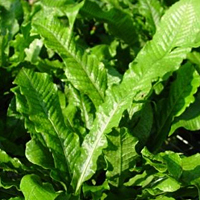
Microsorium crocodyllus
Humidity: requires high air humidity.
Temperature: during the growing period 21-23 °C. In winter not below 10 °C.
Propagation: by division and spores.
Pests and diseases: thrips, aphids, whitefly, fungus gnat, slugs and snails, aphids, earwig, caterpillars.
Source: www.floriculture.ru