
Conifers
Microbiota
Microbióta
Microbiota (Microbióta) — a genus of coniferous shrubs of the cypress family (Cupressaceae). It consists of a single species Microbiota decussata (Microbióta decussáta), occurring on the southern and western slopes of the Sikhote-Alin in the Russian Far East. It is the only endemic genus of gymnosperms in Russia. Microbiota decussata is listed in the Red Data Book of Russia as a species declining in numbers.
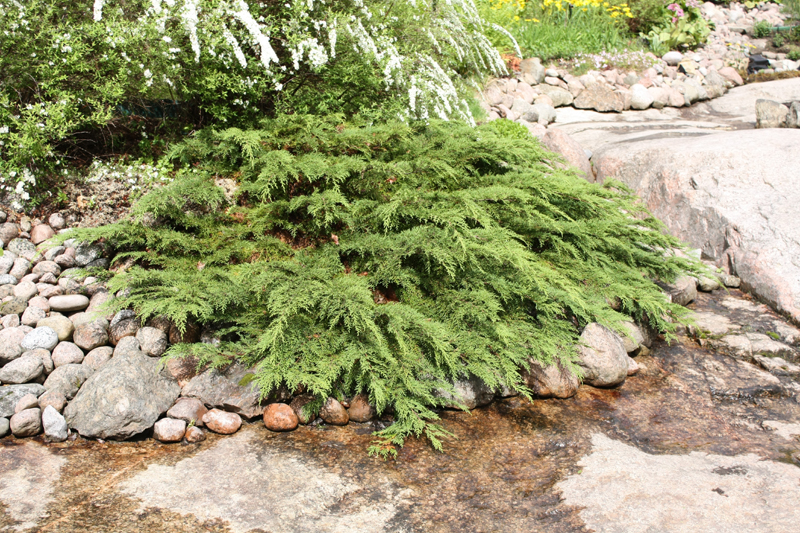
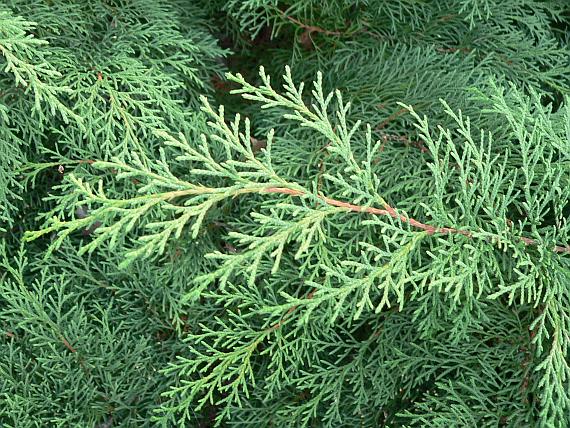
Microbiota is a prostrate, monoecious, evergreen shrub up to 1 m tall, with a stem diameter up to 10 cm, with creeping and slightly ascending, graceful, slender branches. The bark of old branches is smooth, brown; branches are oriented in a single plane and covered with scaly foliage of dark green color, turning brown in winter. In young plants and on shoots located in shade, some of the scaly leaves may be needle-like. Externally the plant resembles the creeping forms of Thuja. The foliage has a strong scent when crushed. Cones are rather small, of 2-4 scales, one-seeded. The root system consists of fine fibrous roots that branch densely. It grows slowly, the annual increase is about 2 cm. Microbiota is very long-lived, reaching 100 years and more. In cultivation male specimens are encountered more often.
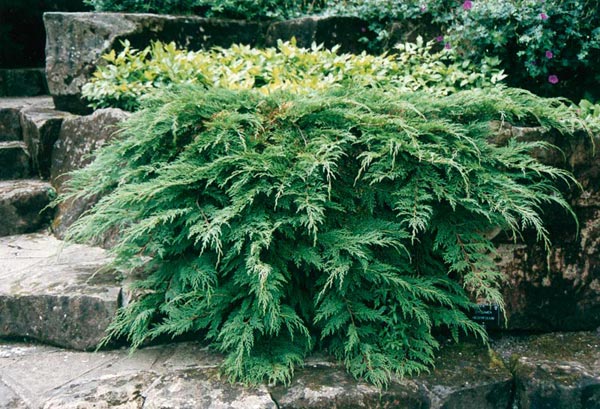
Microbiota has been present in botanical garden collections since the 1930s-40s (LOSS, Kiev, Tashkent); currently in more than 20 dendrological collections in Russia, however it appeared for sale (for enthusiasts) only in the last 10 years.
Location: fairly light-loving, but tolerates shaded habitats. Undemanding to soils, it develops best on a good top humus layer, from acidic to alkaline, moist and rich in nutrients, in sheltered sites.
Planting: in group plantings the distance between plants is 1.0-1.5 m; in a row (along paths or in borders) 0.5 - 0.8 m. It is possible to sink the root collar by 1.5 - 2 cm. Soil mix: turf soil, peat-compost, sand. Drainage: crushed stone or pebbles in a layer of 15-20 cm.
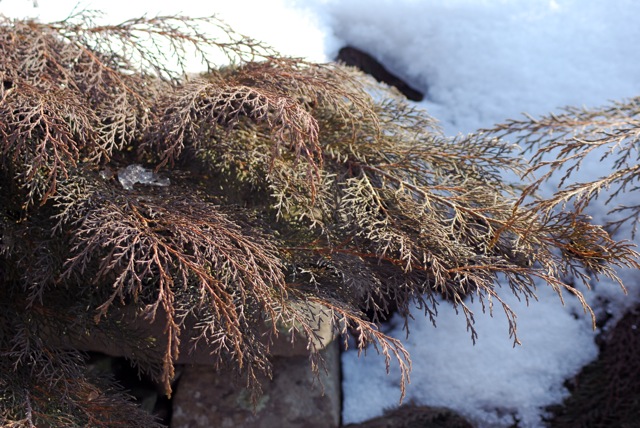
autumn coloration of Microbiota
Care: two years after planting apply "Kemira Universal" 20 g/m2 or nitroammophoska in spring 200-250 g/m2 once every 2 years. Water as the top layer of soil dries. In a dry summer plants are watered at least twice a week. Does not tolerate stagnant moisture. Spraying (misting) the plants in the evenings is recommended, regularly! Loosen young plantings to a depth of ~5-7 cm, later to 15 cm, simultaneously with weed removal. In old dense groups loosening should not be done. Mulching with wood chips or peat after planting with a layer up to 10 cm is desirable. Trimming/pruning only if necessary to shape the crown. The best time is early spring (late April - early May). Under snow cover plants are not damaged by frost. To protect young seedlings from late spring frosts and sunscald, it is recommended to cover them in November with conifer branches or dry leaves in a layer up to 15 cm. Resistant to pests and diseases.
Propagation: propagates well by seeds and green cuttings. Seeds ripen in late August - early September. Obtaining seeds is almost impossible and germination may require specific conditions. Cuttings on average give low success rates (30%).
Uses: very decorative; it can be successfully used on rock gardens, for decorating slopes, borders, edging lawns, and as groundcover. In cultivation relatively recently.