
Flowering shrubs
Magnolia Soulangeana
Magnolia soulangiana
Synonyms: Magnolia × brozzonii Millais, Magnolia conspicua var. alexandrina Loudon, Magnolia conspicua var. citriodora Loudon, Magnolia conspicua var. soulangeana (Soul.-Bod.) Loudon, Magnolia conspicua var. speciosa Loudon, Magnolia lene Pépin, Magnolia × lenneana (Lem.) Koehne, Magnolia × lennei Van Houtte, Magnolia obovata var. soulangeana (Soul.-Bod.) Ser., Magnolia soulangeana var. brozzinii auct., Magnolia speciosa Van Geel, Magnolia yulan var. soulangeana (Soul.-Bod.) Lindl., Yulania × lenneana Lem., Yulania × soulangeana (Soul.-Bod.) D.L.Fu, Soulange's magnolia
Magnolia Soulangeana (Magnolia ×soulangeana Soul.-Bod.) – a species of flowering plants in the genus Magnolia (Magnolia) of the family Magnoliaceae. The hybrid was obtained in 1820 by the agronomist and retired cavalry officer of Napoleon's army Étienne Soulange-Bodin at his Château de Fromont near Paris. He crossed Magnolia denudata with Magnolia liliiflora and was very impressed by its first flowering, as well as by the first offspring in 1826. From France the hybrid very quickly reached England and other European countries, and later North America.
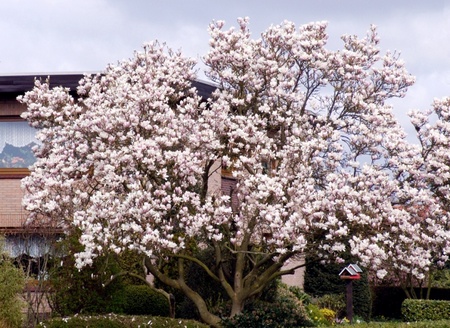
The hybrid was first described by the secretary of the botanical society "Société Linnéenne de Paris" and botanist A. Thiébaud de Berneaud, who published it in his article A. Thiébaud de Berneaud. Relation de la cinquième fête champêtre célébré le 24 mai 1826 // Comte-Rendu des Travaux de la Société Linnéenne de Paris. In the same year, slightly later, Étienne Soulange published the article "Notice sur une nouvelle espèce de magnolia (Paris, 1826)" with a description of this hybrid.
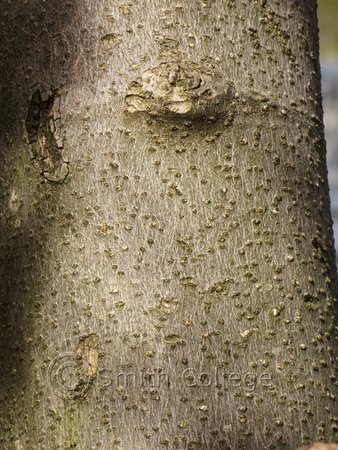
It is a deciduous shrub, more rarely a small tree up to 5 (8-10) m in height. It grows quickly. The crown is broadly rounded or broadly pyramidal, rather loose, branched, and low. Shoots are initially slightly pubescent, greenish-gray, later becoming glabrous and gray-brown, with a waxy coating and white lenticels. Bark smooth, brownish-gray.
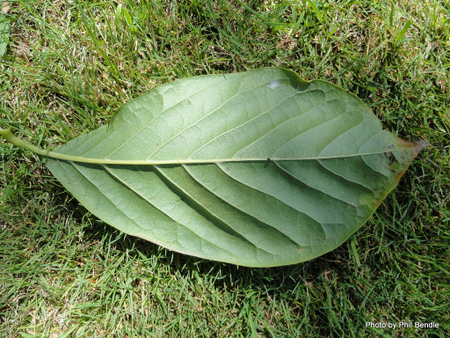
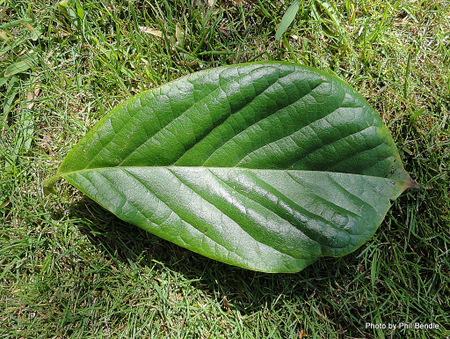
Leaves 8-15 cm long and 4-7.5 cm wide, elliptic or obovate, more rarely almost round, apex cuneately tapered, short, acute, thin, base cuneate. Blade glabrous above, herbaceous green and glossy, sparsely pubescent beneath. Petioles pubescent, 1-1.5 cm long.
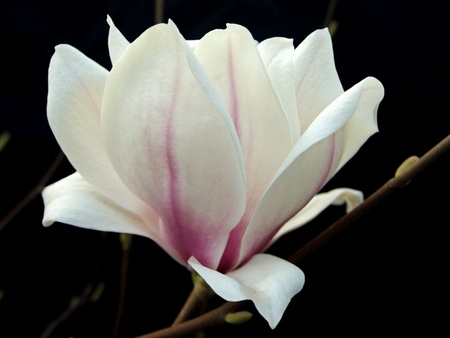
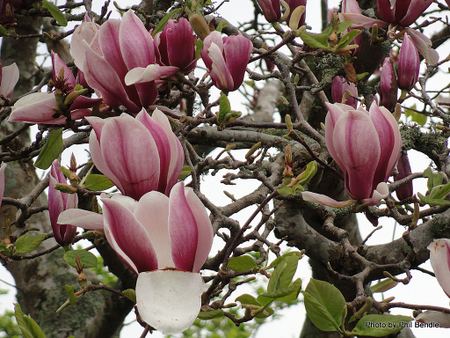
Flower buds ovoid. Flowers up to 15 cm in diameter, at first cup-shaped, later not fully widely open, becoming almost saucer-shaped, facing upward, odorless or fragrant, white, at the base externally or entirely colored in pale pink, carmine, wine-purple or violet. Perianth segments about 9, in 3 whorls, up to 11 cm long and 7 cm wide, gradually semi-opening, oblong-obovate or oblong-spathulate, concave above, shortly acuminate. Stamens 1-1.2 cm long. Anthers 6 mm long, dehiscing laterally. Gynoecium cylindrical, 1.5 cm long, glabrous. Flowers before leaf emergence, in April-May and into June. Begins to flower from 7 years of age.
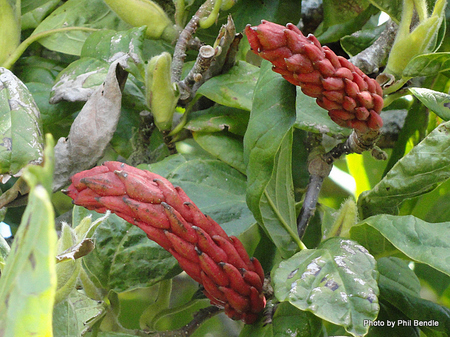
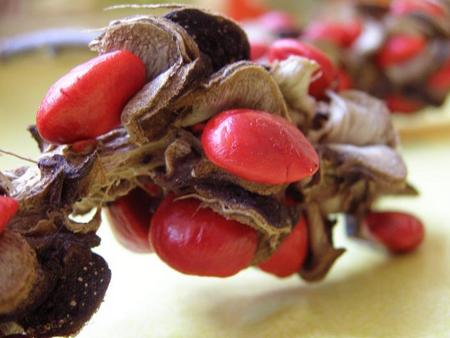
Fruits are aggregate cone-like carpels up to 8 cm long and 3 cm wide, pinkish-purple. Mature carpels black, ovoid or obovoid, 1-1.5 cm long. Seeds dark brown, broadly obovoid or obovoid, laterally flattened. Fruits ripen in September-October.
Chromosome number: 2n = 76
Representatives:
- Magnolia ×soulangeana Alexandrina
- Magnolia ×soulangeana grandiflora
- Magnolia ×soulangeana Soul.-Bod. nothovar. lennei (Van Houtte) Rehder
- Magnolia ×soulangeana Rubra
- Magnolia ×soulangeana Niemetzii
Cultivars: More than 100 cultivars of this hybrid are known. The most popular are 'Grace McDade', 'Jurmag1', 'Rustica Rubra', 'Alba Superba', 'Alba', 'Lennei Alba', 'Susan', 'Brozzoni', 'San Jose', 'Satisfaction', 'Dorsopurpurea', 'Heaven Scent'. A large collection of cultivars is assembled in Kyiv.
Hardiness zone: 5a (-25°C). In severe winters flower buds and the tips of one-year shoots may be damaged by frost.
Location/site: The optimal planting site is sunny and sheltered from north and east winds. Relatively shade-tolerant. Requires moisture and tolerates temporary waterlogging. During dry periods needs watering. Mulching the root zone with peat, peat-compost or wood chips 8-12 cm thick is recommended.
Soil: prefers acidic or neutral soil. Does not tolerate alkaline soils.
Planting: soil mix – leaf mold, peat, sand in a ratio of 3:2:2. Place drainage of crushed stone or coarse sand 15-20 cm thick at the bottom of the hole. Transplanting should be done with care, as thick, fleshy roots are easily damaged. It is recommended to buy container-grown plants and plant them outdoors in spring.
Pruning: sanitary pruning is recommended.
Care: young plants require winter protection with spruce boughs or non-woven fabric; trunks are wrapped with burlap.
Propagation: propagated by seeds, grafting and cuttings. Seeds after collection should be sown immediately in the ground or stratified in a cool place in sand. Before sowing, seeds are recommended to be rubbed with sand to remove the fleshy coat and washed in water. Sow in March-April in seedling boxes placed in a room at +15–+18°C. After the appearance of three leaves, seedlings are pricked out to beds.
Pests: Two-spotted spider mite (Tetranychus urticae), broad/transparent mite (Hemitarsonemus latus), field slugs (Deroceras agrestis and Limax maximus), grove snail (Cepaea nemoralis), Roman snail (Helix pomatia), striped greenhouse aphid (Aulacorthum circumflexum or Neomyzus circumflexum), peach aphid (Myzus persicae), rose thrips (Thrips fuscipennis, Haliday), cabbage moth (Mamestra oleracea), ivy scale (Aspidiotus hederae), mealybug (Pseudococcus maritimus), eastern May beetle (Melolontha hippocastani), western May beetle (M. melolontha).
Diseases: Bacterial leaf spot (Pseudomonas syringae), seedling rot (Pythium ultimum, Fusarium spp., Rhizoctonia solani), powdery mildew (Erysiphe magnifica), dieback of shoots (Botrytis cinerea, Botryospheria sp.), scab (Elsinoe magnoliae), gray mold (Botrytis cinerea), sooty mold (Cladosporium sp.).
Uses: highly ornamental species. Often used as solitary or group plantings and for creating avenues. Decorative during bud formation and flowering.