Indoor plants
Lycaste
Lycaste
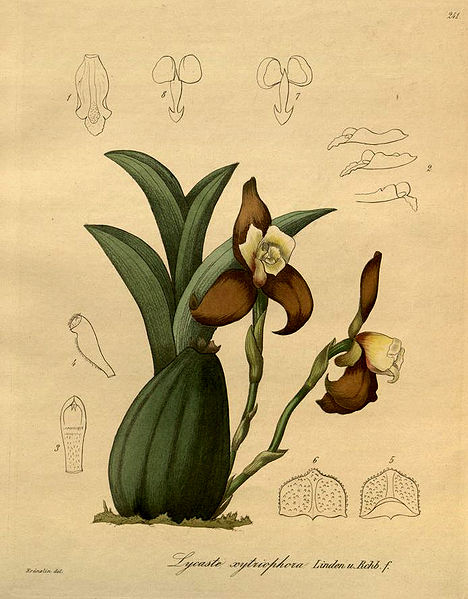
The genus Lycaste, named after a beauty mentioned in ancient Greek mythology, includes about 45 species of sympodial orchids from the American tropics with large oval pseudobulbs and folded leaves. Their native range is tropical America. These are mainly epiphytic plants with large solitary flowers on a short or elongated inflorescence arising from the base of the pseudobulb. The petals, most often differing in color from the sepals, are directed along the column and form an arch over the lip. The flowers are waxy, often fragrant, and may be white, pink, greenish-yellow or orange. The petals are usually slightly convergent and cover the column. In nature they grow in various conditions, sometimes at considerable altitudes. They prefer fresh air. Many adapt well to indoor conditions.
During the rest period, when the plants are leafless, keep them in a bright, dry room at about 12-13 °C, ensuring the pseudobulbs do not shrivel. With the appearance of new shoots, begin misting and provide slight shading. Only after normal roots form on the new shoots and throughout the growth period should the plants be watered generously.
Virgin Lycaste - Lycaste virginalis
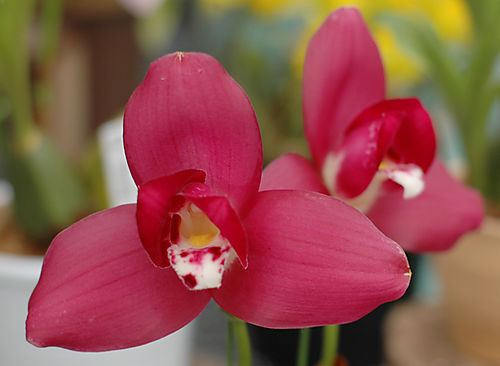
The most beautiful species of the genus, also known under the name L. Skinneri (L. Skinneri). In Guatemala, where L. virginalis is considered the national flower, it is called the "white nun." Long (up to 25-35 cm) thin inflorescences bear large (up to 15 cm in diameter) very beautiful fragrant white-pink flowers. The lip is three-lobed, white or slightly yellowish, with bright pink (to purplish-red) lines and spots, and dark purple at the very base. The disc of the lip has a large tongue-shaped callus. Numerous varieties exist, differing in the intensity of flower coloration. Due to the long inflorescences, it can be used for cutting.
Short-sheathed Lycaste - Lycaste brevispatha
Sometimes listed under the name L. candida. A smaller plant compared to the previous species. Waxy flowers about 5 cm across. Inflorescences shorter than the leaves. Sepals with reflexed tips, greenish, sometimes with small pink speckles. Petals white with a slight pink tint. The lip is indistinctly three-lobed, pure white, with sparse light pink speckles.
Blood-red Lycaste - Lycaste cruenta Lindl.
The sepals are reflexed in their upper half, yellow-green; the petals are yellow to orange-yellow, sometimes with red spots at the base. The lip is sack-shaped, bright orange-yellow with chestnut-brown speckles and spots and a dark blood-red patch at the very base.
Location: Lycastes require abundant diffused light (15-30 klx). The highest illumination is needed during the emergence and development of inflorescences. Minimum winter temperature about 12 °C; best results are obtained if the maximum summer temperature does not exceed 25-27 °C. A significant temperature drop between day and night favorably affects development and flowering. Good air circulation is essential for the plants.
Light: bright light
Watering: Lycastes are very sensitive to substrate salinity, so proper watering is necessary (until water drains freely from the pot), soft water and regular repotting (preferably annually). Excessive watering in winter is dangerous - it promotes bacterial and fungal diseases. Avoid allowing water to enter new shoots when watering.
Humidity: moderate
Care: Lycastes are plants with a clearly expressed growth cycle. In autumn, after pseudobulbs mature, the leaves yellow and many species drop them before flowering. At this time the plants require a short rest period of 2-3 weeks with a complete cessation of watering. Many species produce inflorescences during this period. New growth and roots appear in spring; increase watering then. During the vegetative growth period regular feeding is required.
Propagation: by division. Separate 2-3 pseudobulbs with a young shoot, leaving the same number of shoots on the old plant. Treat the rhizome cut surfaces with powdered charcoal.
Repotting: use small baskets and pots for planting. The substrate should be well aerated. Lycastes are very sensitive to substrate salinity. Repotting frequency depends on the cultivation conditions. If plants are kept in indoor greenhouses with constant high humidity, the substrate quickly deteriorates - it decomposes and becomes saline, leading to root rot and death. This may not immediately affect the plant's appearance - the consequences of root loss may appear much later. They will result in weak new shoots, lack of flowering. If the plant remains in such substrate, gradual decline begins - numerous small, non-maturing, disease-prone shoots appear. Restoring normal growth and flowering may take several years. In open culture the substrate remains in good condition longer. Signs of decomposed pine-bark substrate are darkening, bark crumbles easily when compressed and, paradoxically, it stops retaining moisture. With salinization a white crust appears on the substrate surface. The best way to avoid all this is annual repotting. In principle, plants can be repotted at any time. The main thing is not to damage the roots, especially their growing tips. For this reason most growers recommend repotting at the very beginning of new root emergence at the base of the shoot. In this case the likelihood of root damage is much lower. This applies to sympodial orchids because many monopodial ones produce roots along the stem. When repotting, inspect the roots, remove dead and diseased ones, and divide the plant.