
Deciduous trees
Liquidambar styraciflua (American sweetgum)
Liquidambar styraciflua
Synonyms: amber tree, storax liquidambar
Liquidambar styraciflua (Liquidambar styraciflua L.) – a species of tree in the genus Liquidambar (Liquidambar) of the family Altingiaceae (Altingiaceae). The species was first described in 1753 by Carl Linnaeus in Species Plantarum, Tomus II: 999. In cultivation since 1681.
In the wild it occurs in the eastern part of North America – as far north as southern New York State, to central Florida, the northern coast of the Gulf of Mexico and eastern Texas. It also occurs in Mexico south of the state of Nuevo León and in Guatemala. It grows in lowlands and plains; in Mexico and Guatemala it prefers mountainous areas where the climate is cooler.
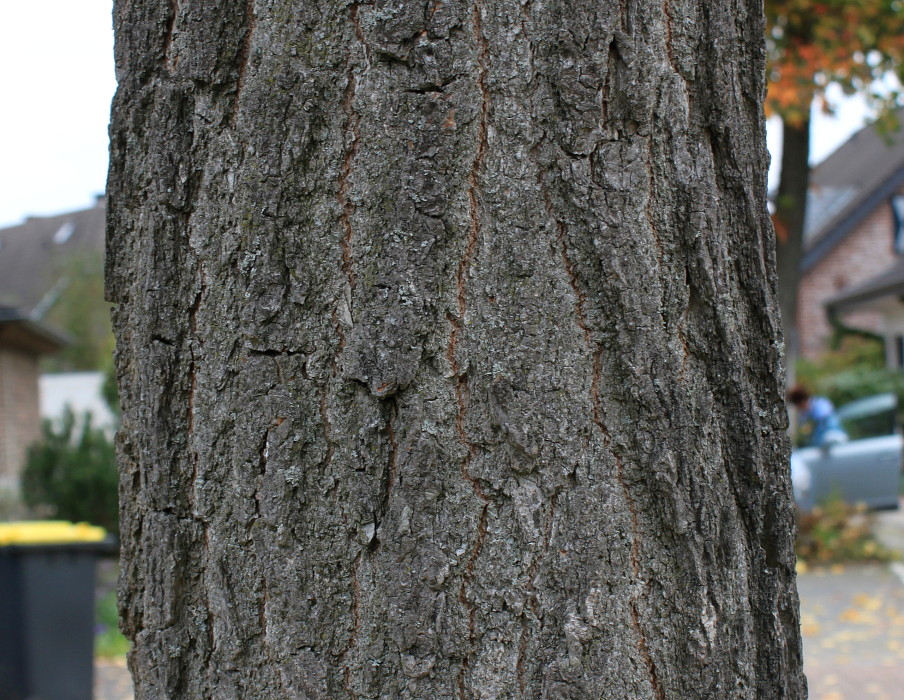
Author В.Куделя
It is a medium-sized tree 25-30 (41) m tall, trunk diameter reaching 2 m, with an erect trunk and a pyramidal crown. Annual increment 20-40 cm, on moist fertile soils 60-90 cm per year. Bark fissured, grey-brown. Shoots of various shades – from bright green to yellow-brown, with clearly noticeable corky outgrowths, especially on young trees. Terminal buds large, sticky, covered with green or orange-brown scales.
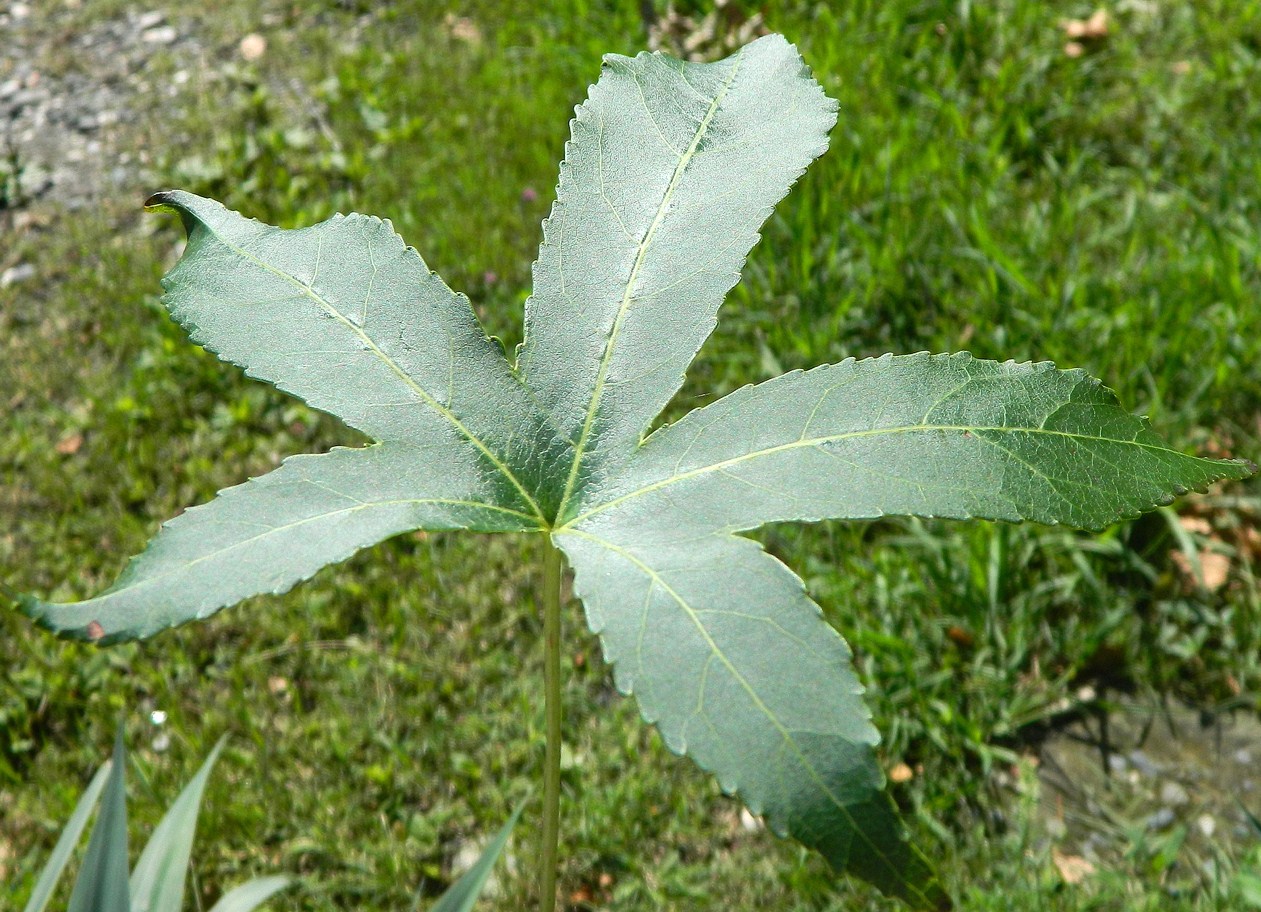
Author Е.Спиваковский
Leaves palmate-lobed, entire, 7—19 (25) cm long, broad, with finely serrated margins, sessile, petioles 6—10 cm long. Leaves with 5—7 lobes, resembling maple leaves, but arranged alternately rather than oppositely. Upper surface of the leaves bright green, lower surface pubescent in the axils, when broken they have a pleasant smell. In autumn they turn orange, red and purple tones.
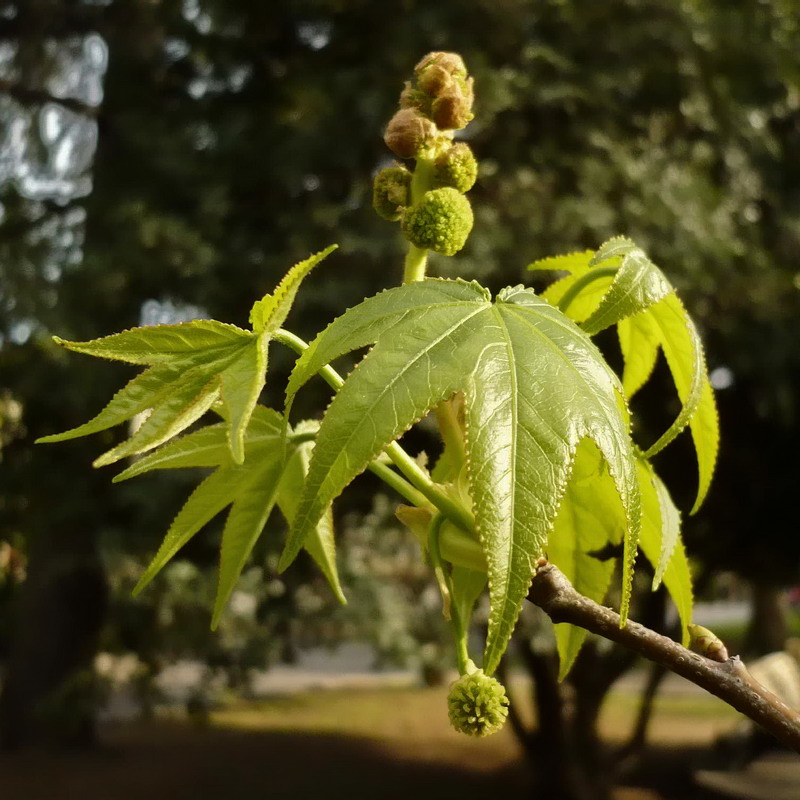
Author Н.Голубев
Flowers monoecious, small, inconspicuous, bright yellow-green with a slight reddish tint, 5-7 cm in length. Female flowers sit on a thin stalk and are enclosed in a spherical head. Male flowers are collected in a raceme. Flower stalks long, thin. Flowers in May, before or at the time of leaf unfolding.
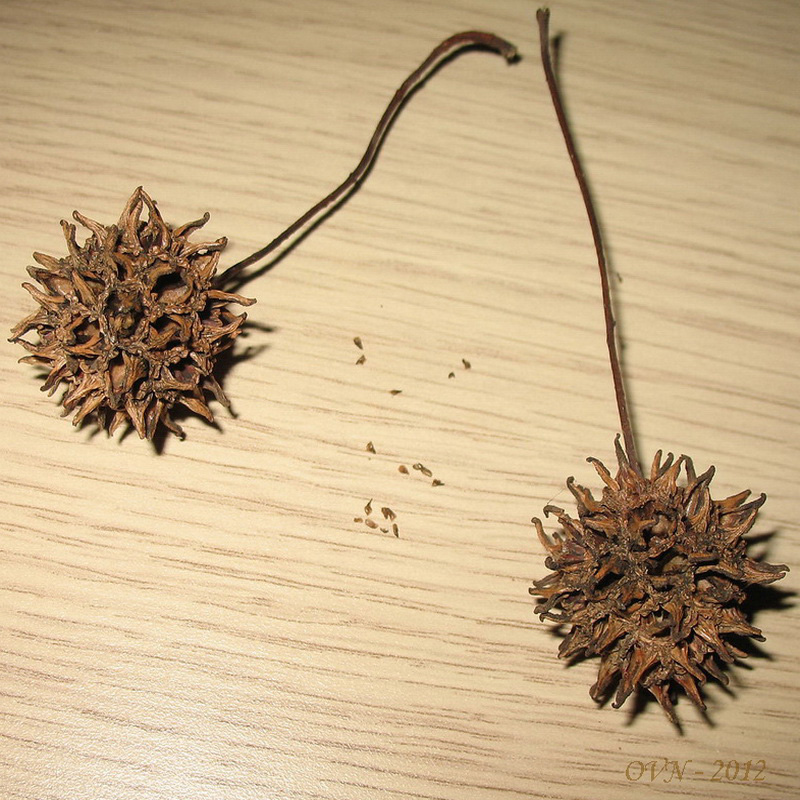
Author В.Озерянко
Fruits – hard, small, brown, glossy spherical infructescences with large spines, 2.5—4 cm in diameter, composed of numerous (20—50) capsules. Each capsule contains one or two small seeds. Fruits ripen in October.
Cultivars: Pendula, Stella, Burgundy, Clydesform ('Emerald Sentinel'), Festival, Goduzam, Grazam, Gumball, Lane Roberts, Moraine, Palo Alto, Parasol, Rotundiloba, Slender Silhouette, Worplesdon
Hardiness zone: 4a - 8b (-29°C).
Location: light-loving, shade-tolerant. Preferably planted in sites sheltered from strong winds. Resistant to smoke and gases.
Soil: preferably planted on moist, wet, acidic loamy or clay soils. Tolerant of standing water and salt content. On alkaline soils, especially with nutrient deficiency, leaf chlorosis may develop.
Care: in hot and dry summers, watering is recommended to maintain ornamental appearance.
Pruning: requires only sanitary pruning.
Propagation: Propagated by sowing seeds for winter stratification and by summer cuttings. For spring sowing, seeds require stratification at 1 - 10 °C for 1 - 2 months. Soil germination of seeds up to 90%. Seeds germinate without pre-sowing treatment as well, but germination in that case is significantly reduced. After one year of storage in bags, germination decreases by half. Sowing depth approx. 1.5 - 2.0 cm.
Pests and diseases: practically not affected.
Uses: ornamental for its crown, bright autumn foliage and unusual fruits. Among the disadvantages – weak wood and spiny fruits. Used in group plantings, parks and public squares.