
Flowering shrubs
Kolkwitzia
Kolkwitzia L
Kolkwitzia (Kolkwitzia L.) – a monotypic genus of flowering plants in the honeysuckle family (Caprifoliaceae). The genus was named after the German botanist Richard Kolkwitz. It was introduced to Europe in 1901.
The native range is in the mountainous regions of central China and Manchuria. It is found in many temperate regions around the world.
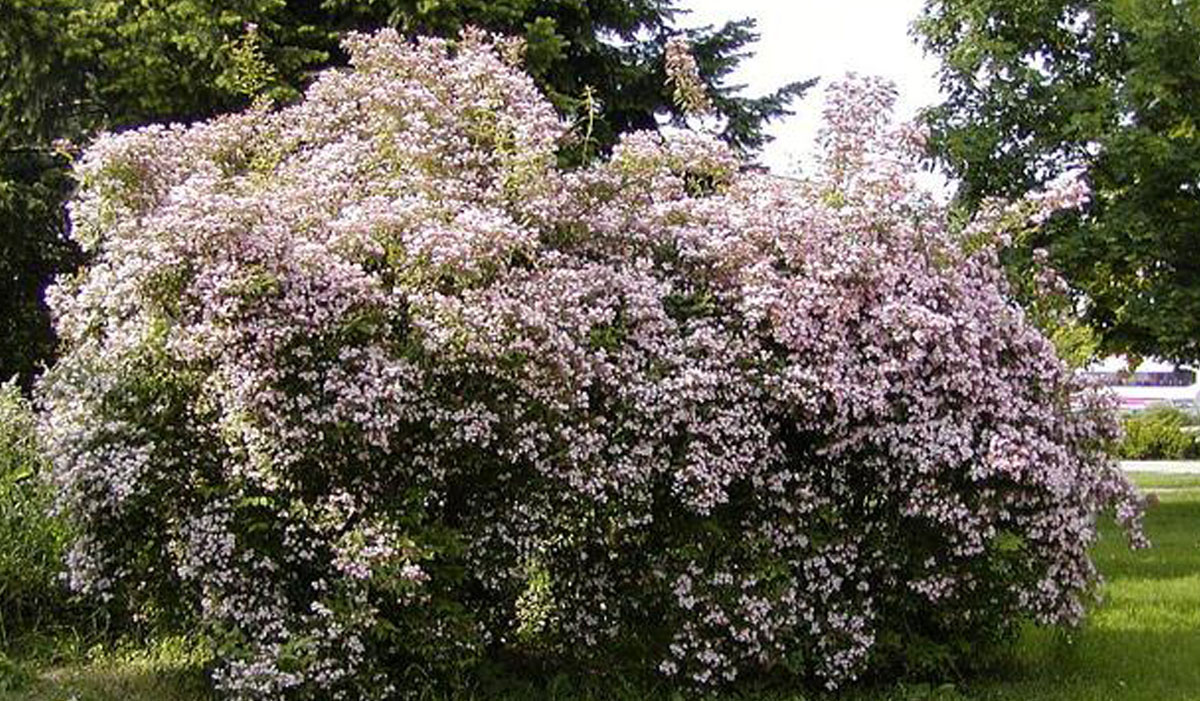
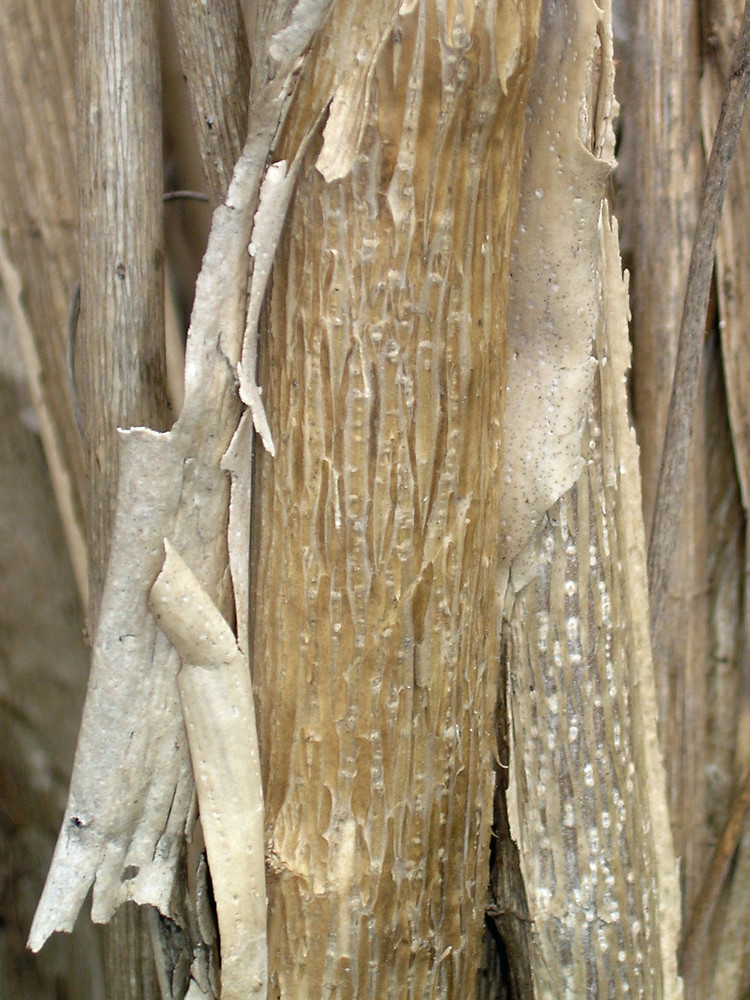
It is a densely branched deciduous shrub 2-3 m in height. Branches are straight or slightly pendulous. Shoots are densely covered with short hairs, later becoming smooth. Bark is reddish-brown, peeling in plates. Grows quickly and produces abundant root suckers.
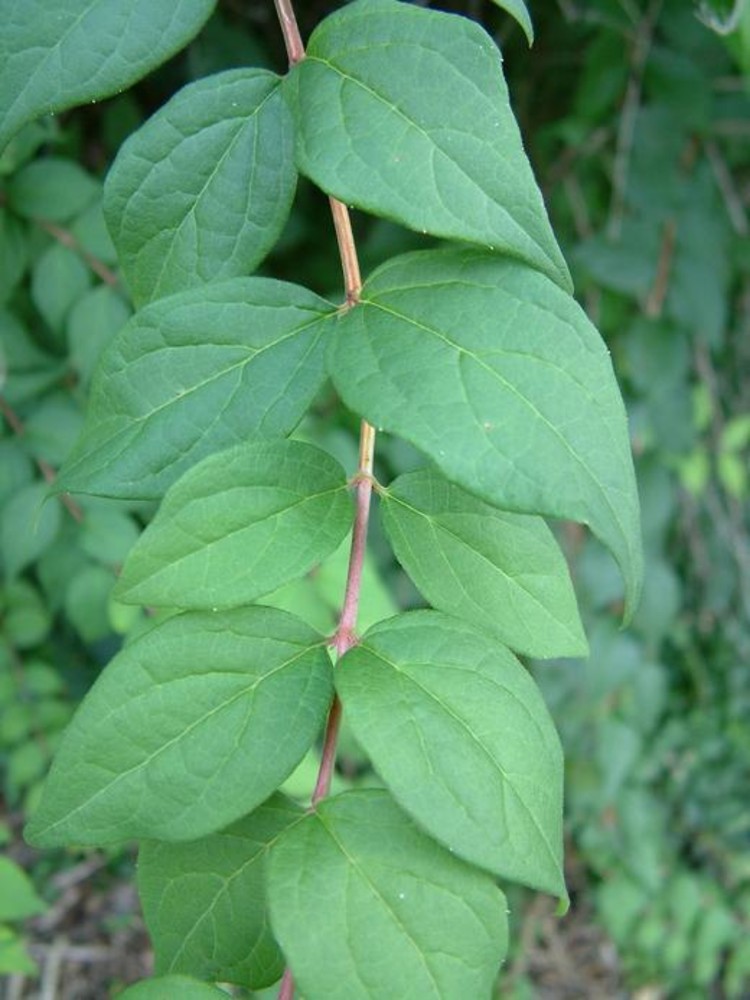
Leaves are paired, opposite, oval, pointed, with a rounded base, 3.5-8 cm long, dark green; sparse hairs along the margins above, densely hairy and lighter beneath. In autumn they take on bright yellow tones.
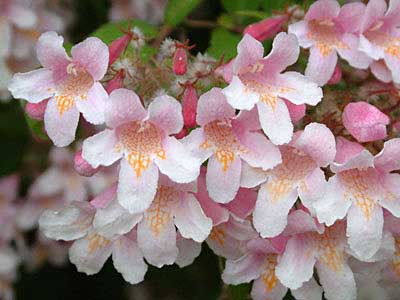
The flowers are very graceful, bell-shaped, up to 1.5 cm long, fragrant, borne at the tips of one-year lateral shoots, paired in corymb-like inflorescences. Pedicels are hairy and decorative. The corolla is bell-shaped, five-lobed, pink on the outside and yellowish inside. It blooms very abundantly, so the leaves are hidden, beginning at around 5 years old, for 20-25 days in spring or summer.
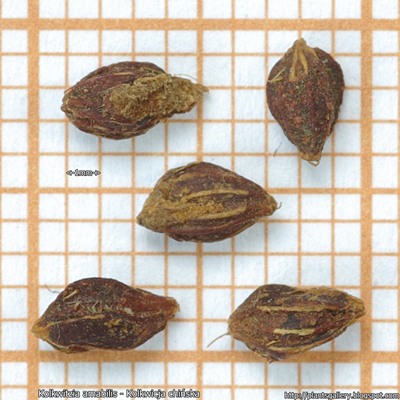
Fruits are dry, covered with bristles, small, ripen in September.
Species: the genus includes 1 species Kolkwitzia amabilis (also Linnaea amabilis (Graebn.) Christenh.)
Cultivars: 'Rosea', 'Pink Cloud'
Hardiness zone: 5a (-28°C)
Position: Light-loving, but also grows well in partial shade. Do not plant in hot, scorching sun. The planting site should be sheltered from cold winter winds. Tolerant of urban conditions. Withstands summer drought well.
Soil: plant in well-drained fertile soil of moderate moisture. Grows on both acidic and alkaline soils.
Care: practically requires no care. You can mulch the root circle with conifer needles or sawdust. Does not require fertilization; on very fertile soil it flowers poorly.
Pruning: remove old and dried shoots after flowering.
Pests and diseases: practically undamaged.
Propagation: propagated by seeds, cuttings, division, and layering. Rooting of July cuttings is about 47%. In the first year cuttings are very sensitive to frost. Seeds are sown in autumn after treatment with concentrated sulfuric acid for 10 minutes prior to sowing. For spring sowing, seeds require 2 months of stratification. Shrubs are divided in autumn.
Companion plants: mock orange, deutzia, weigela, Polemonium (Jacob's-ladder), woodland speedwell, Himalayan geranium, Narbonne flax, woolly lamb's ear, Thunberg's barberry, robinia.
Uses: an impressive summer-flowering shrub. Blooms abundantly; the flowers are very decorative. In autumn it is colorful with its brightly colored leaves. Looks beautiful as a solitary specimen against a lawn, terrace, or red-brown wall. Excellent in group plantings, especially along the boundary of a plot.