
Fruit trees
Walnut
Juglans
Walnut – a genus of deciduous trees in the walnut family (Juglandaceae). Most representatives of the genus grow in North and South America, southeastern Europe, the Caucasus, Central and East Asia; it is also found in the mountains of Bolivia and Java. Cultivated since ancient times.
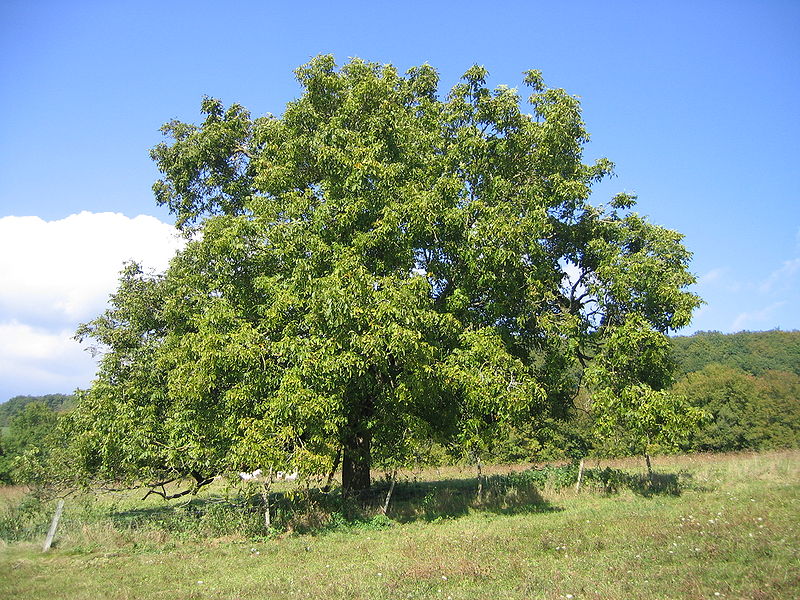
English walnut
The name derives from the Latin 'Jovis' (Jupiter) and 'glans' (nut).
Members of the genus are large deciduous trees. The crown is open, broad, with spreading, powerful and rounded branches. Fast-growing, they reach 10-40 m in height.
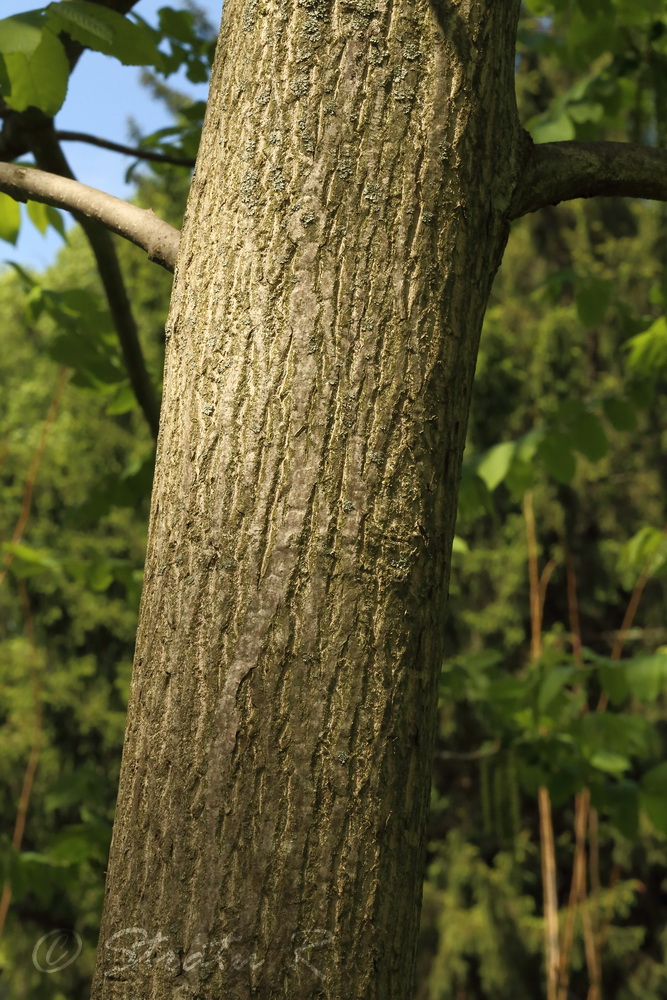
Gray walnut bark
Leaves pinnately compound with an odd number of leaflets, alternate, thin, very large, without stipules, with 3-23 leaflets on short petiolules or sessile leaflets.
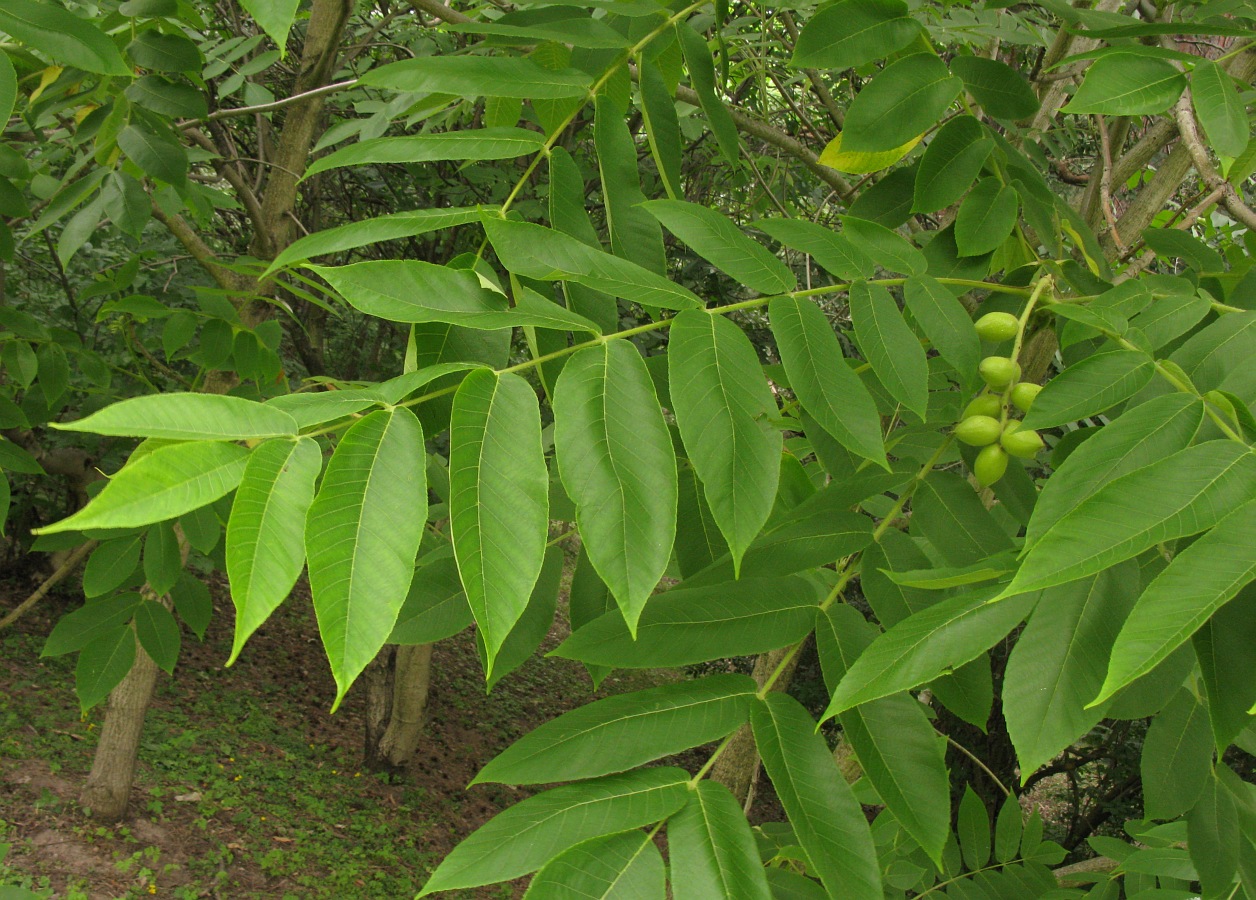
Leaves of the heart-shaped walnut
Flowers unisexual, wind-pollinated. Male flowers grow in the axils of bract scales, numerous and gathered into long hanging catkins, which in almost all species are zygomorphic, with a simple perianth consisting of 4-5 segments.
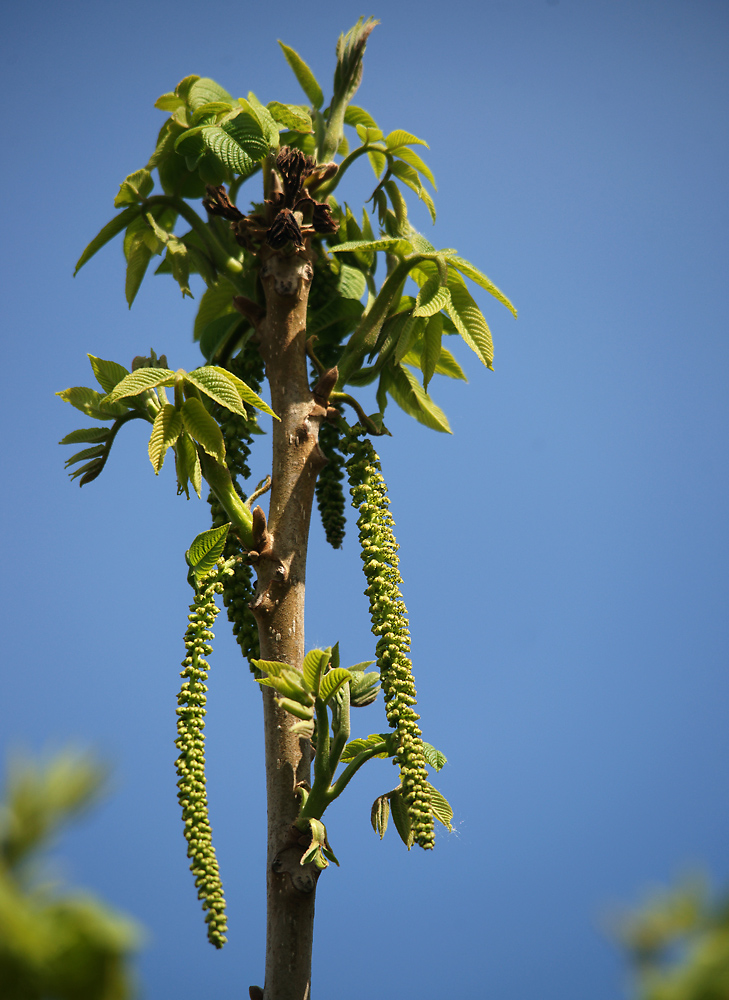
Manchurian walnut
Female flowers are actinomorphic, borne at the ends of branches in the axils of bract scales in spike-like few-flowered inflorescences. With a double perianth fused to the inferior ovary. The gynoecium consists of 2 carpels. Flowers in spring, simultaneously with leaf emergence.
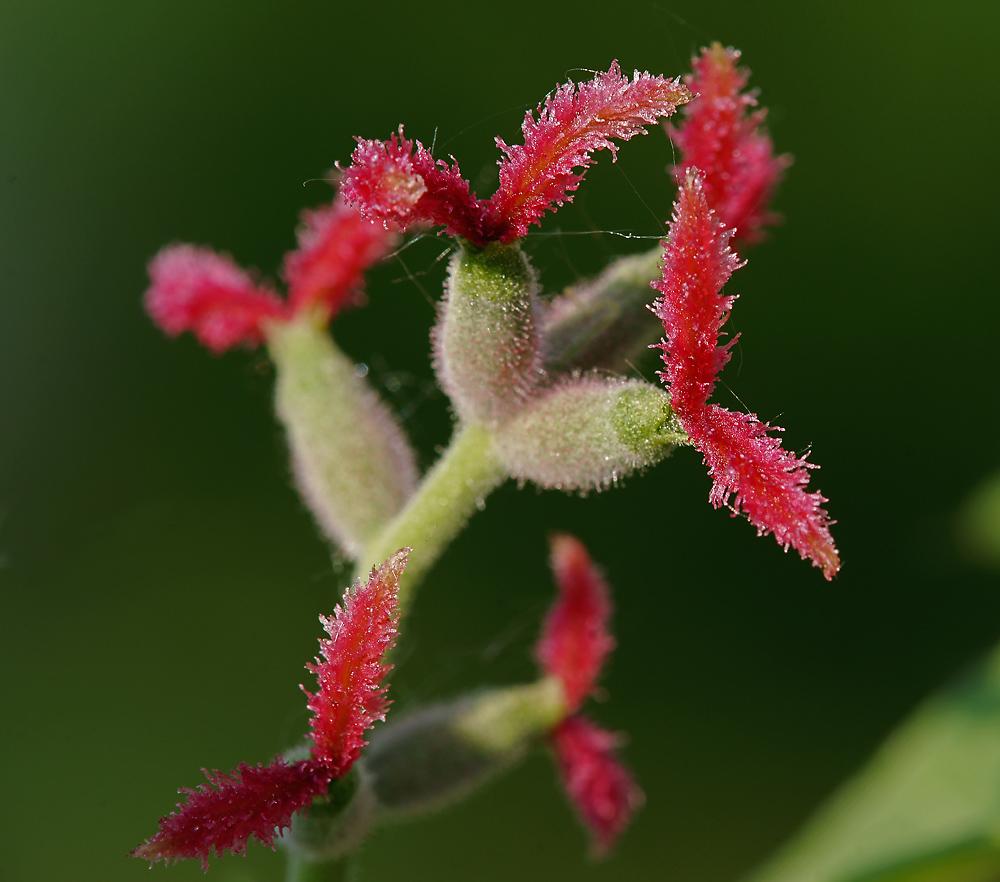
Female flowers of the Manchurian walnut
Begins to bear fruit at 7-15 years depending on the species.
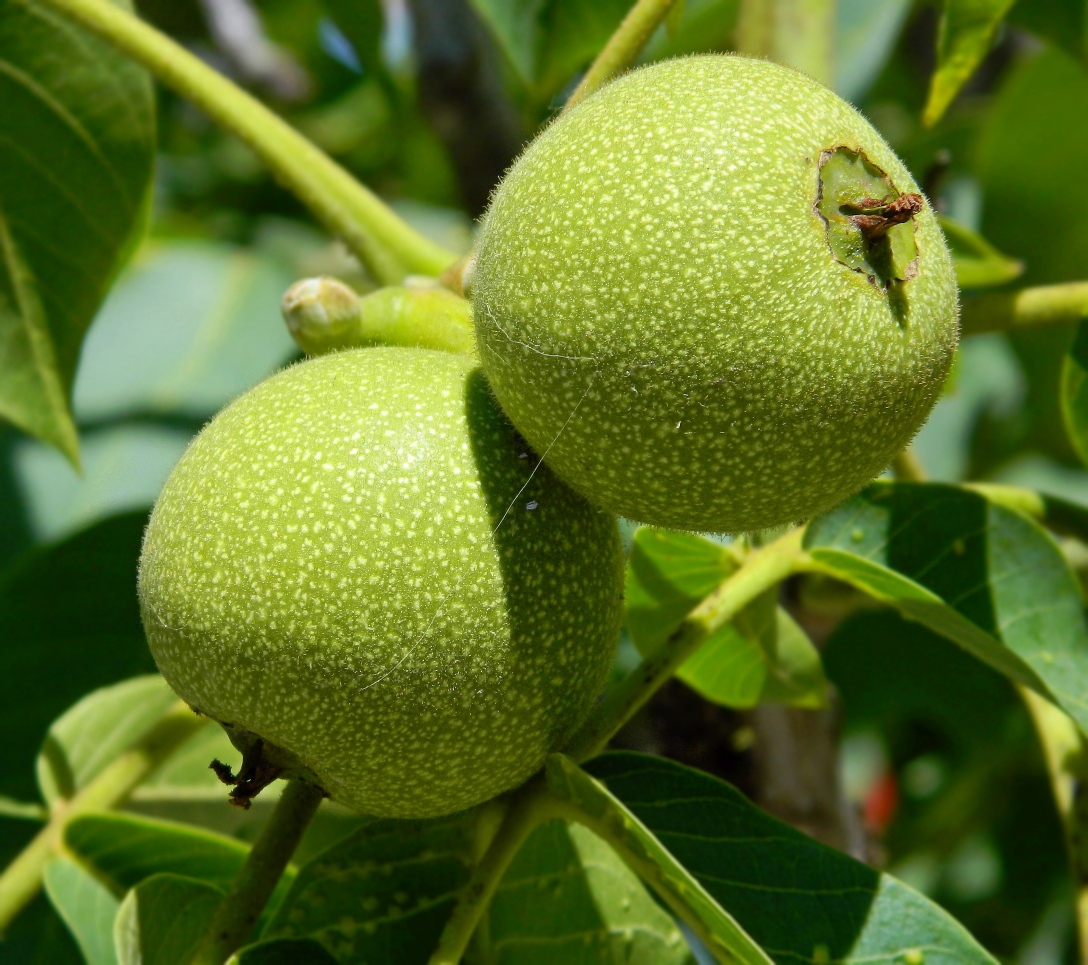
Fruits of the English walnut
Fruits are oblong or rounded false one-seeded drupes. The stone is stony, irregularly furrowed, and two-valved.
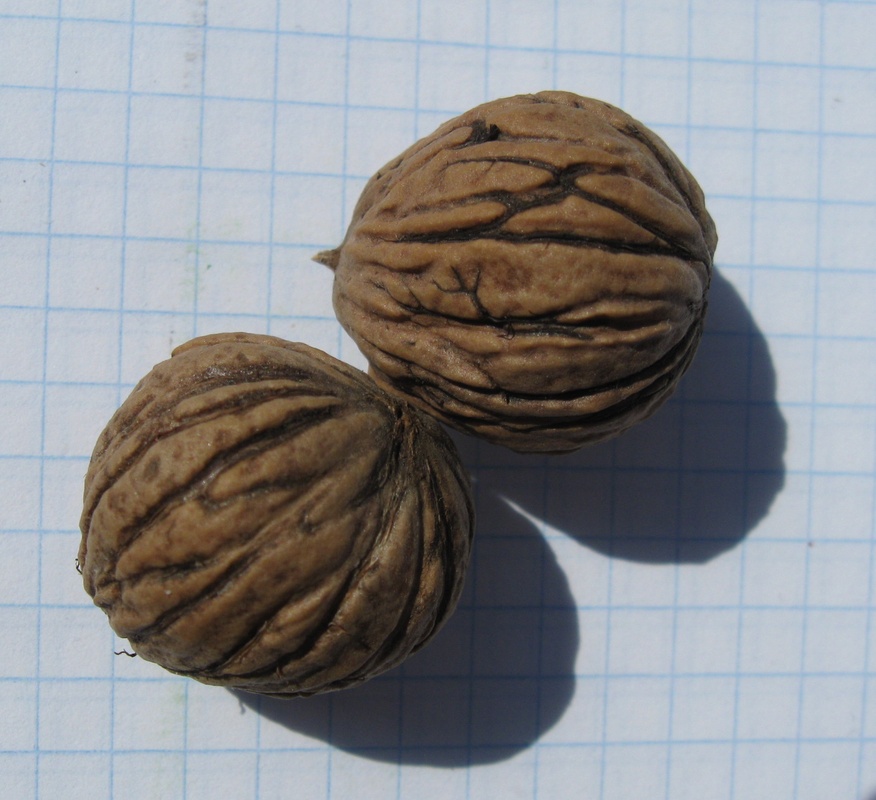
Fruits of the small-fruited walnut
The pericarp, during fruit formation, is soft, fleshy, green or yellowish; at full maturity it dries, blackens or browns, cracks and disintegrates.
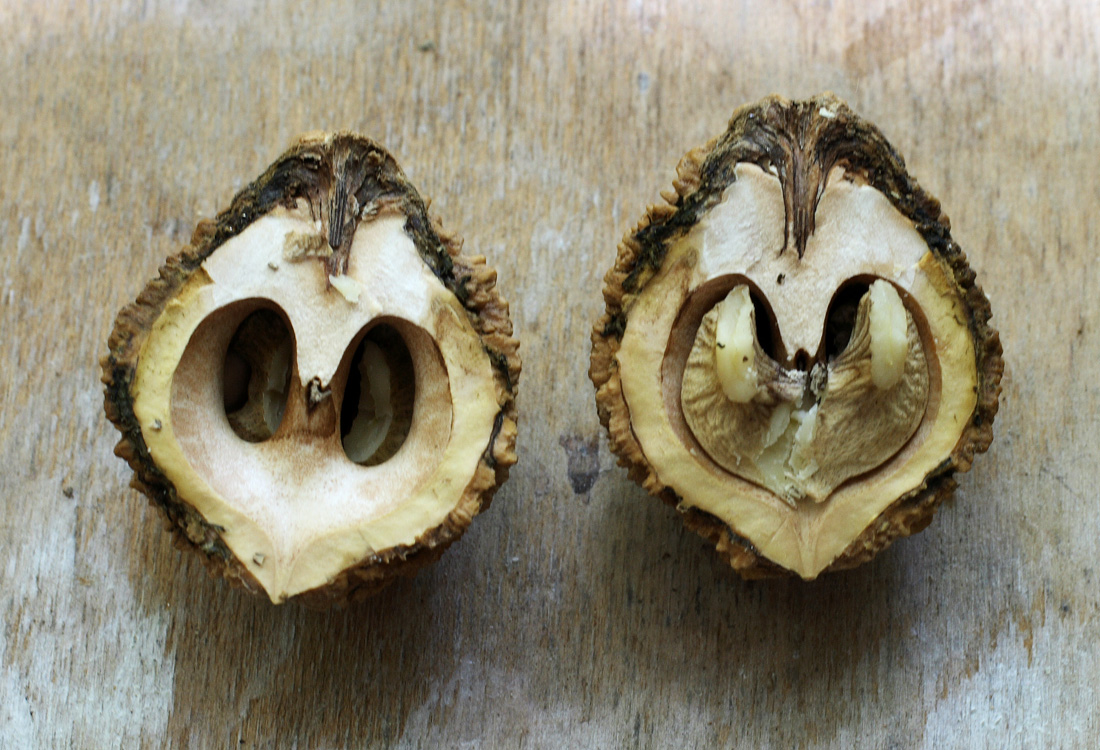
Fruits of the black walnut
Species: (based on materials from Wikipedia)
Section Juglans:
- Juglans regia L. — English walnut
- Juglans sigillata Dode
Section Rhysocaryon
- Juglans australis Griseb. — Southern walnut
- Juglans boliviana DC.
- Juglans brasiliensis Dode
- Juglans californica S.Wats. — California walnut
- Juglans hindsii (Jeps.) R.E.Sm.
- Juglans hirsuta
- Juglans jamaicensis DC.
- Juglans major (Torr.) A.Heller
- Juglans major var. glabrata
- Juglans microcarpa Berland. — Small-fruited walnut
- Juglans microcarpa var. microcarpa
- Juglans microcarpa var. stewartii
- Juglans mollis Engelm.
- Juglans neotropica Diels — Neotropical walnut
- Juglans nigra L.[3] — Black walnut
- Juglans olanchana Standl. & L.O.Williams
- Juglans peruviana Dode
- Juglans soratensis W.E.Manning
- Juglans steyermarkii W.E.Manning
- Juglans venezuelensis W.E.Manning
Section Cardiocaryon
- Juglans ailantifolia Carrière — Ailanthus-leaved walnut
- Juglans ailantifolia var. cordiformis
- Juglans mandshurica Maxim. — Manchurian walnut
Section Trachycaryon
Juglans cinerea L. — Gray walnut
Hardiness zone: zone 2a (-45°C). Most representatives of the genus are winter-hardy without shelter in the conditions of Ukraine.
Site: light-loving but shade-tolerant. Moisture-loving and poorly tolerant of prolonged drought. In hot and dry periods many species may lose ornamental value. Prefers deep, rich and well-drained soils. Suffers from strong winds.
Care: does not tolerate digging of soil under the crown. Does not require additional feeding, as it has a rather extensive root system.
Planting: transplants poorly due to a powerful taproot system. Planting is recommended at an age up to 3 years.
Pruning: pruning is carried out in early spring before bud break. The crown is formed until 4-5 years. After 8-10 years rejuvenation pruning is performed, removing old branches with little growth while retaining three-year-old shoots.
Propagation: readily propagated by seeds and grafting, less often by suckers or cuttings.
Pests: American white moth, codling moth, walnut wart mite, walnut leaf-mining moth.
Diseases: brown spot (Marssonina), Cytospora canker, black canker (Sphaeropsis malorum Peck. and S. juglandis Hohn), green (Penicillium), black (Aspergillus) and pink (Trichothecium) molds, gray rot, cladosporiosis, alternariosis, fusarium fruit rot, fungal pathogens - Diaporte eres Nits, Melanconium juglandium Kunze, Nectria cinnabarina (Tode) Fr, Nectria galligena Bres, bacterial root cancer (Agrobac-terium tumefaciens Sm. et Towns), bacterial blight (Xantomonas arboricola pv. juglandis Arsen)
Uses: 13 species are used in ornamental horticulture. The English walnut is a valuable fruit crop. Members of the genus are noted for a beautiful crown, large ornamental pinnate leaves, and high phytoncidal properties. Used in group and solitary plantings, for creating alleys in squares and parks, and in large gardens.