
Indoor plants
Many-flowered jasmine
Jasminum polyanthum Franch.
Synonyms: Jasminum blinii H.Lév., Jasminum delafieldii H.Lév., Jasminum excellens King & Prain, polyanthum jasmine, pink jasmine.
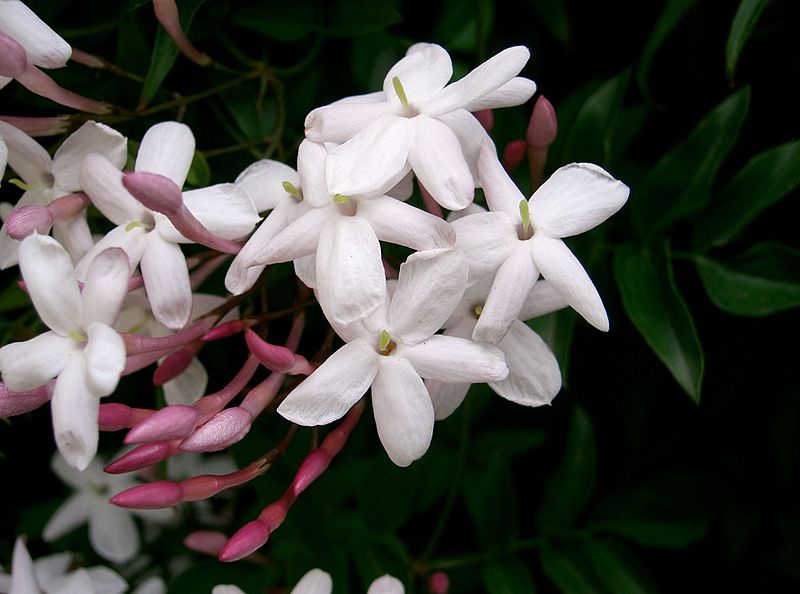
Many-flowered jasmine (Jasminum polyanthum Franch.) – a species of the genus Jasmine (Jasminum) of the olive family (Oleaceae). It was first described in 1891 by the French botanist Adrien René Franchet in «Revue Horticole. Paris 63:270». In 1993 the species received the Award of Garden Merit (AGM) from the Royal Horticultural Society.
In the wild it occurs in China (Guizhou, Sichuan, Yunnan). It rises in the mountains to an altitude of 1400-3000 m above sea level. It is an invasive species in Australia and New Zealand.
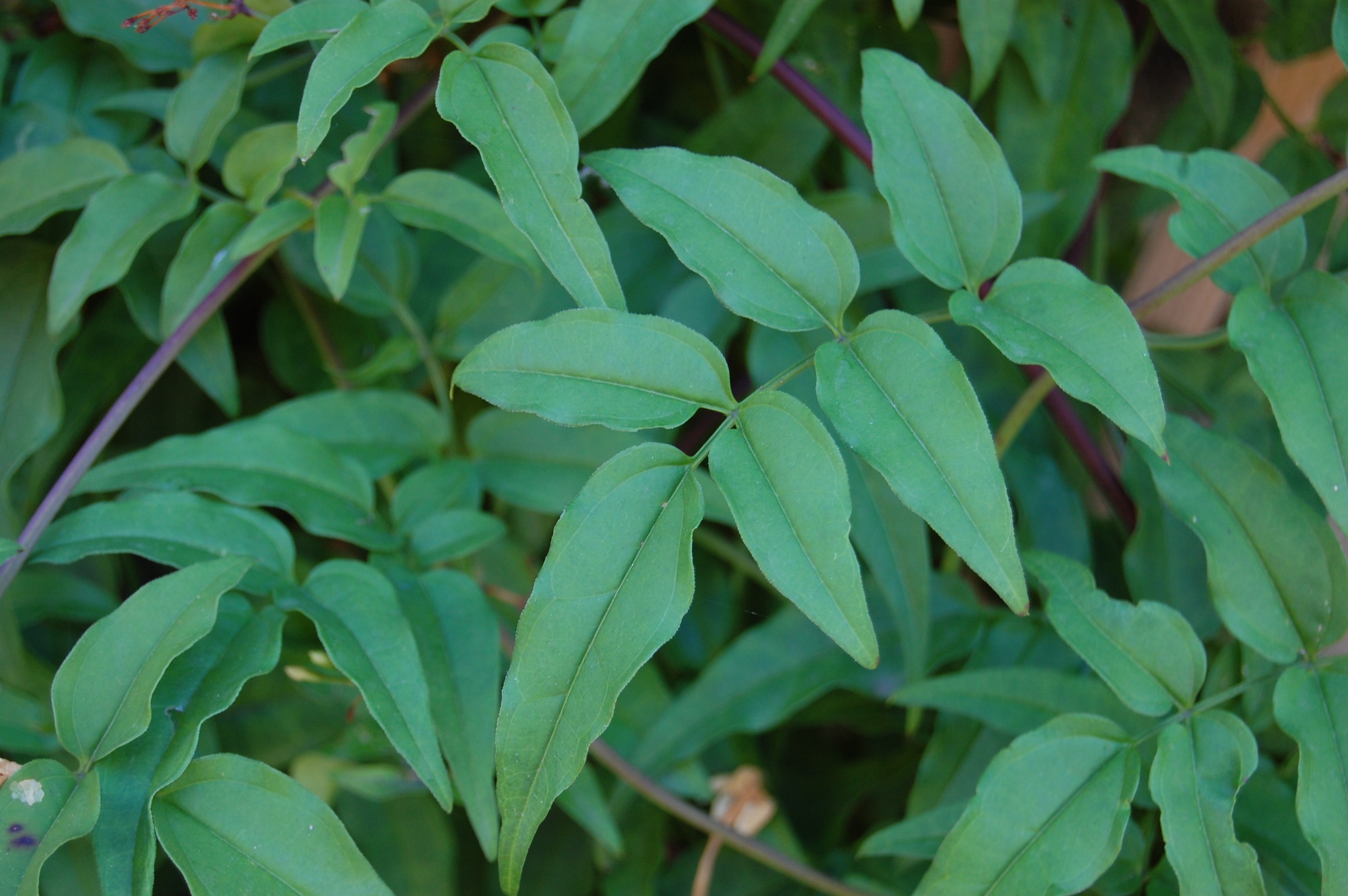
It is an evergreen vine from 1 m to 10 m long. Twigs glabrous, terete in cross-section.
Leaves opposite, compound, pinnate, dark green. Petiole reaches 0.4-2 cm in length, leaves 5-7 cm long, leathery, glossy, odd-pinnate, consisting of 5-7 leaflets. Leaflets lanceolate or ovate, 2.5-9.5 cm long and 1-3.5 cm wide, base cordate or rounded, apex acute.
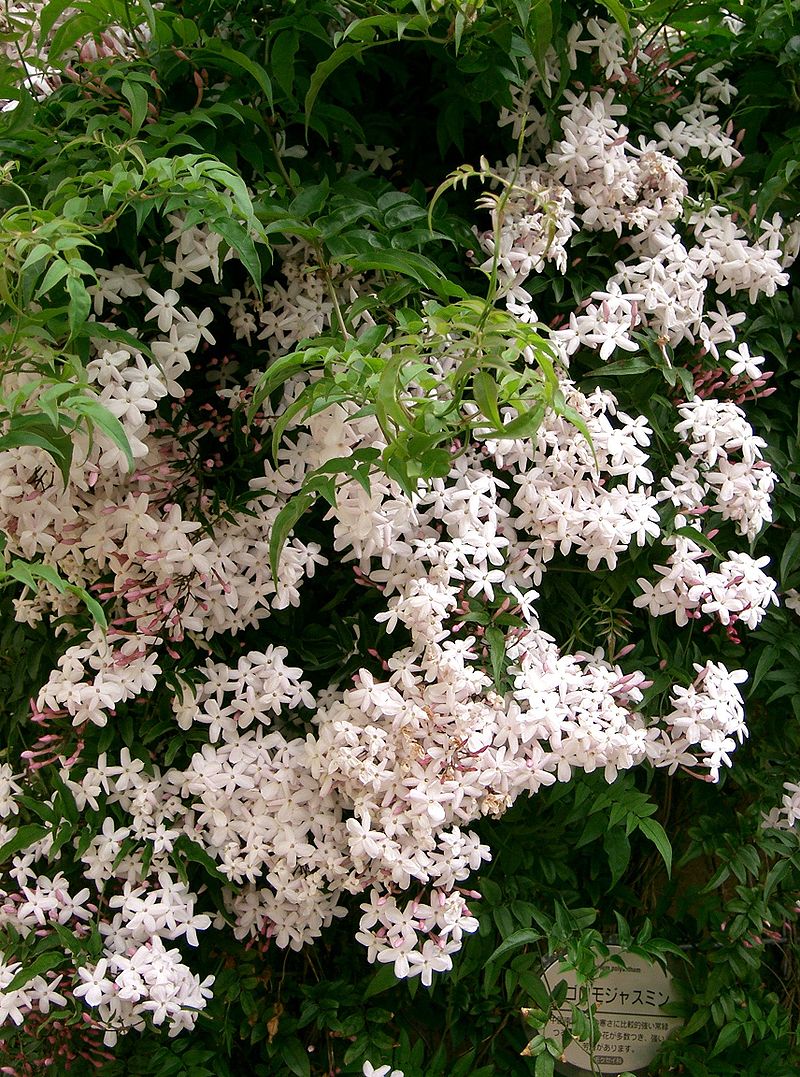
Flowers stellate, white, fragrant, terminal or axillary, in 5-50-flowered racemes or panicles. Bracts awl-shaped, 1-6 mm long. Pedicels 0.5—2.5 cm. Calyx glabrous, tube 1-2 mm; lobes 5, oblong or lanceolate. Flowers from February to August.
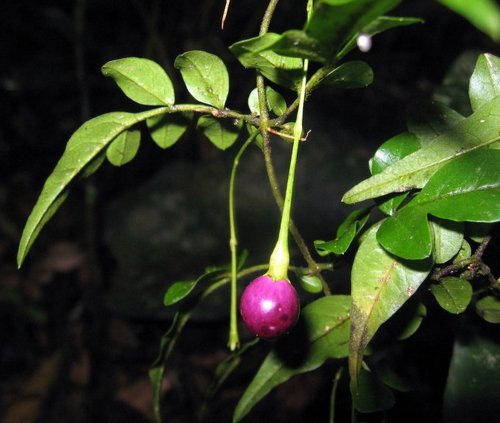
Berries nearly globose, black, 6-11 mm in diameter.
Hardiness zone: 8-11 (4-5°C).
Temperature: in summer keep at normal room temperature – can be placed outdoors. In winter it needs a cool rest at about 10°C (at higher temperatures spraying of the plant is recommended).
Light: light-loving but moderately shade-tolerant; for abundant flowering it needs good illumination with protection from direct sunlight during the hottest hours in summer. An east-facing window is ideal for growing jasmine. In summer it can be grown in the garden; an open site protected from cold north winds and cold air stagnation is ideal.
Soil: prefers slightly acidic soil. Potting mix consists of leaf soil and turf soil, peat and sand in the ratio 3:2:1:1.
Watering: in spring and summer requires abundant watering; the soil should be slightly moist. In winter watering is moderate. Does not tolerate drying out of the root ball or waterlogging. Use warm, soft water for watering; ideally filtered or boiled rainwater.
Care: thin stems need support. During the active growth period from April to August it is recommended to feed with a liquid fertilizer for flowering houseplants (potassium fertilizers).
Humidity: in summer requires regular spraying.
Repotting: repot in March. Young plants are repotted annually, older ones every 2-3 years. Soil mix for young plants: 1 part clay-turf soil, 1 part leaf soil and 1 part sand. For older plants use clay-turf soil in 2 parts.
Pruning: it is recommended to trim long shoots in February by one third.
Propagation: easily propagated by semi-ripe terminal cuttings with 3 internodes. Rooting occurs in about 3 weeks.
Pests: scale insects, spider mites, aphids.