
Fruit trees
Siebold's Walnut
J. sieboldiana Maxim.
Synonym: ailanthus-leaved walnut, Japanese walnut, Juglans cordiformis, Juglans sieboldiana, Juglans mandshurica var. Sachalinensis, oni-gurumi, Japanese Walnut
Walnut – a species of deciduous trees of the genus Walnut of the family Juglandaceae (Walnut family). In nature it grows on Sakhalin, on the Kuril Islands, and in the mountain forests of Japan. It is found in small groups and singly in coniferous-broadleaf and broadleaf forests. Lifespan 200-300 years. It was first introduced into cultivation in France in 1866 by the Dutch botanist F.F. Siebold, after whom it was named.
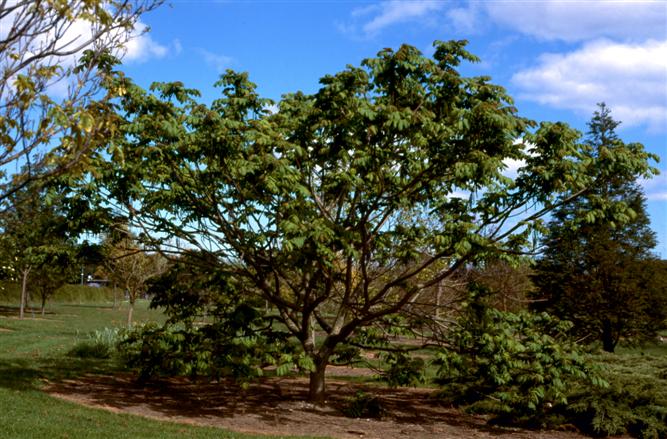
It is a deciduous, slow-growing tree up to 20 m in height, with a trunk diameter of 25-50 cm. Crown airy, loose, pyramidal.
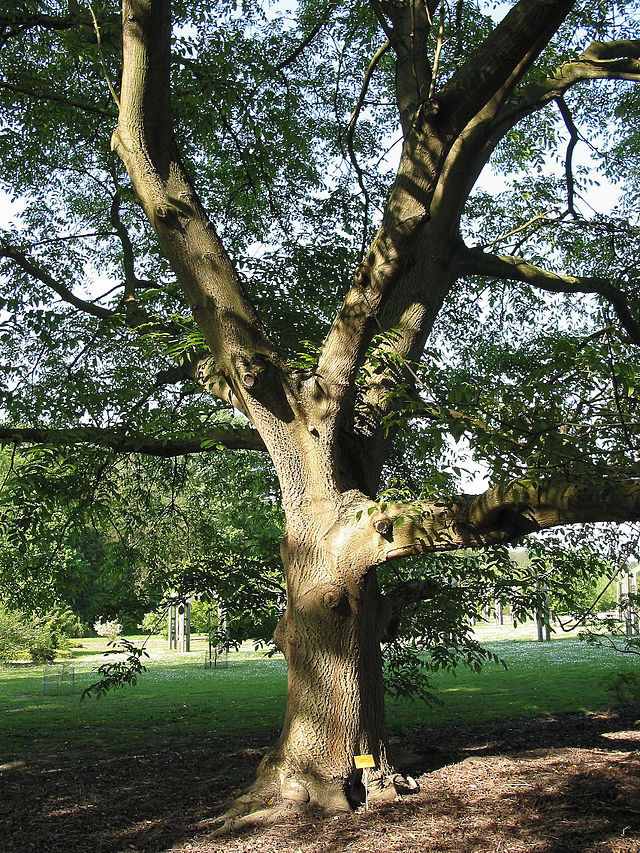
The trunk is covered with greenish-gray bark with longitudinal cracks, branches are light gray, young shoots are pubescent, last year’s shoots glabrous, gray with a yellowish tint.
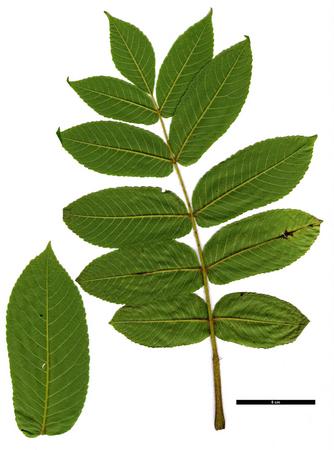
Leaves large, alternate, odd-pinnate, 40-60 (100) cm long and 40 cm wide, borne at the ends of branches, sparsely hairy, above – light green, below – lighter and covered with denser reddish or yellowish pubescence. Petiole brownish, glandular-pubescent, bearing 9-21 ovate-elongated unequal-sided (except the last) leaflets, apices acute, margins coarsely toothed.
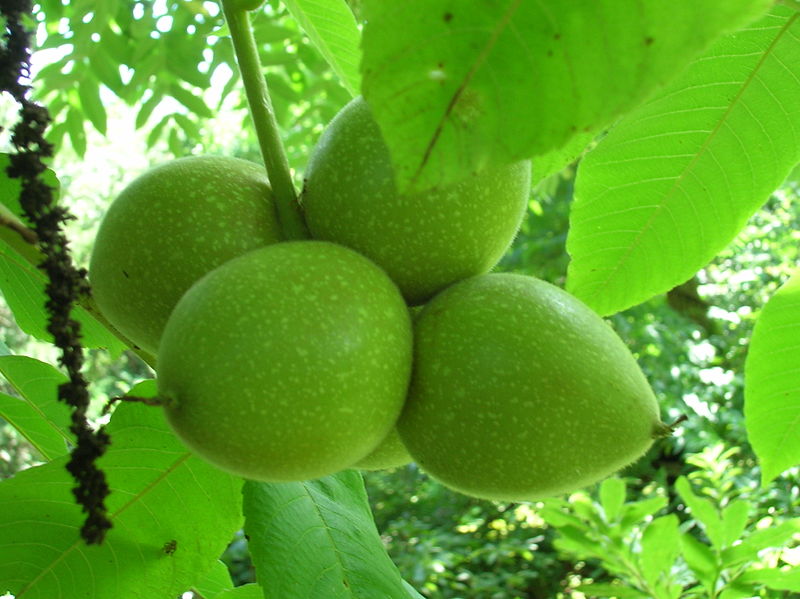
The plant is monoecious. Flowers in the first half of May. Female flowers are gathered in long straight pendulous racemes of 10-20, borne at the ends of branches. Blooms and fruits abundantly. Male flowers are catkins up to 30 cm long, positioned 2-5 in the leaf axils.
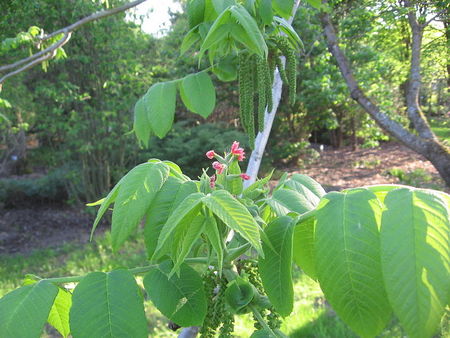
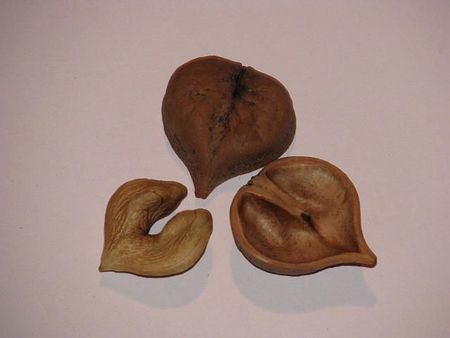
Fruits are drupes of a flattened-round or ovoid shape up to 5 cm long, with 2 longitudinal ribs, an acute apex and rounded base, almost smooth. Similar to walnut, but greatly superior in taste, not bitter, easier to shell, though slightly inferior in kernel size. Shell thin, comparatively hard. Kernel constitutes 30% of the whole fruit mass. Fat content up to 63%. Fruits ripen in August – September. Begins to bear fruit at 6-8 years.
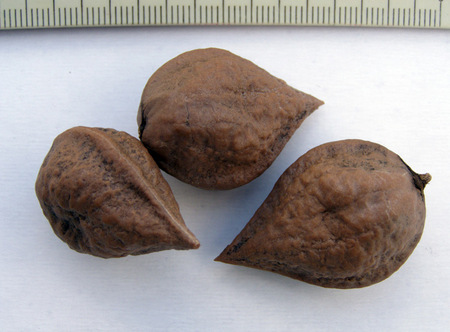
Cultivars: Heartnut, Campbell CW 1, Campbell CW 3, Campbell CWW, Fodermaier, Imshu.
Hardiness zone: zone 2a (-45°C). Can be damaged by late frosts in May – early June.
Location/site: Requires fertile soil. Grows well in Northwestern conditions. Prefers warmth, but is winter-hardy. Shade-tolerant.
Propagation: propagated mainly by seed. Sowing depth for autumn sowing 10-12 cm, for spring sowing (requires stratification) 6-8 cm. Before sowing seeds require treatment with kerosene against rodents. When propagated by cuttings without treatment with rooting stimulants, rooting is 30%. Grafts easily. Propagation material is best collected from introduced trees.
Pests and diseases: little damaged.
Conservation status: a relict species, listed in the Red Book of the Russian Federation.
Uses: Highly ornamental, even after leaf fall. Looks excellent in solitary and group plantings in landscape parks. Leaf infusions are used in folk medicine. In China and Japan it is used as a diuretic, expectorant, anthelmintic, and as a cardiac stimulant, as well as for treating diabetes. From the bark, the fresh husks of the fruit and the leaves a durable dark brown dye is obtained for cotton and woolen fabrics. From the hard shell a black dye is obtained. Essential aromatic oils are obtained from the leaves.