
Deciduous shrubs
Ilex crenata (Japanese holly)
Ilex crenata
Synonyms: Celastrus adenophyllus Miquel; Ilex crenata var. aureovariegata Goldring; Ilex crenata f. bullata Rehder; I. crenata f. helleri (Craig) Rehder; I. crenata var. helleri (Craig) L. H. Bailey; I. crenata f. kusnetzoffii Loesener; I. crenata f. latifolia (Goldring) Rehder; I. crenata var. latifolia Goldring; I. crenata f. longifolia (Goldring) Rehder; I. crenata var. longifolia Goldring; I. crenata f. longipedunculata S. Y. Hu; I. crenata f. luteovariegata (Regel) Rehder; I. crenata var. luteovariegata Regel; I. crenata var. major G. Nicholson ex Dallimore; I. crenata var. mariesii Dallimore; I. crenata f. microphylla Rehder; I. crenata f. multicrenata (C. J. Tseng) S. K. Chen; I. crenata var. multicrenata C. J. Tseng; I. crenata f. nummularia (Yatabe) H. Hara; I. crenata var. nummularia Yatabe; I. crenata f. variegata G. Nicholson; I. crenata var. variegata (G. Nicholson) Dallimore; I. euryifolia K. Mori & Yamamoto; I. helleri Craig., sharp-leaved crenate, Japanese sharp-leaved, serrated holly.
Ilex crenata (Ilex crenata Thunb.) – a species of the genus Ilex (Ilex L.) in the family Aquifoliaceae. It was first described by the Swedish naturalist Carl Peter Thunberg in 1784 in Syst. Veg., ed. 14 (J. A. Murray). In cultivation since 1864.
The range includes eastern China (Anhui, Fujian, Guangdong, Guangxi, Hainan, Hubei, Hunan, Jiangsu, Jiangxi, Taiwan, Shandong (Qingdao), Zhejiang), Japan, Korea, Taiwan, Sakhalin and the Kuril Islands. Grows in forests and thickets on hills and mountains.
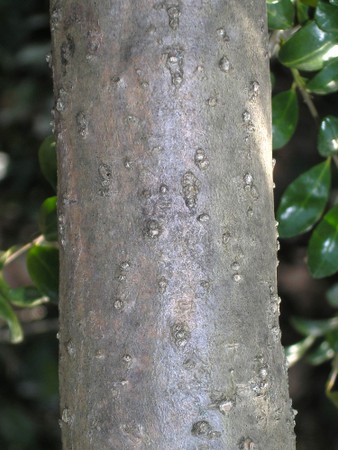
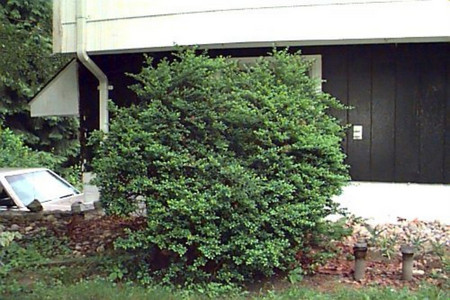
An evergreen small tree or shrub 3-5 (10) m tall. Slow-growing. Crown reaches 2.5 m in diameter, rounded, dense. Branches short, numerous, stiff, thin. Shoots finely ribbed, gray, sparsely pubescent. Bark gray-black. Lenticels round or elliptic.
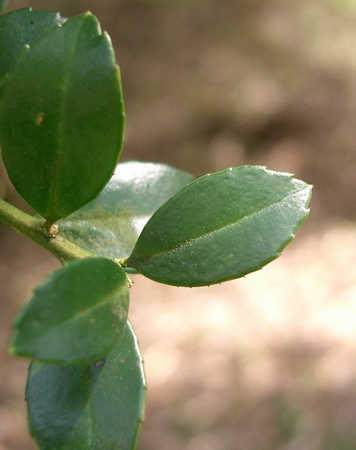
Stipules small, awl-shaped. Petioles 2-3 mm long, pubescent, grooved. Leaf blade obovate, elliptic or oblong-elliptic, 0.5-1.5 cm in length and 1-3.5 cm in width, coriaceous, greenish and glossy above, matte, lighter and slightly pubescent beneath. Lateral veins 3-5 pairs, indistinct, reticulate venation obscure. Base cuneate or obtuse, margins crenate-serrate, apices obtuse, rounded or subacute.
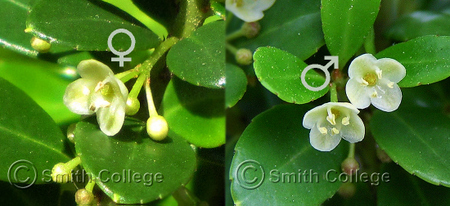
Flowers white, axillary. Male inflorescences 1-7-flowered, on the leaves of lower shoots of the current year, rarely pseudo-umbellate on second-year shoots. Peduncles 4-9 mm long; secondary axis up to 1 mm in diameter; pedicels 2-3 mm. Bracts 1 or 2, located under the base or basal membrane; 1-flowered pedicels 4-8 mm, bracts 1 or 2, submedial. Flowers white, 4-merous; calyx saucer-shaped, up to 2 mm in diameter, glabrous, 4-lobed, lobes broadly deltate. Petals 4, broadly elliptic, about 2 mm in diameter, slightly united at the base; stamens shorter than the petals, anthers elliptic; in the rudimentary state the ovaries are conical, slightly apiculate or acute at the apex. Female inflorescences 1-3-flowered, axillary on current-year shoots; pedicels 3.5-6 (-12) mm long, longitudinally ribbed; bracts 1 or 2; calyx about 3 mm in diameter, 4-lobed, lobes rounded; corolla about 6 mm in diameter. Petals ovate, about 3 mm long, slightly united at the base. Anthers ovate, about 2 mm long. Flowers in May-June.
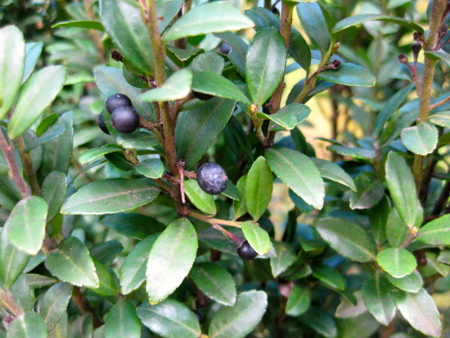
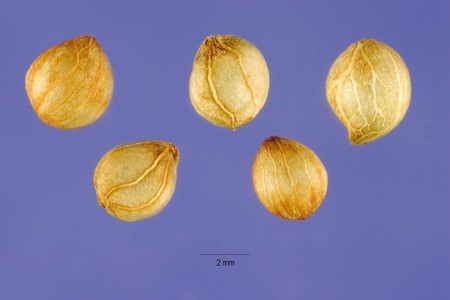
Fruits black, globose, 6-8 mm in diameter, shiny, with 4 seeds inside. Pedicel 4-6 mm long. Fruits in August-September.
Forms:
- Ilex crenata f. convexa (Makino) Rehder (Ilex crenata var. convexa Makino)
- Ilex crenata f. Crenata (Ilex crenata f. genuina Loes.; Ilex crenata f. kusnetzoffii Loes.; Ilex elliptica Siebold ex Miq.)
- Ilex crenata f. bullata Rehder
- Ilex crenata f. helleri (Craig) Rehder
- Ilex crenata f. latifolia (Goldring) Rehder
- Ilex crenata f. longifolia (Goldring) Rehder
- Ilex crenata f. longipedunculata S.Y. Hu
- Ilex crenata f. luteovariegata (Regel) Rehder
- Ilex crenata f. microphylla Rehder
- Ilex crenata f. multicrenata (C.J. Tseng) S.K. Chen
- Ilex crenata f. nummularia (Yatabe) H. Hara
- Ilex crenata f. nummularia (Yatabe) H. Hara
- Ilex crenata f. watanabeana
Varieties:
- Ilex crenata var. aureovariegata Goldring
- Ilex crenata var. helleri (Craig) L.H. Bailey
- Ilex crenata var. latifolia Goldring
- Ilex crenata var. longifolia Goldring
- Ilex crenata var. luteovariegata Regel
- Ilex crenata var. mariesii Bean ex Dallim.
- Ilex crenata var. multicrenata C.J. Tseng
- Ilex crenata var. nummularia Yatabe
- Ilex crenata var. variegata (G. Nicholson) Dallim.
Cultivars: variegated foliage - 'Golden Gem', 'Shiro-Fukurin'; dark-green foliage - 'Green Lustre'; grey-green foliage - 'Bad Zwischenahn'; with yellow fruits - 'Ivory Hall'; creeping - 'Green Island', 'Hetzii'; upright - 'Chesapeake'; dwarf - 'Mariesii', 'Stokes'. The cultivar 'Golden Gem' received a prestigious award from the Royal Horticultural Society.
Hardiness zone: 5-7(28°С).
Exposure: prefers partial shade and shade, grows in full sun only with adequate moisture. Tolerates air pollution and smoke well.
Soil: prefers light, moist, forest soil, preferably with an underlying lime-containing bedrock. Recommended soil pH from 3.7 to 6.0. Performs poorly on dry and heavy soils. Does not tolerate drought.
Planting: it is recommended to plant young specimens, mature plants tolerate transplanting poorly. Best planted in May or September. In regions with mild winters planting is done in winter, elsewhere in early spring. For abundant fruiting consider cross-pollination; it is recommended to plant 2 or 3 specimens.
Pruning: tolerates pruning and formative trimming well; recommended in May-June. Can be used for bonsai.
Care: young plants need protection from bright winter and early spring sun, from soil freezing and icy winds. In dry and hot summers they require watering.
Pests: leaf-mining fly
Diseases: Phytophthora
Propagation: seeds are best sown immediately after ripening in autumn in a cold frame. Germination begins after 18 months. Scarification, warm and cold stratification can accelerate germination. Cuttings are taken at the end of August and planted in a shaded spot in a cold frame. Transplanting of rooted cuttings is carried out after 12 months.
Uses: used in solitary and group plantings, for creating hedges and clipped hedges, and for topiary.