
Deciduous shrubs
Colchic holly
Ilex colchica Pojark.
Synonyms: Colchic sharp-leaved holly, Black Sea sharp-leaved holly, Black Sea holly
Ilex colchica Pojark. – a species of the genus Ilex (Ilex L.) of the family Aquifoliaceae. It was first described by the Soviet botanist A.I. Pojarkova in 1945 (1947) in the "Research Work of the Department of Biological Sciences". The name "Colchic" comes from the place "Colchis" (western part of Georgia), where the specimen of the plant was first found.
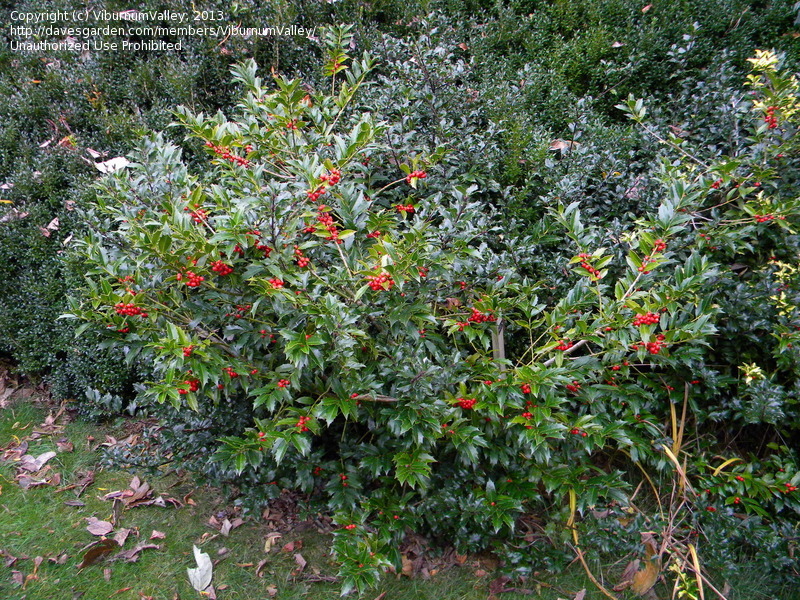
Occurs in Turkey, Armenia, Azerbaijan, Georgia, Bulgaria. Grows singly or in small groups in coniferous and broad-leaved forests. Often associated with Oriental beech (Fagus orientalis).
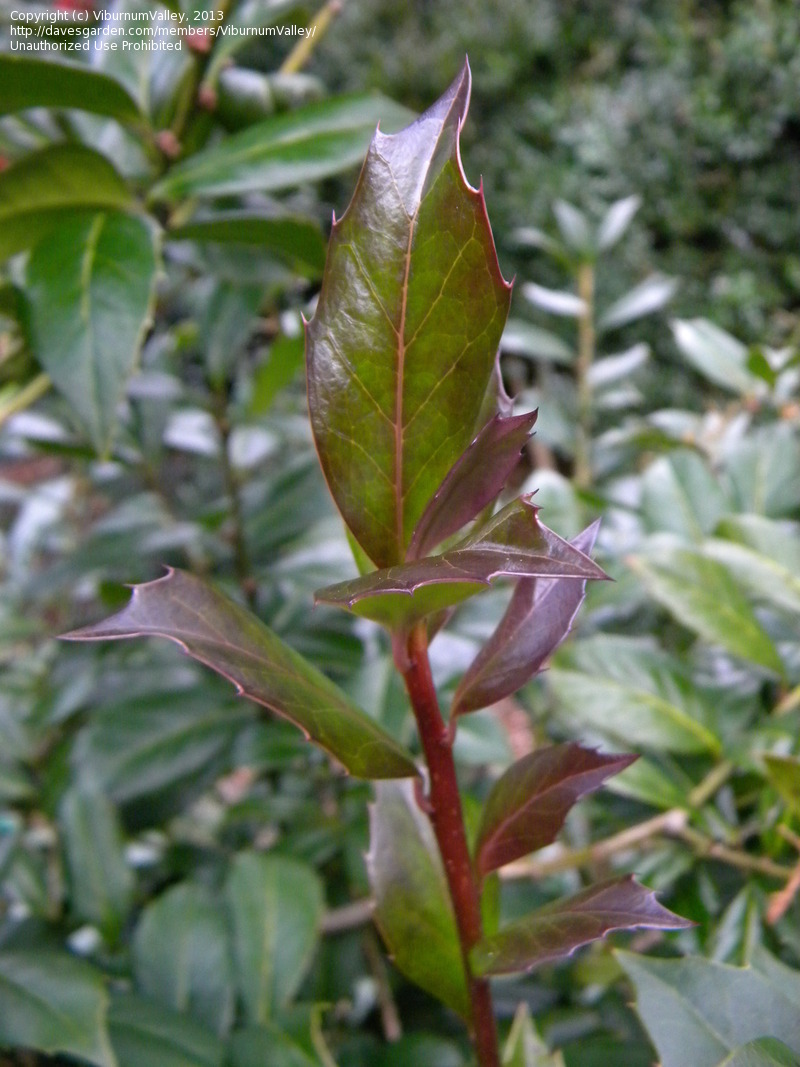
A small multi-stemmed tree or shrub 2-6 m in height. Branches pendulous and prostrate, often rooting. Young shoots reddish-green. Bark smooth, gray-green.
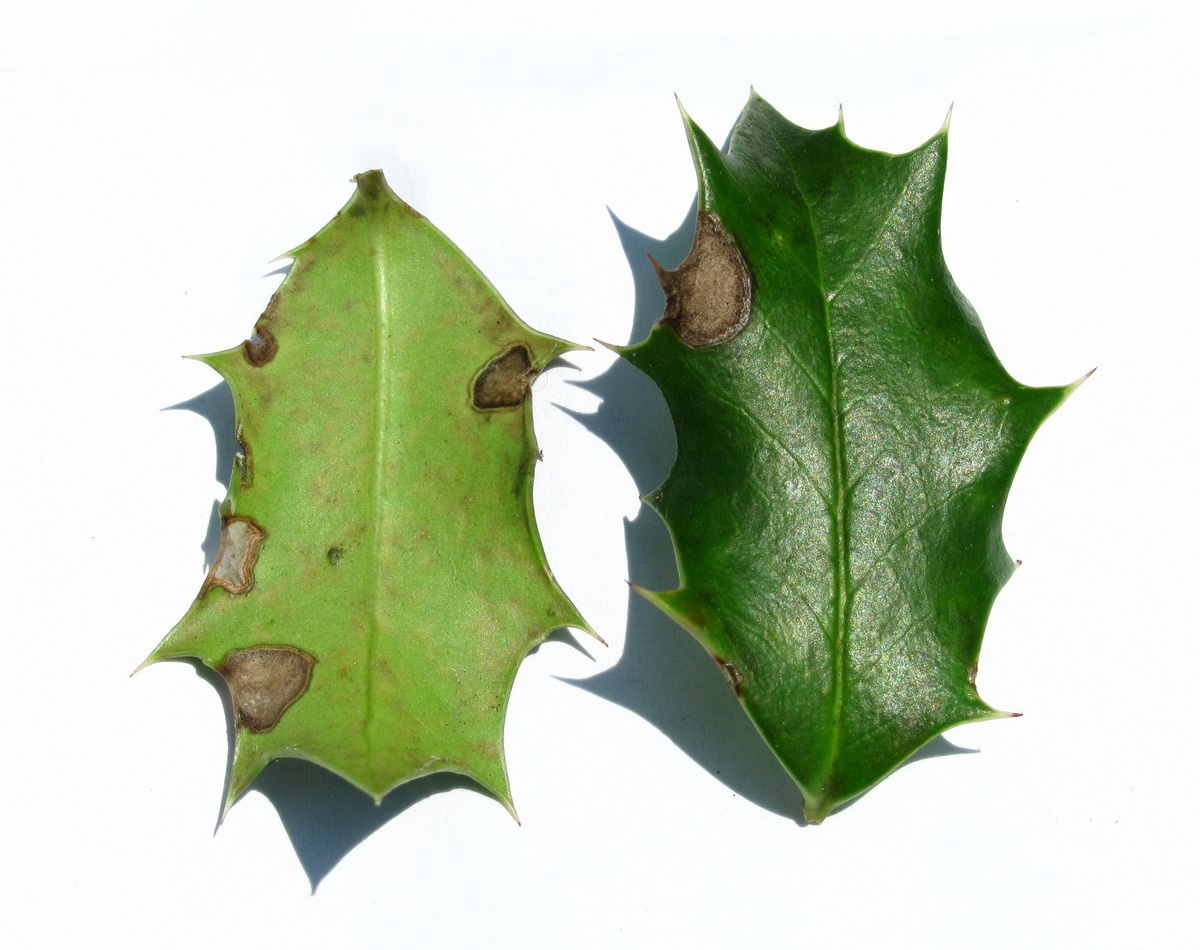
Leaves opposite, elliptic or obovate, 26 (5-8) cm in length, glossy dark green above, matte green below, margins spiny, crenate-toothed. In autumn they acquire burgundy tones. Petioles short, with a narrow, deep groove.
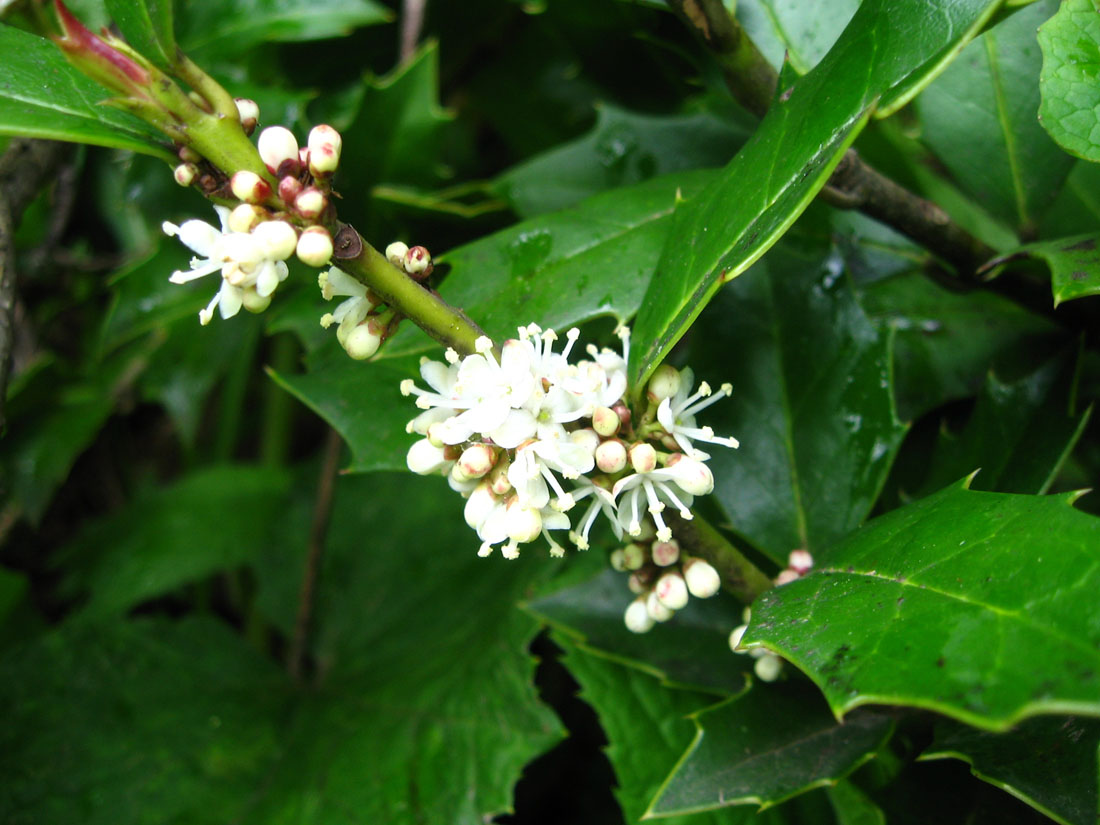
Male flowers
The plant is dioecious. Flowers solitary or in few-flowered axillary partial umbels (2-4), appearing on last year's shoots. Calyx half-fused, with 4 broad obtuse triangular lobes. Sepals 4, rarely 5. Corolla whitish, spike-like. Petals in staminate flowers oblong-obovate, in pistillate flowers broadly ovate. Male inflorescences 3-flowered, female mainly 1-flowered, rarely 2-3. Flowering is sporadic, in April-May. Pollinated by insects.
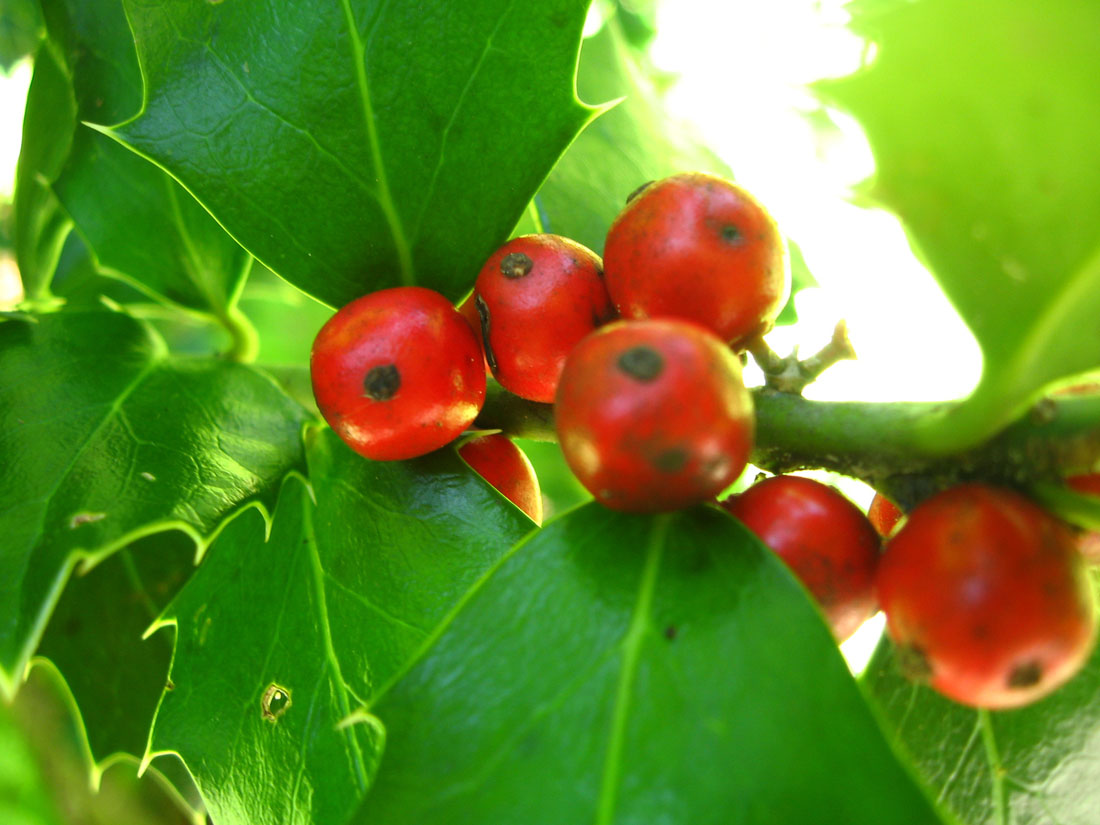
Fruits – bright red drupes of globular, elliptical or ovoid shape, fleshy, 8-10 mm long and 7-10 mm in diameter. Stones elliptical, 4 in number, three-angled, compressed from the sides, indented on the back and with elongated broad ribs. Fruits in August-September.
Varieties:
- Ilex colchica Pojark. subsp. colchica
- Ilex colchica subsp. imerethica (Gagnidze) Gagnidze
Hardiness zone: 6(-24°С). In winter shoots that are above the snow cover may be frost-damaged.
Location: prefers partial shade and shade; in sun it grows only with sufficient moisture. Tolerates air pollution and smoke well.
Soil: prefers light, moist, forest soils, necessarily underlain by lime-containing rock. Recommended soil pH from 3.7 to 6.0. Grows poorly on dry and heavy soils. Does not tolerate drought.
Planting: it is recommended to plant young plants; mature plants tolerate transplantation poorly. Planting is best done in May or September. In regions with mild winters planting is done in winter, in other places in early spring. For abundant fruiting cross-pollination should be considered, so it is recommended to plant 2 or 3 plants.
Pruning: tolerates pruning and trimming well.
Care: young plants need protection from bright winter and early spring sun, from soil freezing and icy winds. In dry and hot summers they need watering.
Pests: leaf-mining fly, box tree moth.
Diseases: Phytophthora.
Propagation: propagated by seeds.
Uses: rarely used in landscape design. Can be used for creating hedges and topiary forms.