
Flowering shrubs
Panicle hydrangea
Hydrangea paniculata
Synonyms: Hydrangea kamienskii H. Lév., Hydrangea sachalinensis H. Lév., Hydrangea schindleri Engl., Hydrangea verticillata W.H. Gao.
Panicle hydrangea (Hydrangea paniculata) - a species of shrubs in the genus Hydrangea (Hydrangea) of the family Hydrangeaceae (Hydrangeaceae). Native to Japan, southern and eastern China, and southern Sakhalin. Occurs on forest edges and in open oak woods. Mesotroph, eutroph, light-loving mesophyte, mesotherm, understory associate. In cultivation since 1861. Lives up to 60 years.
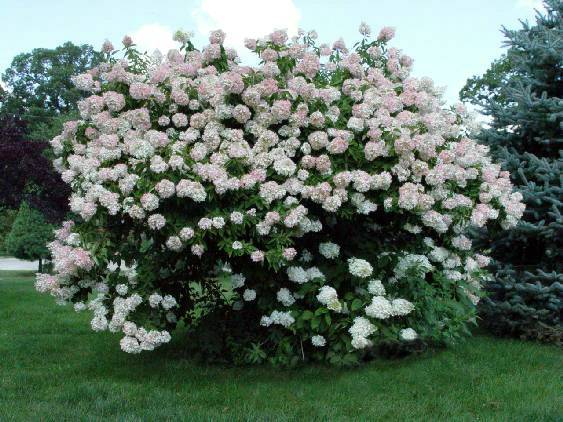
Deciduous shrub or small tree, reaching 2–3 m in height, in its range growing up to 4–9 m. Grows rapidly. Crown dense, spreading, rounded. Shoots pubescent, later glabrous, reddish-brown, fairly brittle. Bark rough, brown, peeling. Root system shallow, roots mainly spread laterally, so their boundary considerably exceeds the crown.
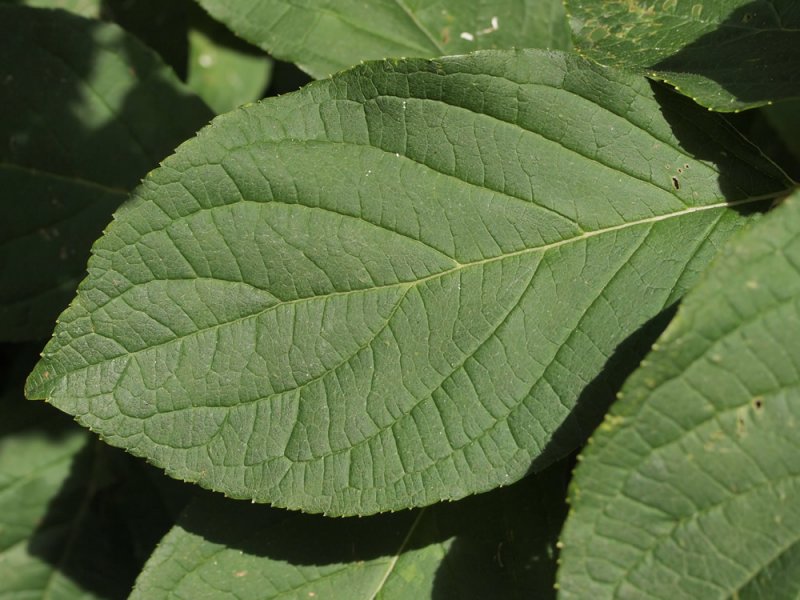
Leaves opposite, on well-developed plants in whorls of 3, ovate or elliptical in shape, 7.5–15 cm long, acuminate, with a thin, sharp, drawn-out apex, with a broadly cuneate, less often rounded base, with sharply or coarsely serrate margin, densely green above, almost glabrous or sparsely bristly and grayish-green beneath, bristly along the veins.
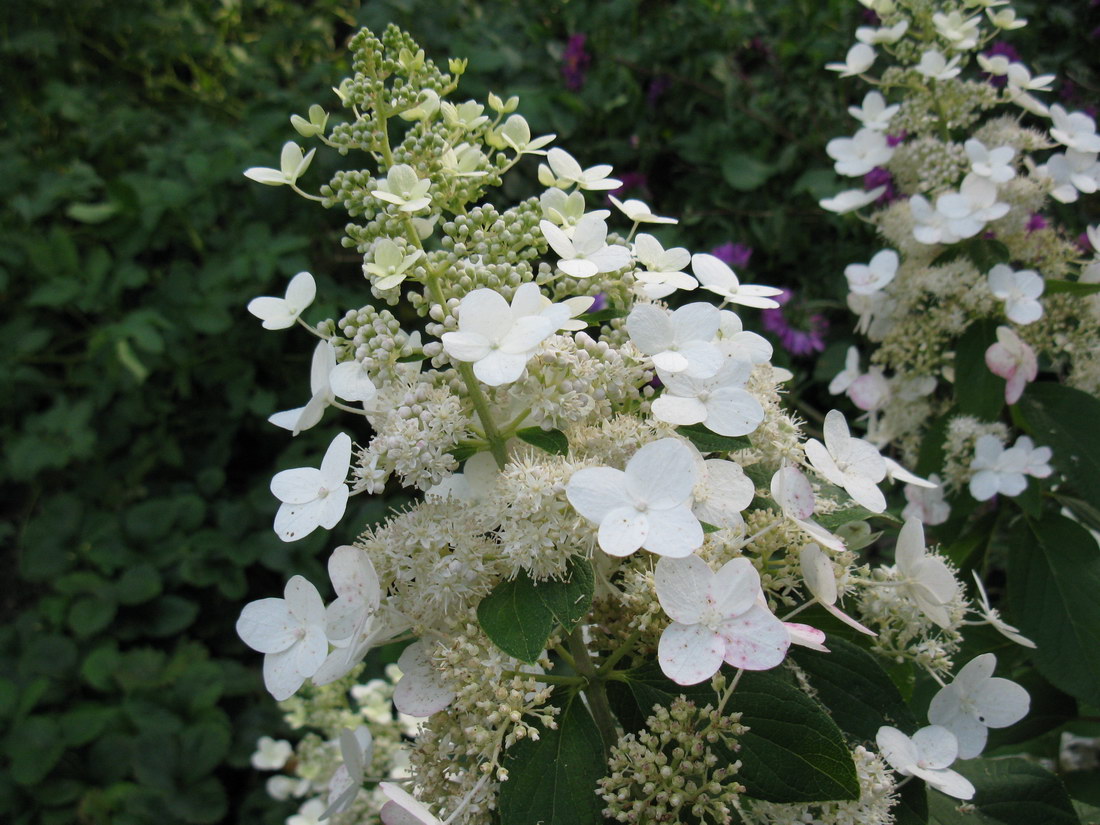
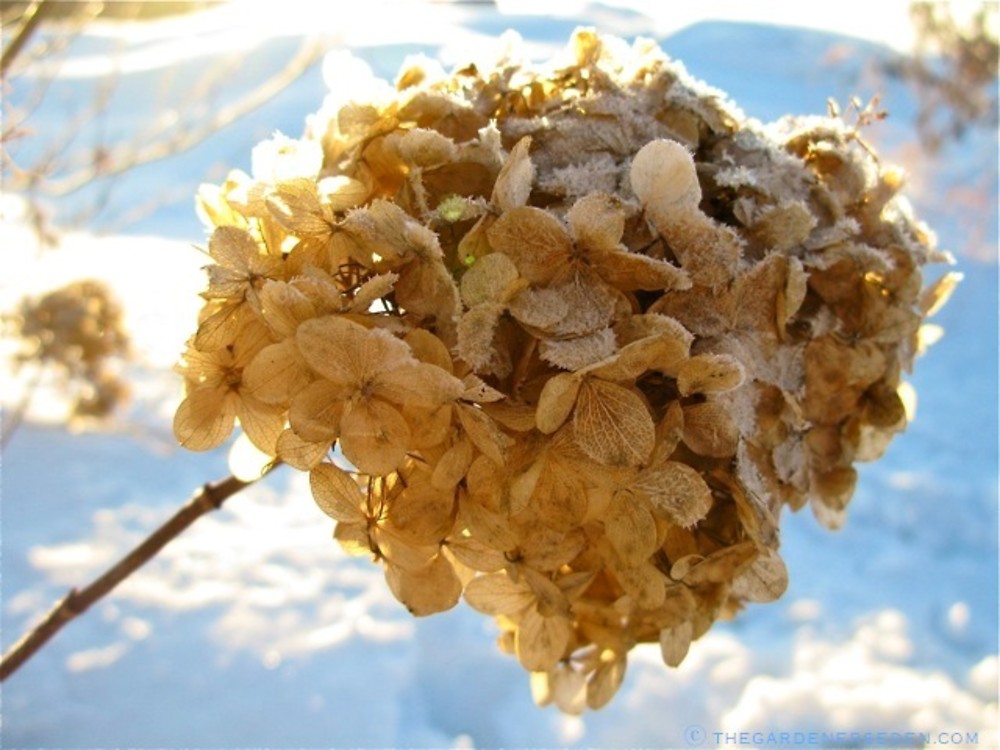
Flowers – panicles of conical or broadly pyramidal shape, somewhat nodding or erect, 15–30 (45) cm long and up to 18 cm wide, with pubescent axes. Sterile flowers white, later purplish, more or less numerous, 2.5–3.5 cm in diameter, with 3–5 obovate or oval petals, persisting on the plant until late autumn. Fertile flowers small, numerous, yellowish-white, petals falling quickly. Pistils 2–3, ovary half-superior, stamens 10. Blooms in July–September. A nectar-bearing plant. First flowering can be observed in the 2nd–3rd year. The number of inflorescences increases with growth: at 5 years – 30 inflorescences, at 6 years – 60 inflorescences, at 13 years – 357 inflorescences.
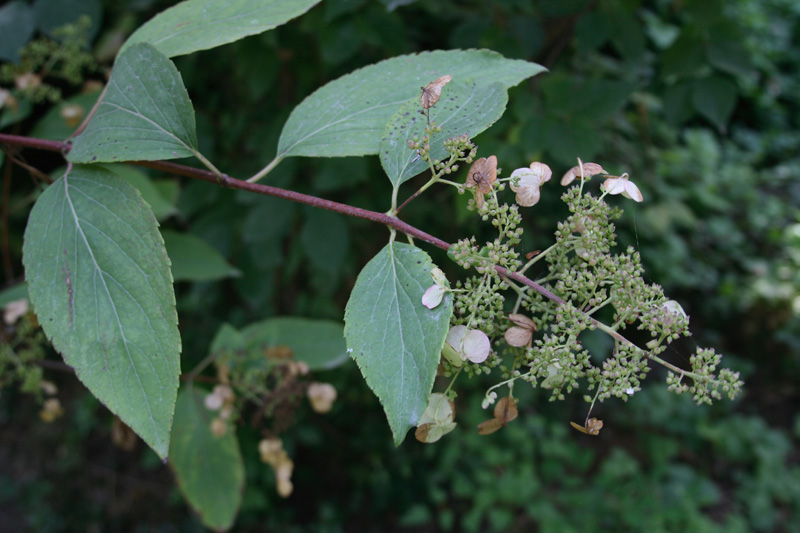
Fruits – ovoid capsules, 4–5 mm long. Seeds 3–4 mm long, with a sail-like appendage at the apex. Ripen in October.
Cultivars: 'Матильда' ('Mathilda'), 'Киушу' ('Kyushu'), 'Юник' ('Unique'), 'Брюссель Лэйс' ('Brussels Lace'), 'Грандифлора' ('Grandiflora'), 'Пинк Дайамонд' ('Pink Diamond'), 'Пресокс' ('Ргаесох'), 'Флорибунда' ('Floribunda'), Тардива' ('Tardiva').
Winter hardiness zone: 4 (-25°C). Flowers and fruits in the southern part of Ukraine (Odesa, Lviv, Crimea).
Location: prefers partial shade; in open sites growth slows and the inflorescences become smaller. Tolerant to smoke and gases.
Soil: grows well and flowers abundantly on fertile soils. Prefers clayey, structured soil; can grow on red soils, but does not like sandy soils. Flower color becomes brighter on acidic soil and paler on neutral soil. Does not tolerate ash, lime, chalk and other liming materials. Requires moist soil.
Planting: It is recommended to plant in the permanent place at the age of 4–5 years. For planting dig a hole 35–40 cm deep and 50 x 70 cm wide. For a free-standing hedge dig a one-meter strip. Recommended distance between plants is 2.5 m, but for a more attractive hedge at an earlier age the distance between plants can be 0.7–1 m, and later they are transplanted. In northern regions it is recommended to plant in spring, in southern regions – in spring or autumn. When planting, shorten the roots, and if planting in spring – also shorten the one-year shoots, leaving 3–4 pairs of buds. When planting in neutral soil it is recommended to add coniferous soil (partly decomposed pine or spruce litter), brown peat or sawdust. Saxifraga moss or sedums can be planted in the tree circle. After planting the soil can be mulched with peat or compost in a layer of 5–8 cm. In autumn you can top-dress with mineral fertilizers; in spring – with a solution of urea (18–20 g per bucket) at 2–3 buckets per plant.
Care: frequent fertilization is recommended. Early in the growing season a green fertilizer (from young nettles) can be applied, diluted. Consumption - 1 bucket per 2-meter plant, followed by watering (1 bucket of water). If the soil is dry, it should be pre-moistened with 1 bucket of water. Also once every 10–15 days during watering apply fermented cow-manure infusion. To prepare the manure infusion use a bucket of cow manure and pour 3 liters of water over it, cover and leave for 3–4 days. For use dilute 1 liter of the infusion in a bucket of water. During bud formation you can apply a complete mineral fertilizer and repeat the feeding after 15 days. If too much fertilizer is applied, the buds may break under their own weight.
Pruning: for abundant flowering perform annual pruning before the start of vegetation. Inflorescences remaining on the bushes in late autumn are pruned so that branches do not break under the snow in winter. In spring perform strong regular pruning, removing weak and congesting shoots completely, and cutting back frost-damaged shoots to healthy wood (they flower the same year). One-year shoots should be shortened, leaving 3–5 buds. When grown as a bush form – shoots are cut back to 3 buds; this pruning leads to abundant flowering in the same year with inflorescences up to 40 cm long. When grown as a standard (single-stem), pruning is more moderate – flowering is abundant, and inflorescences reach 25 cm in length. For old bushes a rejuvenation pruning is recommended, cutting back to perennial wood or to a stool. After this, the decorative effect of the bush is restored in the 2nd year.
Standard form: to grow in standard form, choose the tallest and strongest among rooted cuttings and plant it separately. All shoots except the "leading" one (emanating from the base) should be pinched 1–2 times in summer. This procedure helps increase the trunk diameter. After the leading shoot reaches the desired height, the thickening shoots are cut "ring-like" in June. Each year at the beginning of vegetation the leader is shortened to a well-developed bud. At a height of 1–1.5 m the crown is formed. The standard must be pruned, and skeletal branches develop from the lower 4–5 buds.
Propagation: easily propagated by cuttings and layers. For propagation you can use shoots pruned in spring. From them prepare cuttings with 4–5 buds, place them for 2 days in a weak solution of Kornevin and plant them in a nursery in loose acidic soil to a depth of 2 buds. Plantings should be shaded and regularly moistened, preventing the soil from drying out. When young leaves appear, shading is gradually removed. The number of cuttings at 5 years is 30 pcs, and at 15 years – 300 pcs.
When taking summer cuttings the survival rate is not high, since the period for cuttings is very short and occurs when shoots contain the optimal amount of moisture and the leaves do not evaporate it too quickly. This period occurs approximately June 10–15. It is best to cut cuttings from the lower parts of stems. Cutting length – no more than 10 cm, without flower buds. It is recommended to pinch off shoots with a heel by hand rather than cutting with secateurs. If the heel exceeds 1.5 cm – it is recommended to trim it slightly. After that, it should be carefully dusted with Kornevin so that the preparation does not get on the bark of the cutting. Lower leaves should be removed, leaving only 3–4 upper leaves, then plant the cutting in the ground, cover with a glass jar and shade. Roots begin to develop after 20–30 days. After that the plant can be planted with a large root ball in open ground. In the first year after cutting the plant should be covered with spruce or pine boughs (2–3 branches per plant). From the second year bushes do not need shelter. With good root development, the plant may even bloom in the second year, but in that case the inflorescences are recommended to be removed.
Pests: aphids (pelargonium, greenhouse, bean), greenhouse thrips, spittlebug (froghopper), spider mite, green plant bug, berry bug, meadow bug, shiny pale leaf beetle, nettle-leaf weevil, cutworms (larvae of noctuid moths), golden chafer, certain hairy caterpillars, marsh crane fly, earwig, gall nematode.
Diseases: tracheomycosis wilt, white sclerotial rot, gray mold, common (European) canker, tubercular bark necrosis, powdery mildew, Phyllosticta, Septoria, ring and Ascochyta leaf spot.
Companions: lilies, roses, clematis.
Uses: a valuable species for landscape and park planting. Used in urban plantings, parks, squares and inner courtyards. Can be planted in small alleys. The inflorescences of 'Grandiflora' make excellent dried bouquets.