
Flowers for the garden
Hybrid Tea Rose
Hybrid Tea and Climbing Hybrid Tea
Synonyms: large-flowered roses
Hybrid Tea Rose (Hybrid Tea and Climbing Hybrid Tea) – a class of rose cultivars from the group Modern Garden Roses, according to the Oxford classification of 1976 by the World Federation of Rose Societies (WFRS). It is one of the most popular groups of garden roses. Distinguishing characteristics of hybrid tea roses are continuous flowering and high flower quality.
The first hybrid tea rose cultivar 'La France' was obtained by the French breeder Jean-Baptiste André Guillot in 1867 as a result of crossing a remontant (repeat-flowering) rose and a tea rose. According to another version, the first cultivars were 'Cheshunt Hybrid' by George Paul, Jr., 1872 and 'Madame Lacharme' by François Lacharme, 1872, since the cultivar 'La France' was first sold as a hybrid Bourbon rose.
To create modern hybrid tea cultivars, descendants of that cultivar and the cultivar 'Soleil d'Or', obtained in the 1900s by breeder Joseph Pernet-Ducher as a result of crossing the remontant rose 'Antoine Ducher' with R. foetida, have been used.
Hybrid tea roses form medium-sized (60-70 cm) or tall (80-100 cm) bushes with firm, woody stems. Bush shape may vary from spreading to narrow-pyramidal.
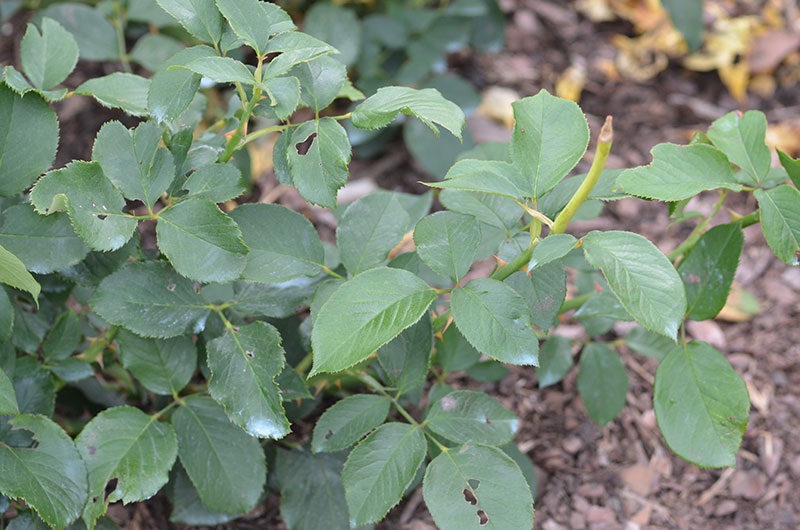
Leaves vary: in some cultivars they are delicate, in others leathery, thick, matte or glossy.
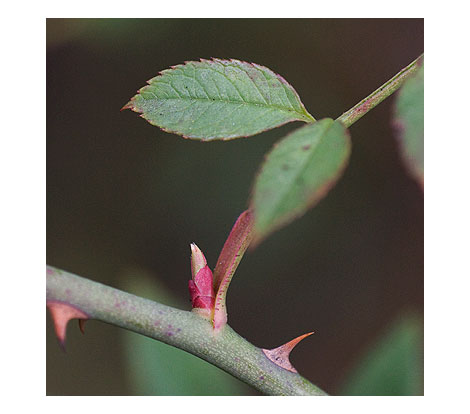
Flowers are 10-14 cm in diameter, double (25-35 petals) and very double (50-60 petals), borne singly or in small clusters (5-7 flowers). Flower stalks 20-80 cm long. Petal color and texture are diverse. Flower fragrance ranges from strong to delicate and light. They bloom from late June until late autumn.
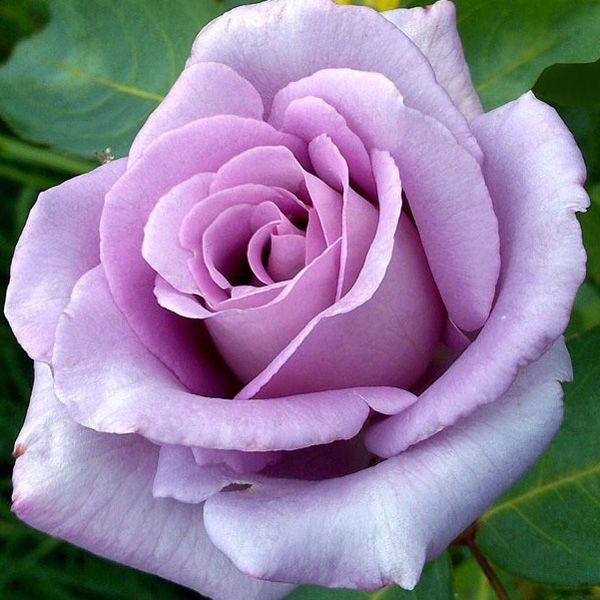
Hybrid Tea Rose «Blue Moon»
Cultivars: more than 10,000 cultivars are listed. The most popular: Avalanche, Augusta Louise, Gloria, Anastasiya, Angelicа, Athena, Avalanche, Black Baccara, Black Magic, Blue Moon, Chopin, Deep Water, Dolce Vita, Double Delight, El Toro, Esmeralda, Friendship, Kleopatra, Landora, Montezuma, Nostalgie, Purple, Red Berlin, Red Intuition, Royal Williams, Samanta, Verano, Versilia, Vivaldi, Wonder Blue, Bella Vita, Bella Perla, Versilia, Violet Parfume, Высший свет, Госпел, Золото Инков, Императрица Фарах, Кронос, Queen of England, Люксор, New fashion, Зависть, Ночь и День, Parfume de Paris, Примадонна, Talea, Юрианда.
Hardiness zone: 9a (-10-8°C)
Location: choose a sunny, bright site sheltered from strong, cold winds.
Soil: the most suitable soils for roses are heavy loamy soils rich in humus, well aerated, moisture-retentive, slightly acidic (pH 5.8-6.5). Prepare the soil for them in autumn or at least one month before spring planting. It is very important to work the soil to a depth of 50-60 cm. Per 1 m2 of the treated layer, add 10-20 g of manure, humus or peat-compost, 300-400 g of lime, 400-500 g of bone meal, 40-50 g of superphosphate, 150-200 g of wood ash. Dig the soil, mixing it with fertilizers; organic matter in the soil mixture should not exceed 50%. Exact fertilizer rates are calculated based on soil analysis. The optimal content of the main nutrients for roses should be maintained in the following ratios, mg per 100 g of soil: nitrogen - 10-20 (NH4NO3), phosphorus (P2O5) - 60-80, potassium (K2) - 80-100, calcium (CaO) - 720.
Planting: it is recommended to plant during the first half of the day. In the temperate zone it is best to plant roses in spring - in late April - early May; in the south - in autumn. Before planting, remove all damaged and diseased shoots and roots from the seedling. Cut strong shoots short - to 10-15 cm, leaving only 2-4 buds on them. Trim roots slightly to live tissue. If roses were dried, soak them in water for 24 hours before planting, and immediately before planting dip the roots in a manure-clay slurry. Planting holes are prepared 50x50 cm and filled with a nutrient mixture: 1 part turf-clay or garden soil, 1 part humus or compost - so that a mound is formed. Place the seedling on the mound, spread the roots and cover with soil, compacting it carefully so there are no air pockets between roots and soil, and water abundantly. Bury the graft union 3-5 cm below the soil surface. After watering, mound soil around the roses. Protect shoots from drying out. After shoots appear, loosen the soil and mulch with humus or peat to a layer of 5-8 cm to help retain moisture. Spacing in the row between hybrid tea, floribunda and polyantha roses is 25-30 cm, between rows - 60-70 cm; for park and climbing roses 45-50 and 80-100 cm respectively; for miniature roses - 15-20 and 40-50 cm. When planting standard (grafted) roses, to prevent drying the grafted part is often packed with moss and wrapped in paper, which is removed only after 1-1.5 weeks when buds begin to break. After planting, mulch the soil with peat or earth to a layer of 3-5 cm. When planting park non-remontant roses, mulch the soil with pine bark or wood chips.
Care: requires regular pruning of shoots affected by pests and diseases, as well as removal of dead leaves. Watering is recommended during dry periods.
Pruning: performed in spring, summer and autumn. The main pruning is in spring, when the bush is shaped. It begins immediately after the plants have fully broken dormancy or at spring planting. Cut the tops of shoots regardless of cultivar; strong shoots are shortened to 10-15 cm, leaving 2-3 well-formed buds on them, on weak shoots - 1-2. When planting in autumn, pruning is done in spring immediately after removing winter protection.
Propagation: mainly by grafting and cuttings. Cuttings are harvested during bud formation or immediately after the first flowering. Cut shoots from the bush and immediately cut cuttings 5-8 cm long from the central part with 2-3 leaves. Make the lower cut just below the bud at an angle, and the upper cut 1 cm above the bud. To reduce transpiration, remove the lower leaf and part of the upper leaf. Leaves should be handled carefully and not removed completely, as cuttings will not root without them. Before planting, place cuttings in a rooting stimulant for 18-20 hours, immersing the ends 1-1.5 cm. This can be a 0.01% solution of heteroauxin. You can also use Kornevin, sodium humate (1 tablet per 1 l of water), aloe (10 drops per glass of water) or honey (1 teaspoon per glass of water). Then rinse the cuttings with clean water and plant. Plant cuttings in a box or bed. The bed should be located where it receives morning or evening sun, with shade during midday sun. Substrate usually used is coarse river sand, a mixture of vermiculite with sand, or sand with peat (1:1). This substrate, 3-4 cm thick, is placed over turf-humus soil (8-10 cm). Plant cuttings at an angle, burying them 1.5-2 cm. Then cover on the bed with glass jars or cover the box with film. After planting, moisten the cuttings several times a day, preferably from a sprayer, maintaining humidity at 80-90%. Remove fallen leaves. After 2-3 weeks a callus appears on the cuttings, and roots form within a month. Remove jars or film, and grow the cuttings on, feeding every 2 weeks with a solution of ammonium nitrate or urea (15-20 g per bucket of water).
Diseases: leaf spot, rust, true powdery mildew, downy mildew, sooty mold, viral diseases.
Pests: aphids, scale insects, leaf-rollers, rose sawfly, thrips, rose cicadas, inchworm caterpillars, cutworms, spider mites, nematodes. It is recommended to regularly spray hybrid tea roses with appropriate products to protect against pests.