
Indoor plants
Heteropanax
Heteropanax
Heteropanax (Heteropanax) is a genus of plants in the family Araliaceae. The genus includes 8 species native to South and East Asia and China.
Heteropanaxes are woody plants with a distinct slender trunk and a well-foliated, tidy crown. Because of these qualities, heteropanaxes are becoming popular as striking plants for spacious, well-lit interiors. However, to enjoy its attractive appearance — the slender trunk and dense leafy crown — proper care must be provided.
Fragrant heteropanax (Heteropanax fragrans).
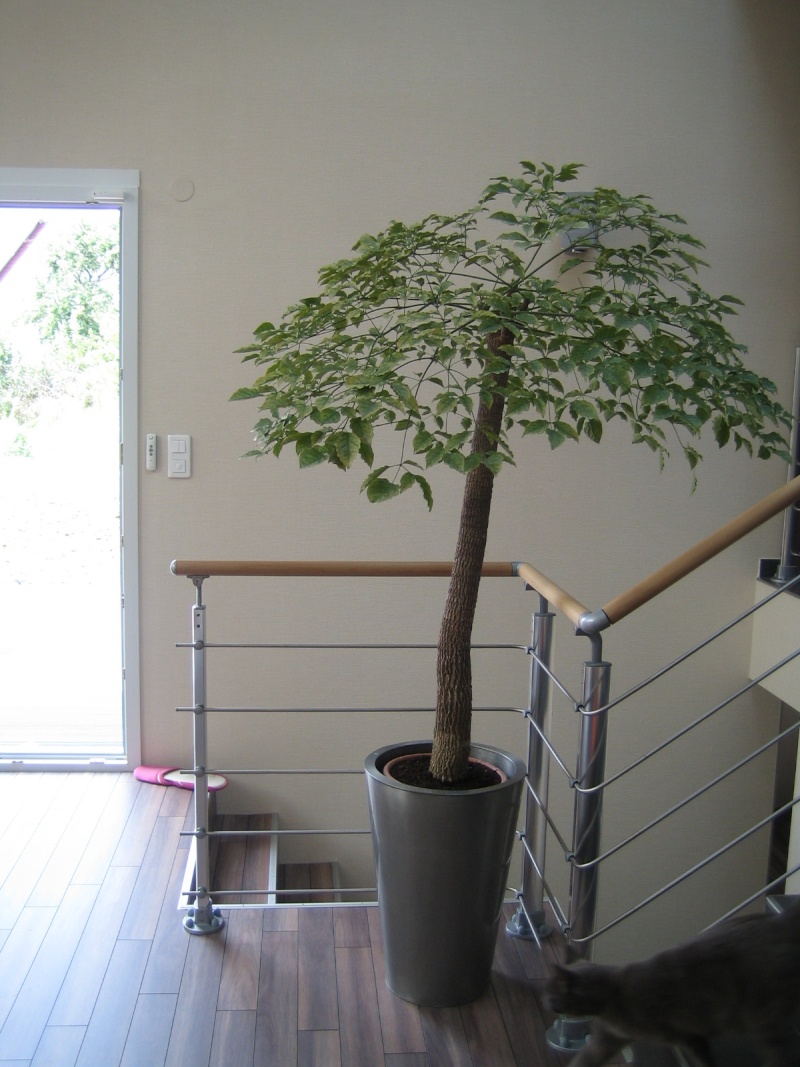
The species' native range is China and the countries of Southeast Asia. Slender trees up to 30 m tall with a pronounced trunk and a beautiful leafy crown. Suitable for cultivation in spacious, well-lit interiors. In areas of natural growth they are used in parks and gardens, as well as for medicinal purposes and for timber.
Location: keep heteropanax during the spring–summer period at 20–25 °C; the plants do not tolerate heat very well. From autumn reduce the temperature to 12–15 °C.

Lighting: prefers bright, diffused light; can tolerate some direct sunlight.
Watering: moderate, water one to two days after the top layer of the substrate has dried, using soft, settled water. Do not allow the root ball to dry out, but constant overwatering is very dangerous.
Air humidity: high. The plant needs regular misting with soft, settled water.
Care: fertilize heteropanax during the active growing season (from spring to autumn) once a month with a fertilizer for indoor decorative-leaved plants.
Propagation: by seeds, cuttings and air layering.
Repotting: in spring. Young plants annually, mature plants every two to three years, very large specimens every 4 years; meanwhile replace the top layer of soil every year.
Possible problems:
Leaves turn yellow and fall off. A possible reason is insufficient light. Without bright light the plant loses leaves, starting from the lower ones.
In summer, in excessively hot conditions, or in winter at low temperatures combined with excess moisture, leaves may drop.
The plant's leaves are drooping. The cause may be insufficient watering. After watering, turgor is restored. With excessive watering the leaves can also droop, becoming translucent or pale. In this case the plant should be repotted.
With insufficient light the leaves become dull, while with excessive light pale spots may appear on the leaves.
With constant excess moisture the roots rot.
With dry air or insufficient watering the leaf tips turn brown.
Shoots are weak. The cause may be insufficient light or inadequate fertilization.