
Flowers for the garden
Daylily
Hemerocallis
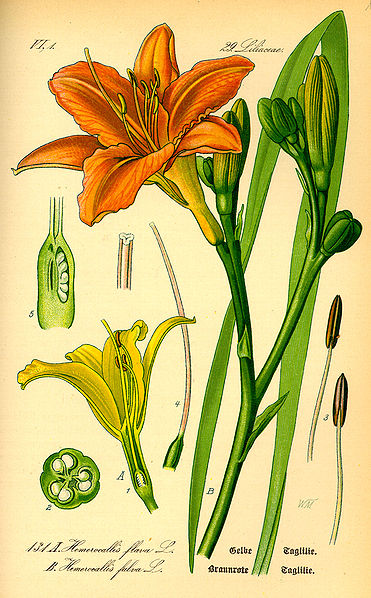
Genus of the family Liliaceae. Most species of daylily are inhabitants of temperately warm regions of East Asia. They are rhizomatous herbaceous perennials with fibrous, often fleshy, swollen roots. Attractive sword-shaped, curved basal leaves form a clump, shaped like streams of a fountain. Daylilies have beautiful, large, funnel-shaped flowers on sturdy scapes, similar to lily flowers. Each flower opens for only one day, which is why the daylily received the folk name "krasodnev". But sometimes the flowers last longer, almost six days, especially in overcast weather at low temperatures.
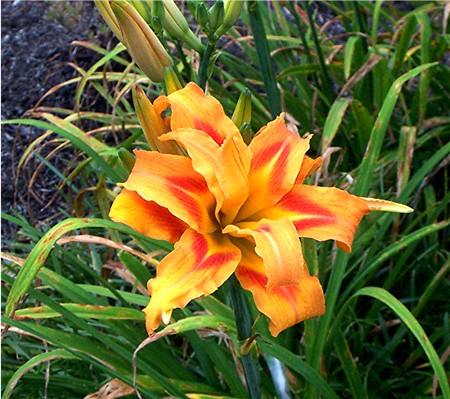
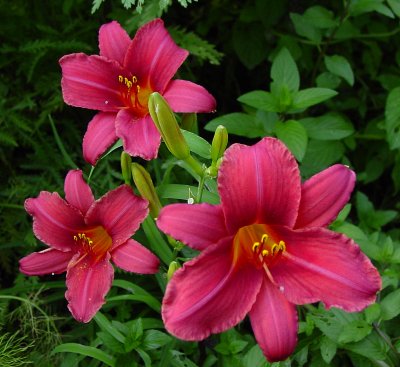
Wild species of the daylily have long been cultivated. As early as the 1st century AD the yellow daylily was well known as a garden plant, mainly for its medicinal properties. Today daylilies are grown exclusively as ornamental plants.
Daylilies are plants that like water, but they can remain without it for a fairly long time. Daylily roots are large, highly branched, and penetrate deeply into the soil. They should be watered so that the water reaches the absorbing rootlets located on the periphery of the root system, i.e., abundantly but not often. Naturally, young, recently planted clumps should be watered fairly often so that the roots remain slightly moist. This is especially important for light, sandy soils that dry out quickly and easily.
Daylilies respond very well to mulching. You can mulch the soil around the clumps with mown grass, peat, or pine bark.
Being early-starting plants, daylilies produce leaves vigorously. For vegetative growth they need a lot of nutrition, predominantly nitrogen. In spring they should be fed with nitrogen — at least urea. Just don’t overdo it, and remember what type of soil you have!
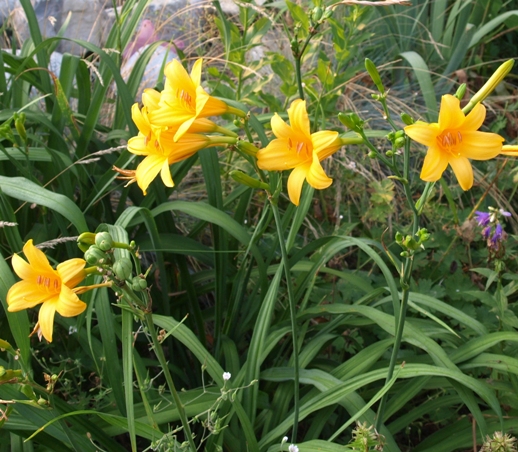
To make your daylilies even more beautiful and truly the favorites of your garden, remove the spent flowers.
Location: can grow in shade and partial shade, but only in a well-lit site will flowering be massed and abundant. Flowers of many hybrid cultivars open fully only in bright sun.
Soil: should be very fertile and well-drained. In terms of texture, medium soils are preferable: if you have sand, it is advisable to "weigh down" the soil by adding some clay or loam, mature compost and well-rotted cow or horse manure. Don’t skimp on compost — the daylily spreads fairly quickly. Where necessary, attend to the appropriate soil acidity for daylilies. The optimal value is pH 6.5.
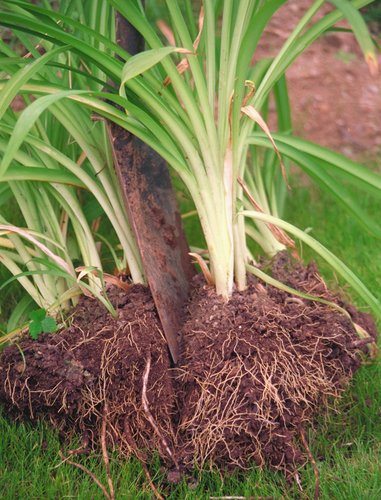
Diseases and pests: The most dangerous disease is crown rot, which can kill the entire plant. It usually appears in spring when the soil is excessively waterlogged. Young leaves yellow, become soft and sticky. They are easily pulled out of the ground. At the first signs of disease the affected plant should be dug up, all damaged tissue removed, washed in a dilute solution of potassium permanganate and dusted with a fungicide (for example, Fundazol). Allow the spot affected by rot to dry, and then replant the plants only in another location, since pathogens may remain in the original spot.
Daylily plantings can be damaged by winter cutworm caterpillars, slugs, and aphids. Thrips occur on the flowers. They are most active in early summer when the first buds appear.
Propagation: by seed and by division of the rhizome.
Usage: daylilies are used in ornamental horticulture in single and group plantings and in mixed borders. Modern tetraploid daylily cultivars look most impressive in the garden.
Source: www.phytodesign.itop.net