
Indoor plants
Hebe cupressoides (Cypress-like hebe)
Hebe cupressoides
Synonyms: Veronica cupressoides, Leonohebe cupressoides
Hebe cupressoides (Hebe cupressoides (Hook. f. ) Cockayne &. Allan) – a species of plants in the genus Hebe (Hebe Comm. ex Juss.) of the family Plantaginaceae. It was first described in 1927 by botanists Joseph Dalton Hooker, Leonard Cockayne and Allan Cunningham in their «Trans. & Proc. New Zealand Inst.»
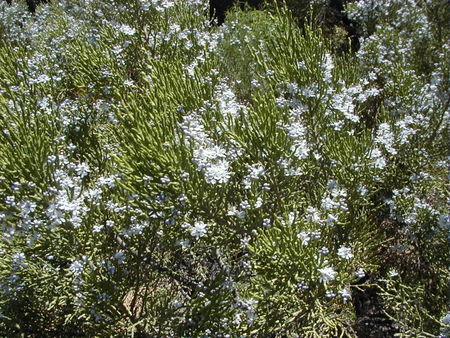
In the wild it occurs in the Mackenzie River basin and in the Shotover River valley, on shaded mountain slopes, on the slopes of the Southern Alps and on the South Island of New Zealand.
It is an evergreen, upright, strongly branching shrub up to 2 m in height and 1.5-2.5 m in diameter. The crown is dense and rounded. The trunk up to 60 mm in diameter, covered with coarse dark gray-black bark that peels off in small flakes.
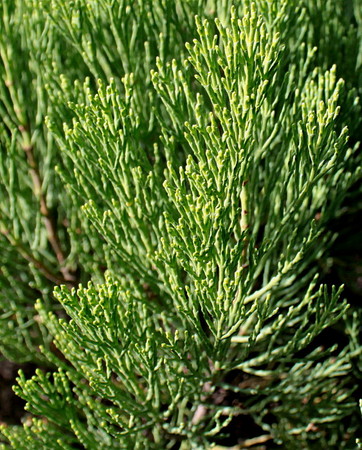
Leaves are small, 1.5 mm long, narrowly triangular, barely fused at the base, tightly appressed to the shoots, gray-green, fleshy.
Blooms in June – July, flowers small, pale lilac, lilac-blue, sometimes cream-colored, fragrant, arranged in raceme-like inflorescences of 68 flowers.
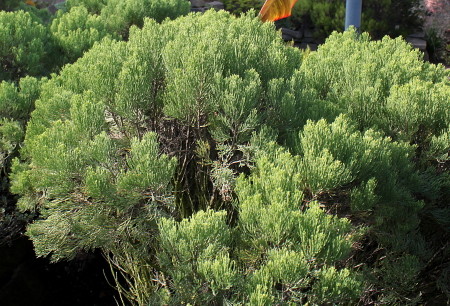
Cultivars: «Boughton Dome», «Golden Dome», 'McKean'
Hardiness zone: 6b (-10°C).
Temperature: In most parts of Ukraine the species is cultivated as a houseplant. For winter it is preferable to cover with spruce boughs while maintaining air circulation or bring into a warm room. In summer outdoors it should be placed in a spot protected from dry and hot air. Summer temperature should be 18-22°C, and winter 8-14°C.
Soil: tolerates most soil types with good drainage; prefers deep and loose soil. Does not like heavy compact clay.
Light: prefers sunny locations or partial shade. Protection from direct sunlight is necessary. A west or east-facing window is well suited for cultivation.
Watering: in summer watering should be regular and moderate. Does not tolerate waterlogged soil or standing water. The soil should not dry out completely between waterings. Reduce watering in winter.
Humidity: in nature it withstands salty sea spray well and likes warm moist winds. In summer and winter it is preferable to mist with room-temperature water.
Care: in spring and summer it is useful to feed twice a month with complete fertilizers. Stop feeding from mid-summer. Pinching shoots stimulates abundant flowering.
Repotting: carried out when the plant becomes very large. The pot diameter should be 5-6 cm larger than the rootball.
Potting mix: prefers slightly acidic soil. Mix: leaf mold, turf soil, peat and sand in a ratio of 1:3:1:1.
Pests: spider mites, whiteflies, aphids, scale insects, mealybugs.
Diseases: rots.
Propagation: easily propagated by seeds, division and cuttings.
Usage: grown in gardens and public places. In most parts of Ukraine it is grown as a houseplant.